Gwinnett’s bet to build Georgia version of Research Triangle Park starts to pay off

Sometimes envy is the driving force behind economic development.
Many states covet the ecosystem created by North Carolina’s Research Triangle Park, a massive biotech and life sciences hub positioned between the Tar Heel State’s top universities. After all, it is home to hundreds of high-tech companies and tens of thousands of well-paid employees.
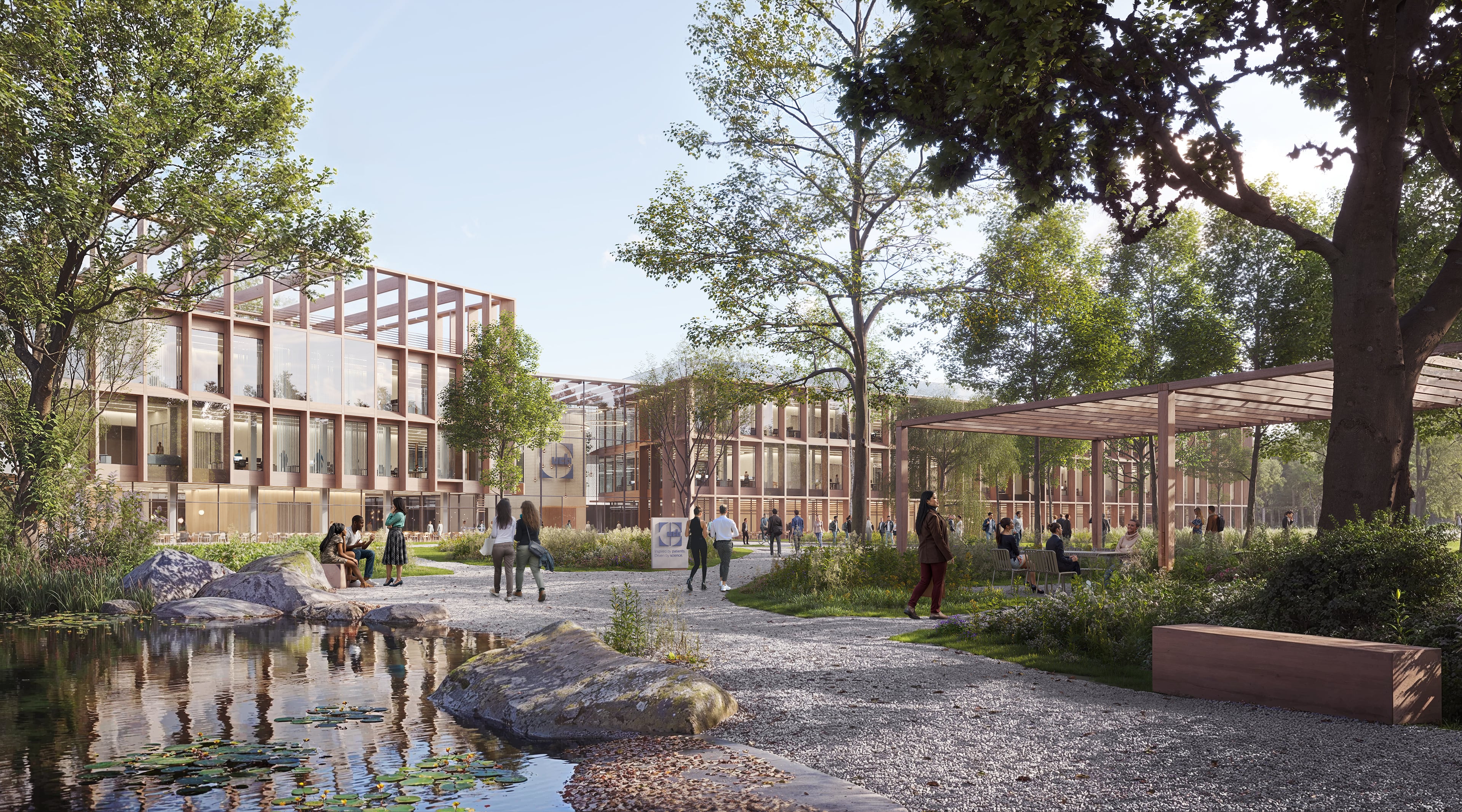
Jealousy of its neighbor influenced Georgia leaders years ago to try to re-create something similar in Gwinnett County, roughly equidistant from colleges in Atlanta, Athens and Gainesville. It wasn’t cheap or quick, but the 2,000-acre gamble, called Rowen, is starting to bear fruit.
UCB Inc., a global biopharmaceutical giant, announced last month it will invest $2 billion to become Rowen’s first tenant. The Belgian company plans to build a medical science manufacturing facility that will span the size of eight football fields, employ 330 workers and become the largest economic development project in Gwinnett history.
County leaders say the announcement validates years of work and hundreds of millions of dollars in public investment. They also say it’s just the beginning, because UCB will occupy only a fraction of Rowen’s site.
“We’ve spent the past six years laying the foundation, literally, and the groundwork to create the space and climate for a UCB to come to Rowen,” Gwinnett County Chairwoman Nicole Love Hendrickson said.

The U.S. arm of UCB paid the Rowen Foundation, the nonprofit that oversees the district’s development, $14.3 million to purchase 79 acres for its future facility. There are still about 1,900 acres left for Mason Ailstock, the foundation’s leader, to fill with promising tenants.
“We have a first mover, and there’s many others that have been watching the work of Rowen come to life,” Ailstock said.
Prep it and they will come?
Before the splashy announcement came years of behind-the-scenes grunt work.
The Rowen project was first envisioned more than 20 years ago and involved a prolonged campaign to acquire the land, rezone it and invest in infrastructure.
The enormous site along Ga. 316 near Dacula was chosen because of its roughly equal proximity to the University of Georgia in Athens, Atlanta’s roster of universities, and Gainesville’s public and technical colleges.
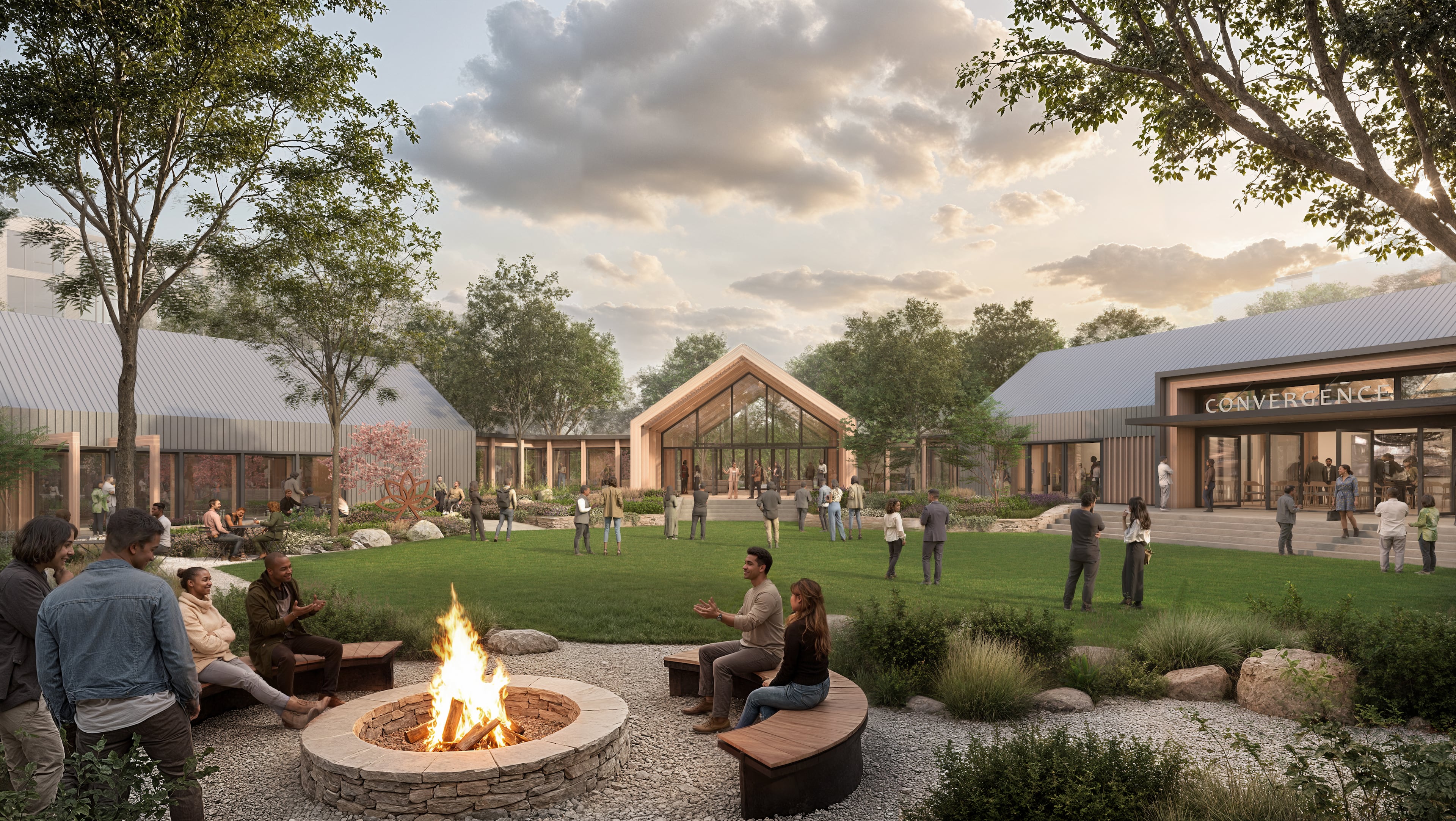
Work on the campus officially broke ground in 2022, kicking off $32 million of infrastructure preparation, including road and utility integration. Rowen last year also announced the project’s first vertical construction, a 10,000-square-foot event and workspace center. It will eventually anchor a mixed-use village with apartments, restaurants, a hotel, parks and retail.
Ailstock said it’s a vote of confidence that the county and Rowen backers have started investment before inking the first tenant commitment.
“We’re creating a stage set that is part of the benefit to UCB,” he said. “It’s much more than just selling them 79 acres.”
So far, the county has invested $174 million into the project through infrastructure improvements and incentives to recruit UCB. The 460,000-square-foot facility is expected to take six to seven years to build.
“This is about more jobs, higher wages, a stronger tax base, greater opportunity for residents,” Hendrickson said. “So these investments that we made were not done in vain, and now we’re seeing the return on that investment.”
Overseas partnerships
UCB’s project will be its first manufacturing facility in the United States, but the company already has a presence in the Atlanta area.
The Brussels-based company operates its North American headquarters in Smyrna, where it employs about 400 people. The company develops medicine for people with severe neurological and autoimmune conditions.

Although Belgium is one of Europe’s smallest countries geographically, it is an outsized economic partner across the globe and in Georgia. About 85% of Belgium’s gross domestic product is trade-related, and it has maintained a consular presence since 1834 in Georgia, specifically at Savannah’s ports.
Total trade between Georgia and Belgium exceeded $3.3 billion last year, according to Trade Data Monitor — ranking in the top 20 for the Peach State’s international trading partners.
Belgian Ambassador Frédéric Bernard visited Atlanta in late March on a diplomatic trip, reinforcing relationships between Georgia and his country. It mirrors a trip earlier this year Gov. Brian Kemp took to Belgium, where he visited UCB and helped lay the seeds for the company to commit to Rowen.
“You feel that (Georgia) authorities are keen on traveling and seeing abroad to bring investment back,” Bernard said. “And companies feel it. … If you deploy energy in your relationship, then the company feels reassured.”
At the end of March, Gwinnett officials also visited Belgium to tour UCB facilities to get a preview of what’s coming to Rowen.
“It’s the opportunity to not only see this level of advanced manufacturing in person and what they want to replicate in their first U.S. manufacturing site, but also to expand those (relationships),” said Kevin Carmichael, a leader with the county’s economic development arm Partnership Gwinnett.
Targeted recruitment
Rowen had a tall task to stand out among the crowd when UCB was looking for sites.
UCB tapped real estate services firm Colliers to narrow down potential sites, starting at more than 1,200 counties across a dozen states. Anthony Burnett, senior vice president of Colliers’ site selection team, said the process began less than a year ago and moved quickly.
Burnett said UCB looked at states with more established pharmaceutical industries, but Rowen stood out for its education access — the core concept behind the project’s research triangle ambitions.
“The state was able to convince UCB about (Georgia’s) talent pipeline,” Burnett said. ” … And overall, it was very cost competitive from the land, recurring operating costs and the incentive deal.”
In addition to Gwinnett’s investment, the Georgia Department of Economic Development provided a $3.3 million grant to “offset site preparation costs.”
Ailstock said UCB boosts Georgia’s biopharmaceutical bona fides, adding to an ecosystem currently anchored by the Centers for Disease Control and Prevention, life sciences manufacturer Meissner and Takeda Pharmaceuticals. UCB’s commitment should help make additional Rowen recruitment easier, he said.
“There’s a tremendous amount of cross-pollination between these industries — life science, ag tech, energy sustainability,” Ailstock said.
“Those create these points of convergence where there is shared knowledge and shared partnerships that otherwise would not have been realized if they did not all locate in Rowen,” he added.
About the Author

Zachary Hansen, a Georgia native, covers economic development and commercial real estate for the AJC. He's been with the newspaper since 2018 and enjoys diving into complex stories that affect people's lives.


