How ‘a group of hippies’ created Atlanta’s 50-year film institution

On a spring day in 1977, a coterie of filmmakers and moviegoers gathered in a shuttered bathhouse at Piedmont Park.
The space was damp, dark and smelled like mildew. But it was suitable enough to set up folding chairs, a roll-up screen and a 16 mm film projector. For the entire day, movies were screened, the titles of which have been lost to time.
The event had a decent turnout. So the organizers expanded the screenings the next year, and then again the following year, until they outgrew the park and the 12 hours of daylight.
Five decades later, the event — now dubbed the Atlanta Film Festival — has transformed into one of the largest film festivals in the Southeast and one of the longest-running in the country, drawing more than 20,000 visitors each year. Now an 11-day affair, ATLFF has been a steppingstone in the careers of dozens of filmmakers, producers and executives, some of whom went on to win Academy Awards for works they debuted at the festival.
This year marks the 50th annual ATLFF and the 50th anniversary of its founding organization, a major milestone for any film-related event in the United States, predating the Sundance Film Festival and South by Southwest.
More than two dozen films, shorts, episodes of television and even music videos will screen at the Plaza Theatre and Tara Theatre between Thursday, April 23 and May 3, interspersed with panels with industry experts.
But the ATLFF and its parent organization are combating a problem standing in the way of their growth: a dearth of corporate, philanthropic and arts funding, said Chris Escobar, who serves as executive director of the parent organization.
The festival helps to “plant the seeds of the next generations of not just crew people, but writers, directors, producers and actors,” Escobar said. “We can’t do that at being at a fraction of the resources we were 20 and 40 years ago.”
‘A maniacal zest’
The Atlanta Film Festival was the brainchild of Independent Media Artists of Georgia Etc, a group of movie lovers and educators who came together to provide resources to the local film community and created the first media arts center in the state. The organization has since been renamed the Atlanta Film Society.
IMAGE initially survived on small grants from the City Bureau of Cultural Affairs and the Georgia Council for the Arts, as well as membership fees. Their initial vision for a film festival: to support the independent filmmaker. The group would recruit judges to help select films to screen and fill out the rest of the lineup with others they liked.
IMAGE’s festival wasn’t the first to set up shop in the city. Its predecessor was the Atlanta International Film Festival, which ran between 1968 and 1974 before a lack of funding led to its dissolution.
The first of what would become the Atlanta Film Festival was held in conjunction with the 10-day Atlanta Arts Festival held in Piedmont Park — hence the group’s inability to find a space other than the bathhouse to occupy. IMAGE received 50 films. The following years, that number doubled, and then doubled again.
By the fourth year, the group expanded the screenings across a full week.
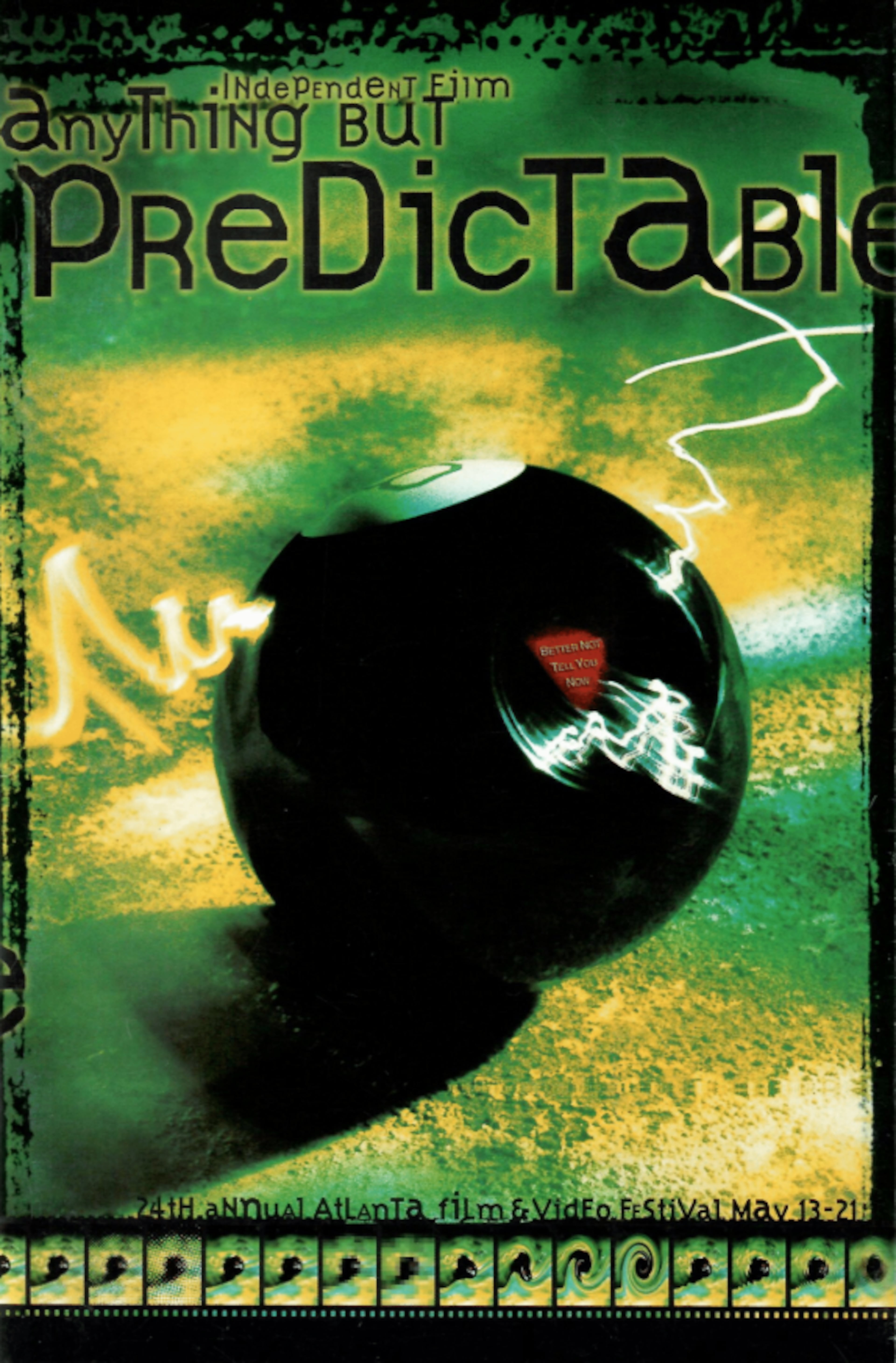
“That sort of thing was exciting,” founding director Bill VanDerKloot said. “There was a real sense of community and enthusiasm for the whole thing. A lot of maniacal zest, in a sense, an idiot zeal.”
There was a feeling of scrappiness in the early years of the festival, which had no major Hollywood name or major corporate backing in its inception, as opposed to Robert Redford’s Sundance or, in later years, The Tribeca Festival, which was co-founded by Robert De Niro.
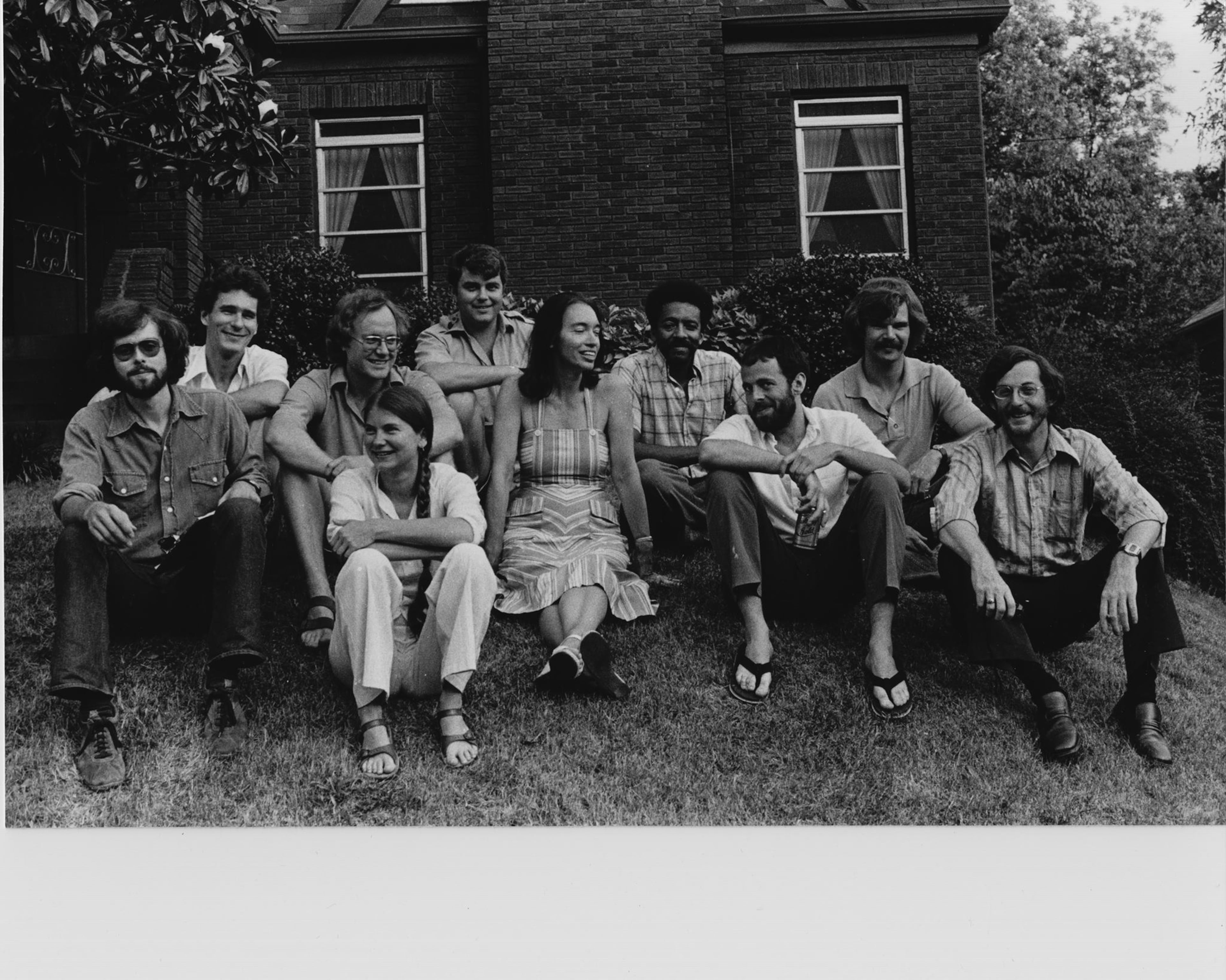
Atlanta’s festival survived with small local grants and entry fees. Showtimes were printed in the newspaper, so its major costs were stipends for the judges, VanDerKloot said. It was staffed by volunteers.
But the festival strengthened as years went on. The Atlanta Journal-Constitution’s longtime film critic, Eleanor Ringel, wrote in 1984: “Atlanta, the city too busy to hate and, until recently, too adolescent to support the arts, has lucked into her very own, very classy film festival.”
By the festival’s 25th anniversary in 2001, it was drawing more than 13,000 attendees. The year before, it drew just 6,500.
The Woodruff Arts Center’s Rich Auditorium, Landmark’s Midtown Art Cinema and Regal’s now-shuttered Hollywood 24 multiplex all hosted screenings, before the festival moved to its current homes at the Plaza and the Tara.
The festival brought all types of figures to the city, from iconic documentarian Frederick Wiseman to punk rocker Richard Hell, who Ringel observed slinking around the Woodruff Arts Center for his 1982 film “Smithereens.” For its 40th anniversary, director James Gunn showed up while he was filming “Guardians of the Galaxy Vol. 2” at Trilith Studios.
Three generations
Often the juiciest headlines major film festivals generate are that films are acquired by distributors. But film festivals also provide a launching pad for filmmakers to make connections, hone their craft and build community.
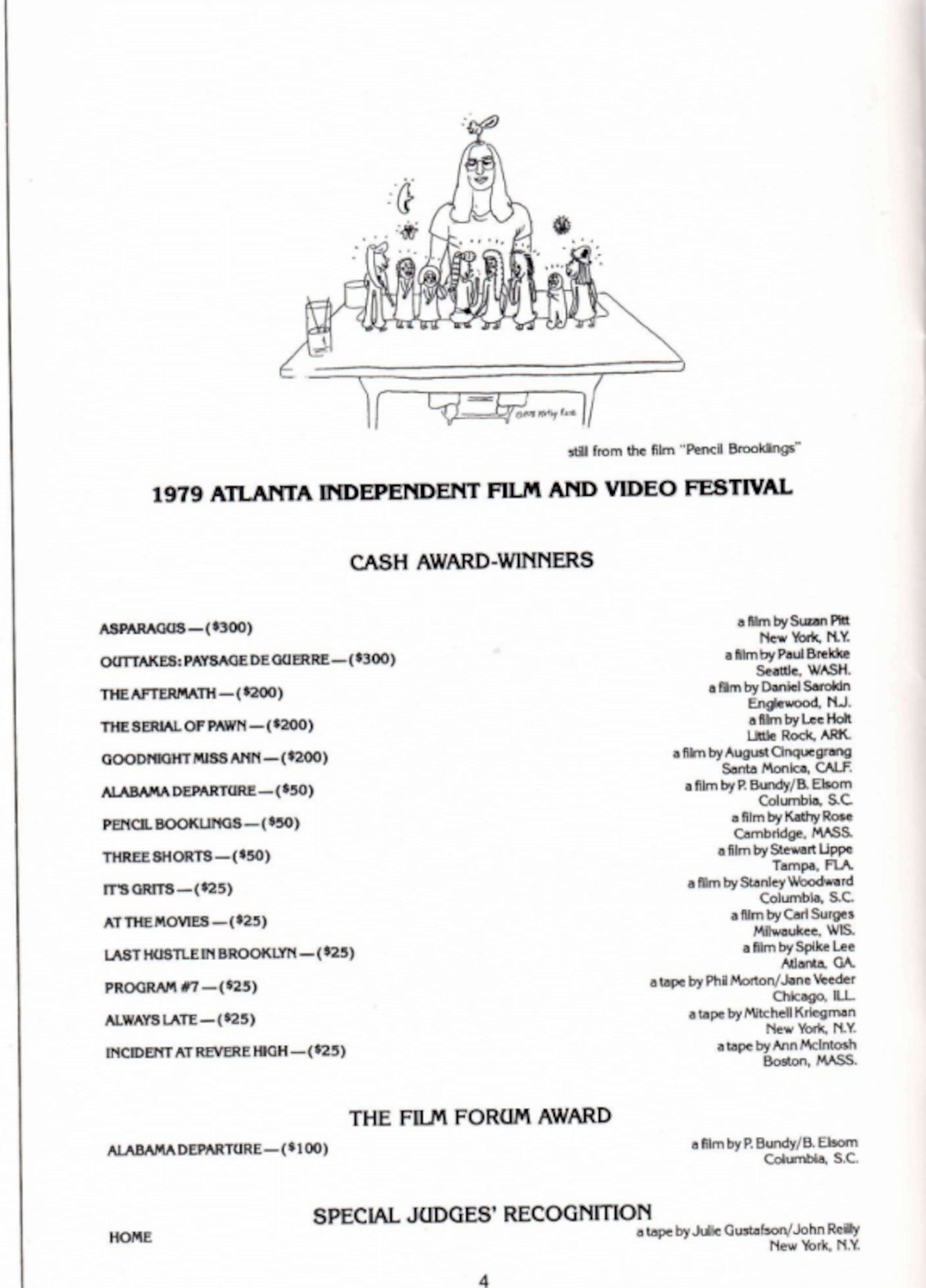
In 1979, a communications student at Morehouse College submitted his first short, titled “Last Hustle in Brooklyn,” to the still green ATLFF. He had spent the summer of 1977 in New York City documenting what he saw on a Super 8 camera, including an infamous blackout that spurred looting and vandalism across dozens of neighborhoods. He was encouraged by Herb Eichelberger, a professor at Clark Atlanta University predecessor Clark College, to compile it into a short.
At the festival, the film won a student category and the student, Spike Lee, took home $25 and soon came to the realization that he wanted to pursue filmmaking instead of communications.
Lee is one of several professionals who began their careers at the festival. His work triggered a domino effect, Escobar said.
In 2025, the ATLFF opened with “The Color Book,” a feature from Atlanta filmmaker David Fortune. About a decade earlier, Fortune was a festival volunteer, working the night director Justin Simien premiered “Dear White People” in Atlanta — a film that tips its hat to Lee with a re-created moment from Lee’s 1989 film “Do the Right Thing.” Fortune saw Simien, Simien saw Lee and the inspiration kept falling forward.
“Imagine Spike Lee doesn’t make (“Last Hustle in Brooklyn”) or doesn’t get into the Atlanta Film Festival. He pursues radio,” Escobar said. “What happens to Justin Simien? What happens to David Fortune? What happens to all of film history, right? We didn’t put these people on the map, but we’re an important part of their story, building their career and of the validation they had.”
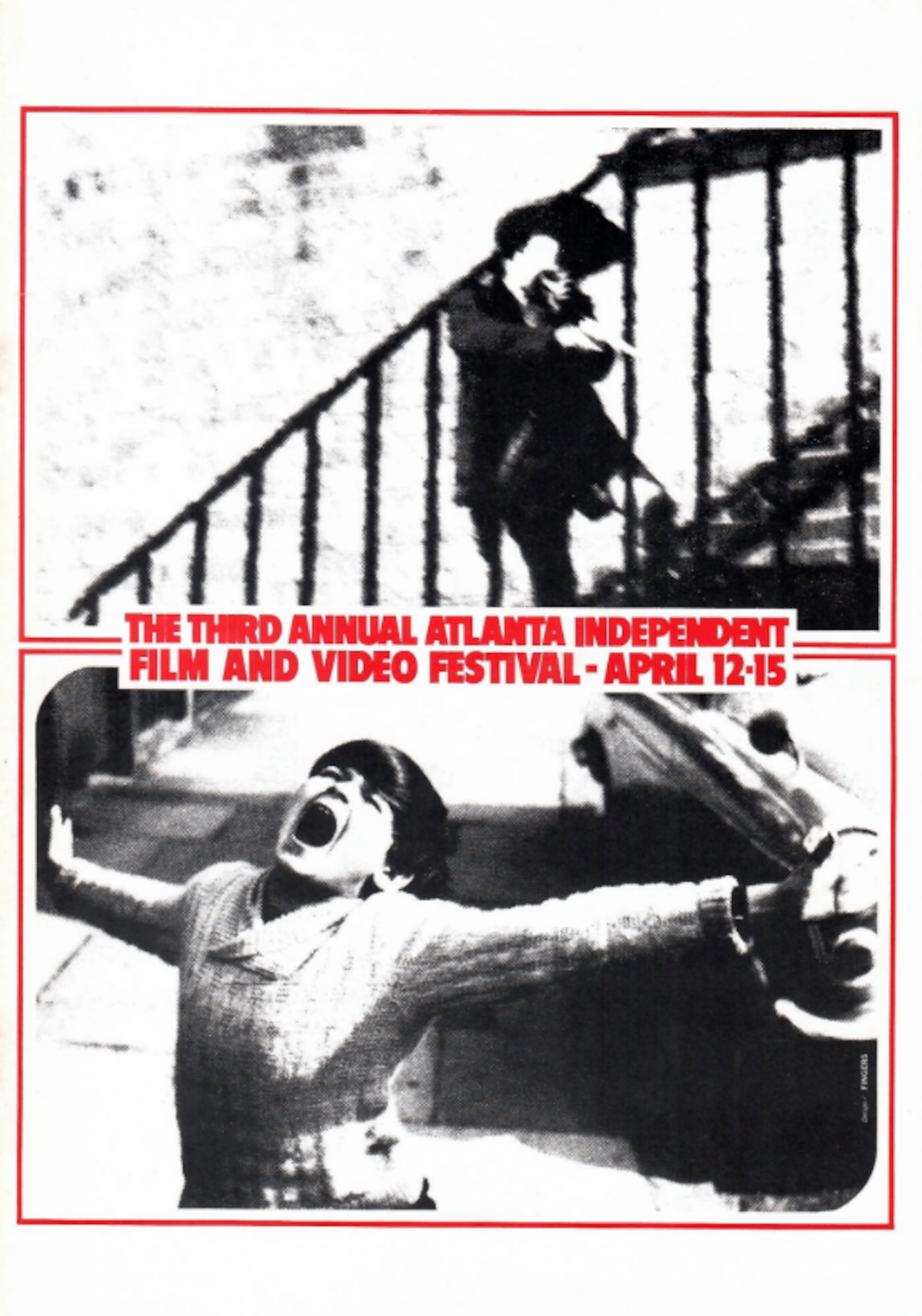
The festival has a long list of alumni.
Tom Quinn, co-founder of independent film production and distribution company Neon, helped program. Genevieve McGillicuddy, who spent more than 15 years with Turner Classic Movies and now directs the network’s TCM Classic Film Festival, served as director as the festival approached its 25th anniversary. Brian Newman, who went on to serve as CEO of the Tribeca Film Institute, also served as director.
A number of directors debuted early works at the festival, including David O. Russell, Robert Rodriguez, James Ponsoldt and Victor Nuñez. Actors Walton Goggins and Danielle Deadwyler are also alums, with the latter serving on the Atlanta Film Society’s board of directors.
“I think in many ways, we’re the watering hole,” Escobar said. “We’re not making these things happen. We’re making the context for where these things can happen.”
Looking ahead
There were some lean years during the festival’s history, owing partially to constant turnover in leadership. Escobar stepped in to lead the festival in 2012. In the years beforehand, there were 15 different people who held the job, he said. The average tenure was just under three years.
Tom Luse, a director and producer who served on IMAGE’s board in the 1980s, said it’s astonishing to see the festival has lasted this long and continues to grow.
“It’s remarkable that this little group of hippies got together and started showing movies in Piedmont Park, and it evolved into what it is now,” Luse said.
But the festival is having to adjust to financial changes. Corporate, philanthropic and public dollars for the festival are now at an all-time low, Escobar said.
Other festivals in the U.S. are facing the same challenge, with some shuttering or announcing hiatuses. Ebertfest, a film festival held annually in Champaign, Illinois, announced its 2026 event would be its last because of financial difficulties.
ATLFF’s budget in 2026 is down about $250,000 from its peak two or three years ago, accounting for about a quarter of its budget.
To make up for the shortfall, the Atlanta Film Society has had to make staffing cuts and reduce expenses, including the money allocated to fly filmmakers out and put them in hotels. It’s also not sending a team to Sundance, which it normally does every year.
“If it means we have less parties, if it means we can bring in less people, we may not have this budget or that budget, but we know at the very core of what we need to do, that can happen,” Escobar said.
This shift in funding is not a new challenge. When Escobar began overseeing the festival, it was sponsored by a dozen different television networks. But as the streaming era accelerated, the ownership of these networks became more concentrated and they began to shift their priorities elsewhere.
Plus, money coming from major local companies such as Spanx, Mailchimp and Turner started dwindling as they were acquired by out-of-state entities, Escobar said. The changes were partially offset by the growth of the film industry in Georgia, though it is now also in flux.
Public arts funding in Georgia has historically been low. For fiscal year 2026, Georgia ranks second-to-last out of states that provide funding to agencies supporting the arts, according to a report from the National Assembly of State Arts Agencies.
The festival would be in a different financial position if it weren’t housed at the Plaza and Tara, which Escobar took over in 2017 and 2023, respectively, at no cost. Negotiating rental fees at venues would be cost prohibitive.
To continue for another 10 and even 50 years, Escobar said the festival needs major investment from stakeholders in the city, both public and private. But it boils down to what the larger Atlanta community wants.
“Do we want to actually take advantage and reach our full potential? We’ve gotten a view of it,” Escobar said. “Or are we fine with this being a regional festival that has a great reputation of finding underseen talent that ultimately gets their big opportunities somewhere else?”
Correction
A photo caption has been updated to remove an incorrect movie from the 2000 festival.
About the Author

Savannah Sicurella is an entertainment business reporter with The Atlanta Journal-Constitution.