How Gulfstream turned a decades-long gamble into a new era of growth

SAVANNAH — Gulfstream Aerospace, the secretive company making some of the most elite planes in the world, has been on a journey, billions of dollars and nearly three-decades in the making.
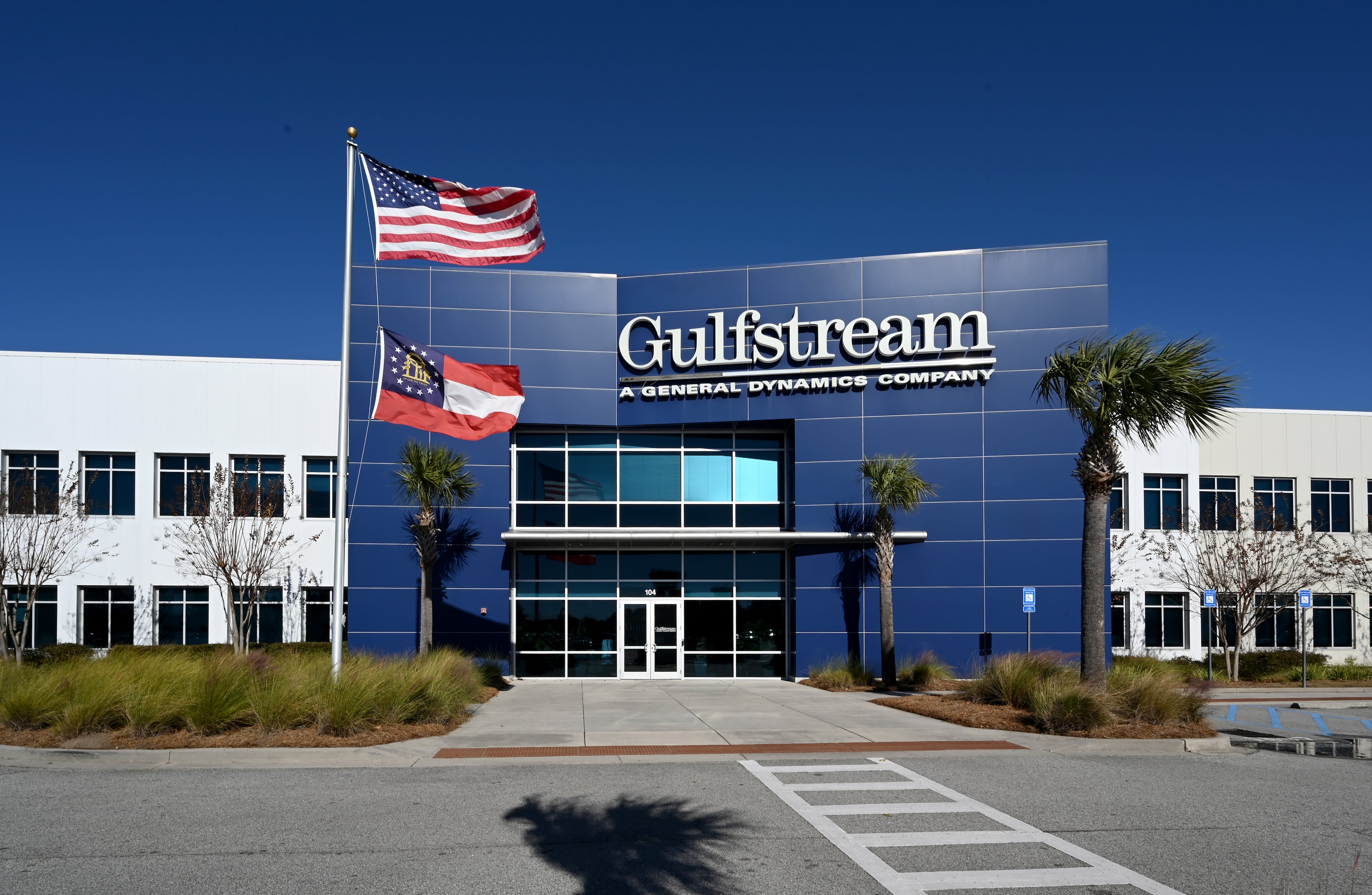
The business jet brand — long considered the industry’s gold standard — dates to the dawn of the jet age, and has been based along the Georgia coast since the late 1960s.
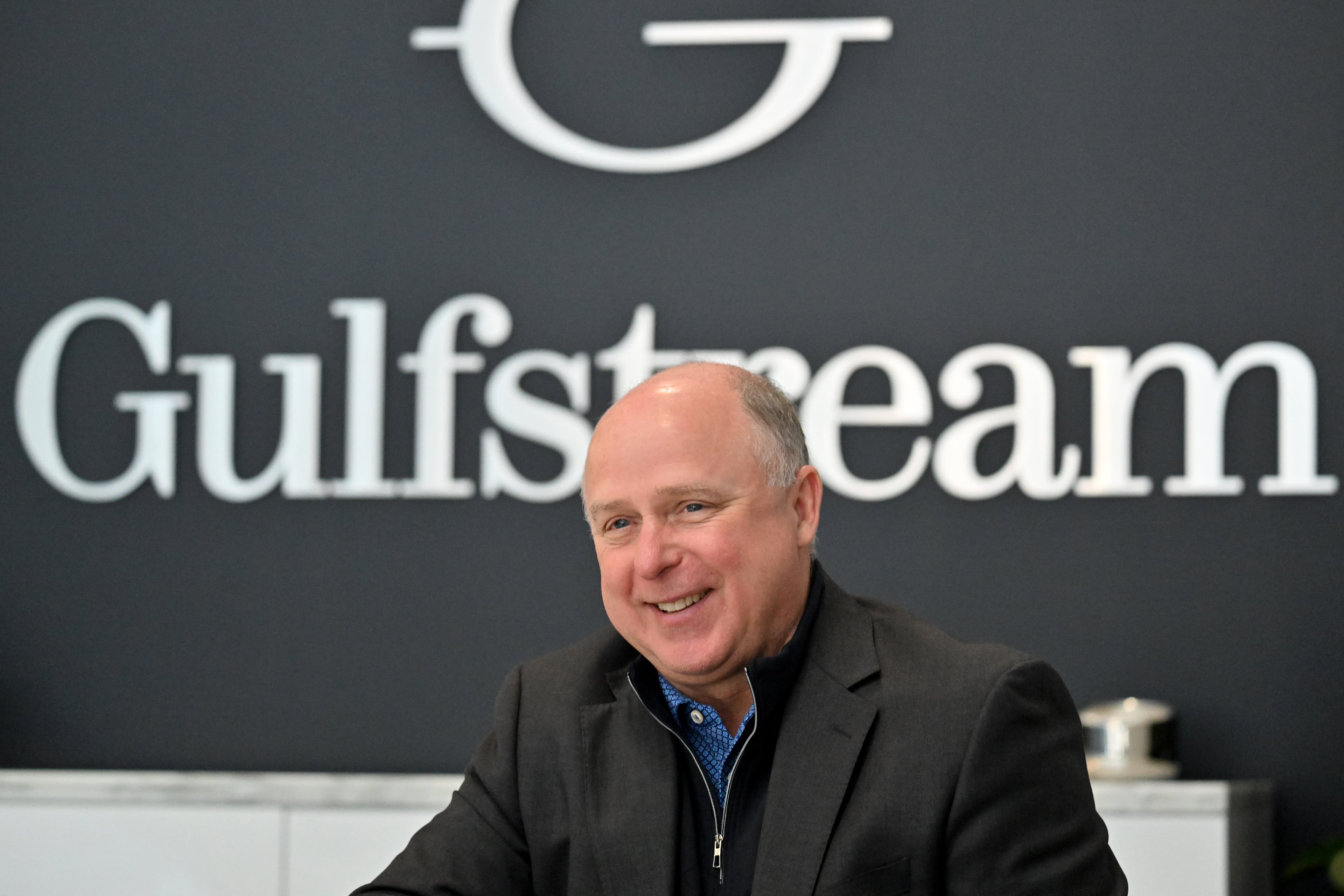
But since defense contracting giant General Dynamics acquired it 27 years ago, things have been “supercharged,” CEO Mark Burns told The Atlanta Journal-Constitution.
“When I started here in the early ‘80s, we just had enough to build one airplane,” he said. “And we kind of limped along for a number of years. We built great airplanes. We just didn’t have financial wherewithal.”
In 1999 General Dynamics acquired the Savannah firm for roughly $5 billion.
The parent company’s chairman, Nicholas Chabraja, predicted to The Washington Post at the time that “the changes under our stewardship would be more evolutionary than revolutionary.”
Gulfstream had a strong reputation, but only two longstanding airplane models with design roots in the 1960s and nearly 8,000 employees. It delivered 75 aircraft to customers in 1999.
Since then, an evolution has certainly occurred.

Gulfstream employs about 22,000 people worldwide, including more than 13,000 in coastal Georgia.
As of last fall, Gulfstream has six new aircraft designs out in the market. It delivered nearly 160 planes in 2025 and set a record of 38 more in the first quarter of this year, plus a backlog of orders worth more than $22 billion.
Georgia’s aerospace sector has risen along with Gulfstream.
Civilian aircraft and related parts were Georgia’s top export to the globe in 2025, according to the Georgia Department of Economic Development, totaling $16.4 billion.
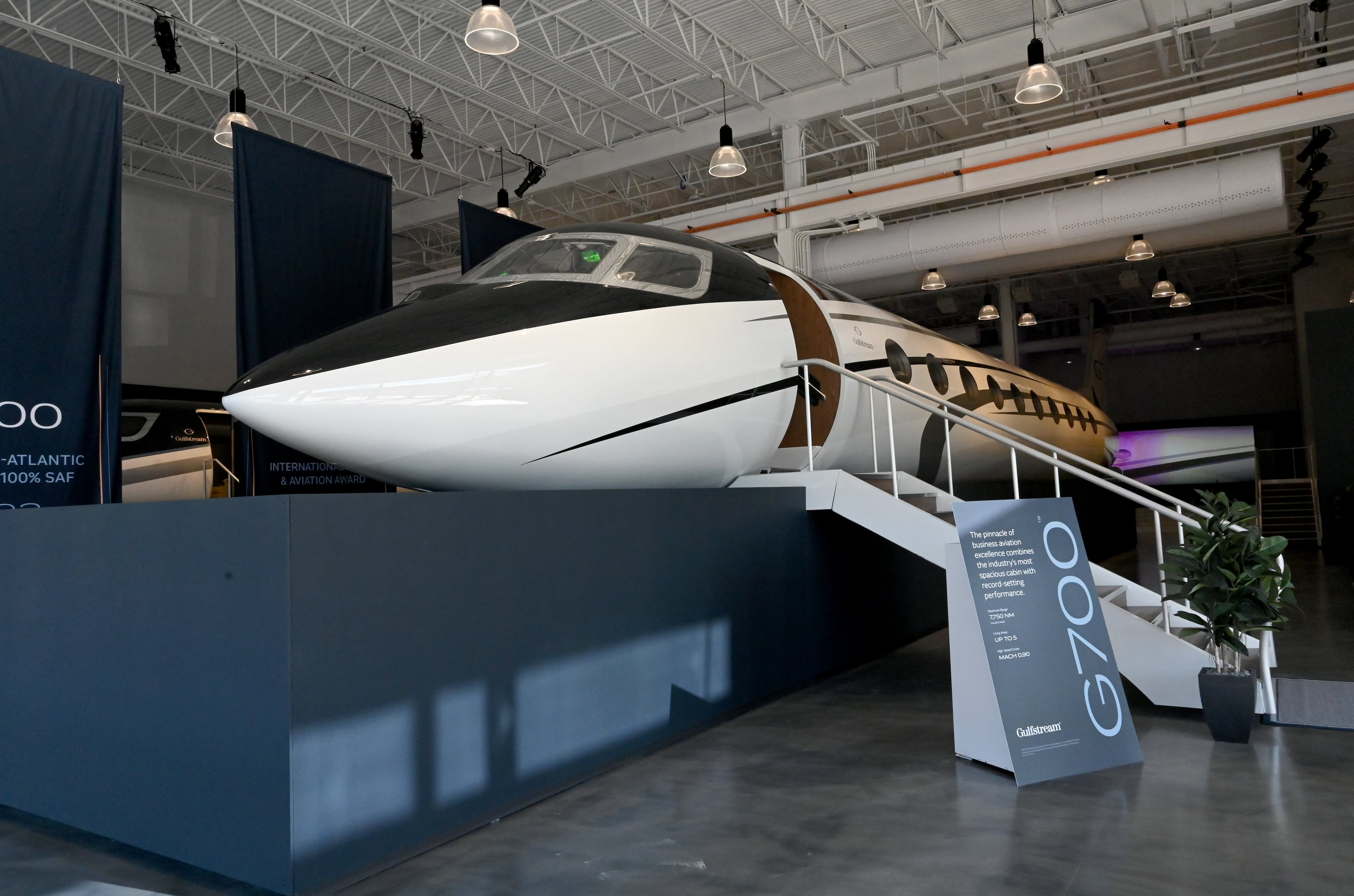
Gulfstream’s jets can be customized to the extreme, from luxurious custom interiors with upholstery, exercise bikes and crystal stemware to highly technical features for missions like the National Oceanic and Atmospheric Administration’s hurricane hunter.
Gulfstream has entered the zeitgeist as a status symbol lauded in pop music and films.
The company is also meeting a macroeconomic moment.
One of its core customer groups — high-net-worth individuals — is growing as global wealth disparity is projected to continue to increase 6% annually through 2030, according to a report from RBC Capital Markets.
Other customers include corporations and governments, including 70 in use by the U.S. government for various missions, said Scott Neal, senior vice president of worldwide sales.
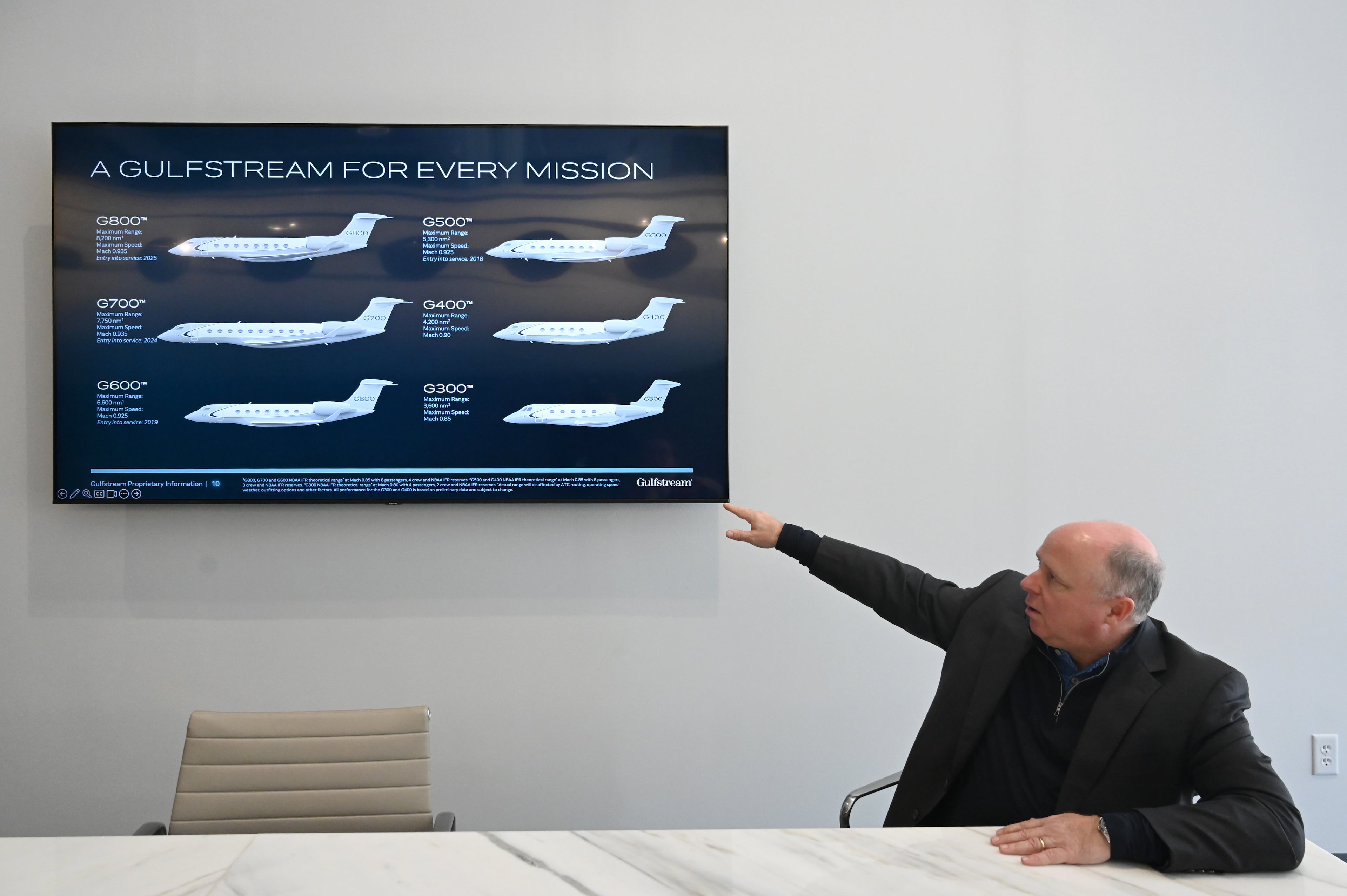
And the company’s present-day capability to offer what it calls “A Gulfstream for every mission,” roots back to that 1999 acquisition, Burns said. He took the company’s top job in 2015.
The long-term bet “really gave us the opportunity to have a bigger vision and aspiration for decades to come. And the success we’re having now with this current new generation of airplanes is enabling us to think about the future even further out.”
For the last decade, Neal said, an average of 35%-40% of sales has been to new Gulfstream customers.
“We’re the best we’ve ever been, but we’re at the doorstep of getting even better,” he predicted.
A new ‘family’
Designing aircraft from scratch is expensive and time-consuming. General Dynamics knew that.
“One of the first things that they talked about was the investment in the future, in R&D,” Burns recalled.
Neal estimated billions of dollars of investment were put into this evolution before a payoff.
Even during the 2008 recession and the COVID-19 pandemic the parent company stuck to the long-term vision, he recalled, “We didn’t stop. We kept plowing through and designing and certifying those airplanes.”

It was the G650, first delivered in 2012, that changed the game.
That same year Gulfstream also delivered the first G280, a smaller plane designed and built in coordination with Israel Aerospace Industries.
But the G650 in particular “was so successful, it gave us the opportunity to have a bigger vision,” Burns said.
The long-range plane capable of near-supersonic speeds set an around-the-world record in 2013, and yes, inspired the song “Like a G6.”
It helped the company make major inroads in the Middle Eastern market, where Neal said it is now the dominant market holder.
Gulfstream has continued adding new aircraft since: the G500, G600, G400, G700 and G800.
Last September marked the completion of the new “family” of aircraft when it unveiled the G300 to replace the G280, Neal said.
It is the smallest aircraft the company plans to make, though still capable of flying from Savannah to London nonstop.
At the other end of the range and price spectrum sits the G800, which replaced the 650 and was certified by the FAA last year. It can fly nonstop from Sydney to New York.
The G700, meanwhile, is the “largest business jet that’s available today,” Neal said. It can seat up to 19 passengers.
So why was it important to invest in all-new designs up and down the fleet? Because of what it unlocked, Neal said.
“It was time to introduce new technologies, a bigger cabin, more comfortable cabin, more safety technologies and more performance.”
They were able to introduce 100% fresh air cabin recirculation, and make the planes bigger and faster and more fuel efficient, he said.
Largest Savannah employer
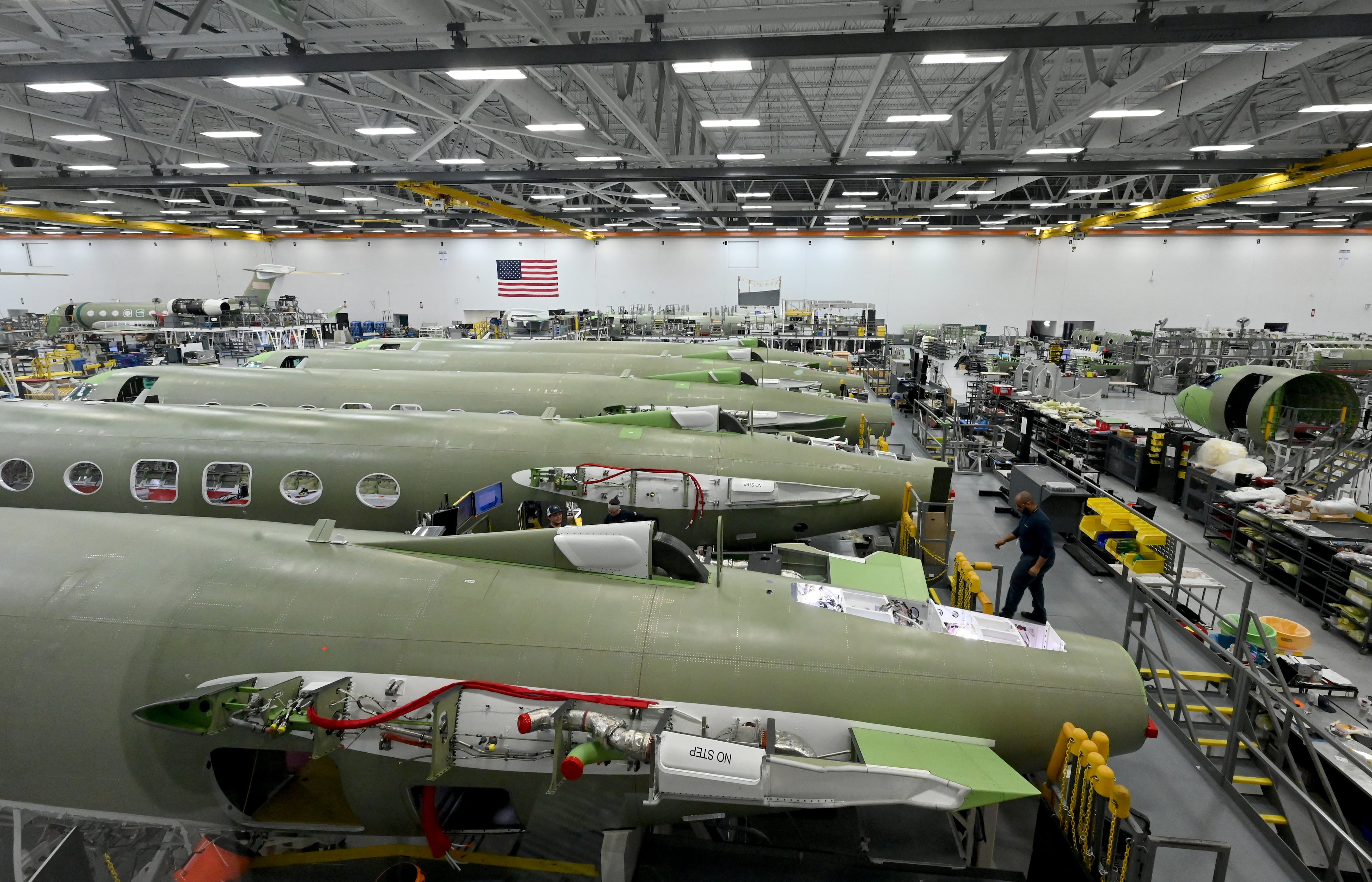
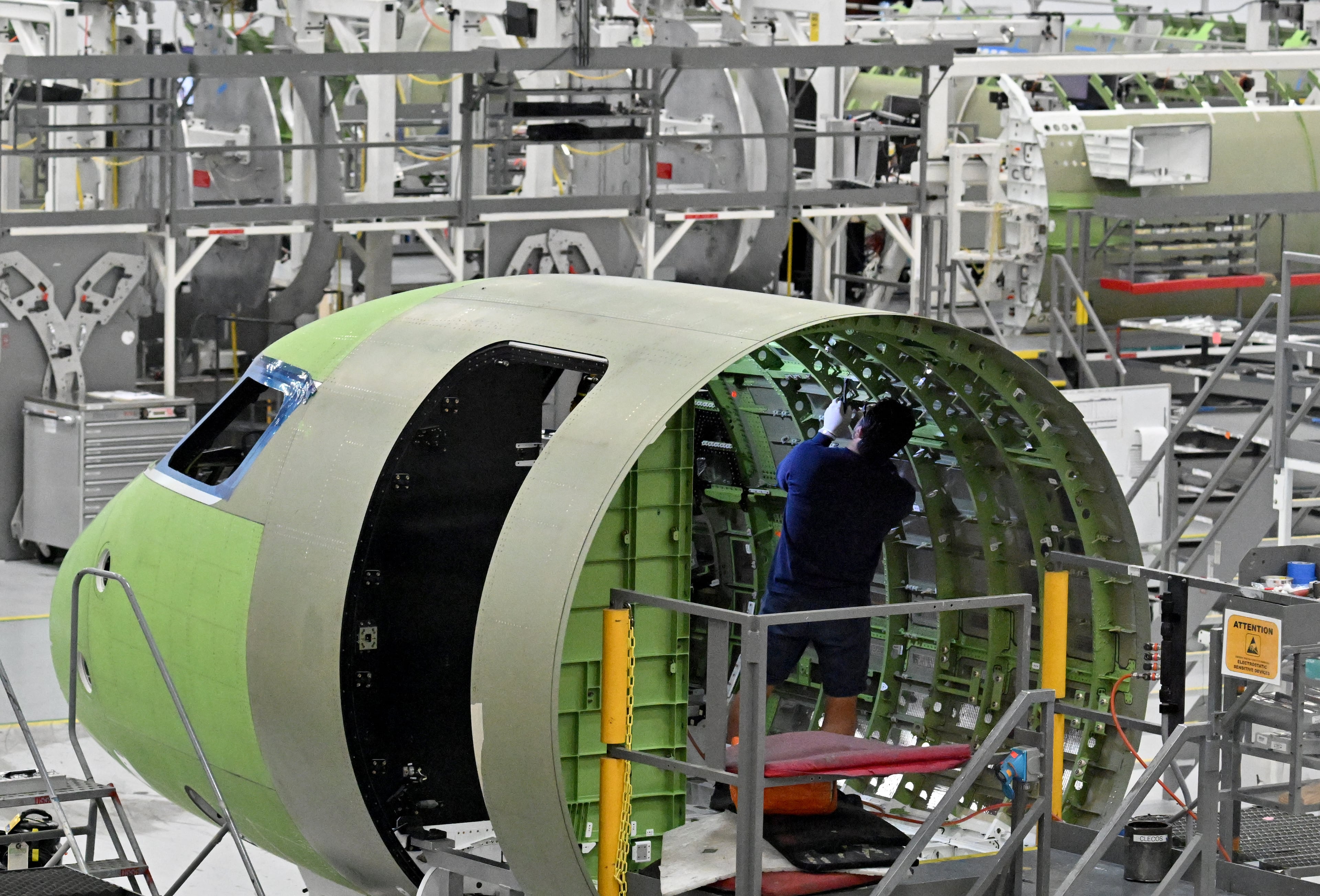
But the company couldn’t just redesign its aircraft. It also needed to be able to build them at unprecedented scale and speed.
Gulfstream has invested nearly $800 million on manufacturing facilities in recent decades, most prominently at its Savannah headquarters.
It is the largest private employer in the metro area with a sprawling nearly 500-acre campus that surrounds the city’s airport.
“The impact that they have on our economy is nothing short of miraculous,” said Trip Tollison, president and CEO of the Savannah Economic Development Authority.
The company offers good pay and benefits, he said, and is also the reason the region has six times the national average of aerospace engineers per capita. It has drawn Gulfstream suppliers to Savannah, too.
General Dynamics’ investment “does not go unnoticed here,” he said. And it has helped put Savannah on the map.
As he travels the world pitching the region as an economic development location, he said, “everybody wants to talk about Gulfstream.”
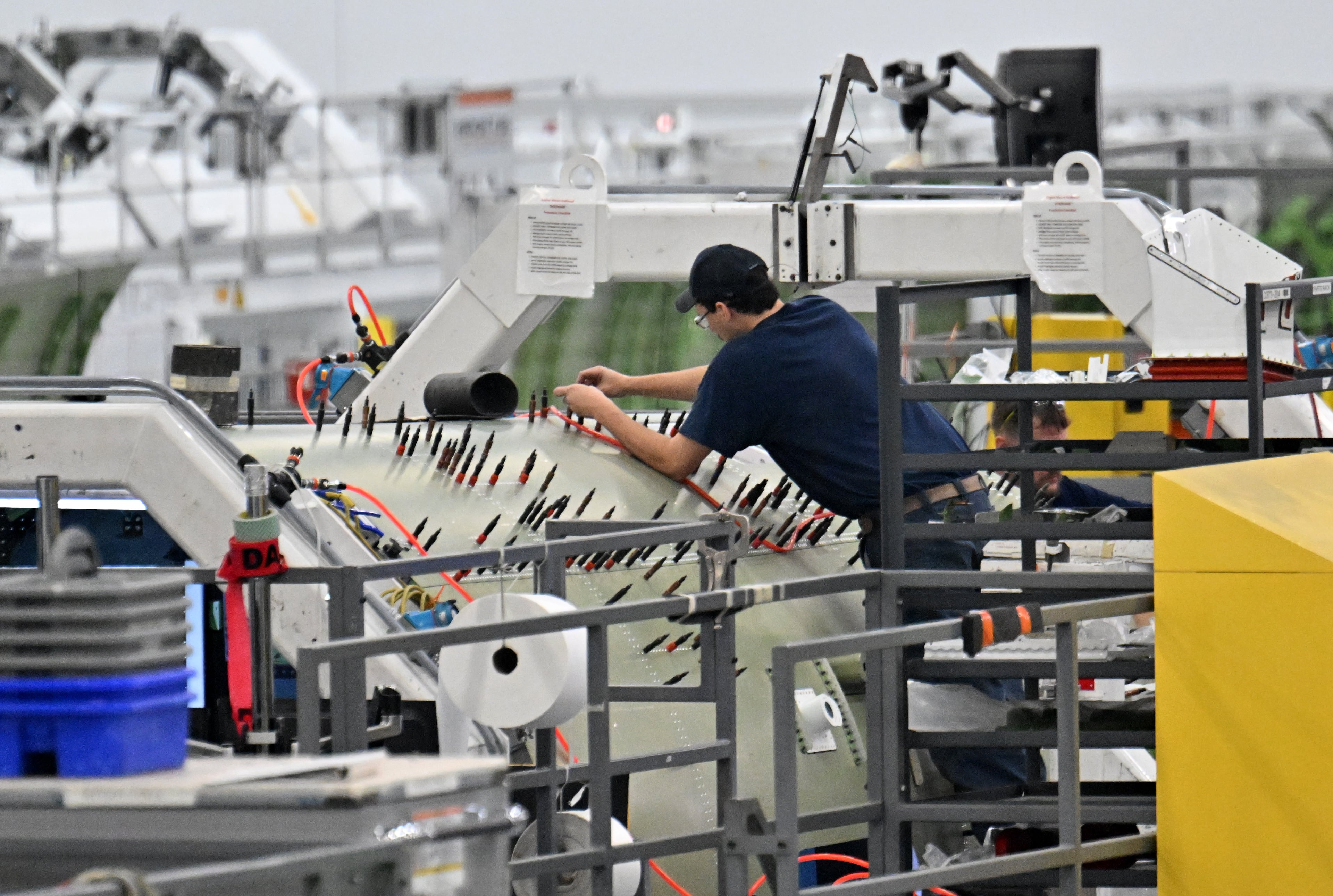
Gulfstream’s new “purpose-built” manufacturing lines feature robotics that enable workers to accomplish tasks in minutes that used to take days.
The company has boosted its recruiting in Savannah and built out programs that reach into middle and high schools, Neal said.
It brought manufacturing of its wings in-house in 2014, which “enabled us to keep pace with our growth plan,” Burns said.
“The large business jet manufacturers are doing very well,” said Adam Cowburn, managing director at Alton Aviation Consultancy specializing in business aviation.
“It’s still very much boom times. I think they’re mostly past a lot of COVID-related supply chain disruptions and manpower disruptions, which were slowing deliveries.”
Gulfstream also has several “completion centers” across the country where interior customization happens, as well as one in Switzerland it operates with sister company, Jet Aviation.
General Dynamics acquired the Swiss aviation services company in 2008.
Gulfstream’s service strategy
Jet Aviation also ties into another of Gulfstream’s long-term strategy: its global service network.
The company doesn’t want its relationship with a customer to end when it turns over the plane, and it services a large majority of the 3,500 Gulfstreams flying today.
Lor Izzard’s job is to make sure that ongoing relationship stays strong, by ensuring Gulfstream’s service network can address any issue that pops up, wherever or whenever it does.
“The airplanes go everywhere,” the company’s senior vice president of customer support said.
“So we have to have a solution that’s ready to service those airplanes everywhere.”
His team has grown to become about a fourth of Gulfstream’s total workforce, he noted.
That has meant expanding its service locations across the globe — including a half-dozen operated by Jet.
It has also involved growing Gulfstream’s mobile repair workforce of technicians ready to fly wherever at a moment’s notice.
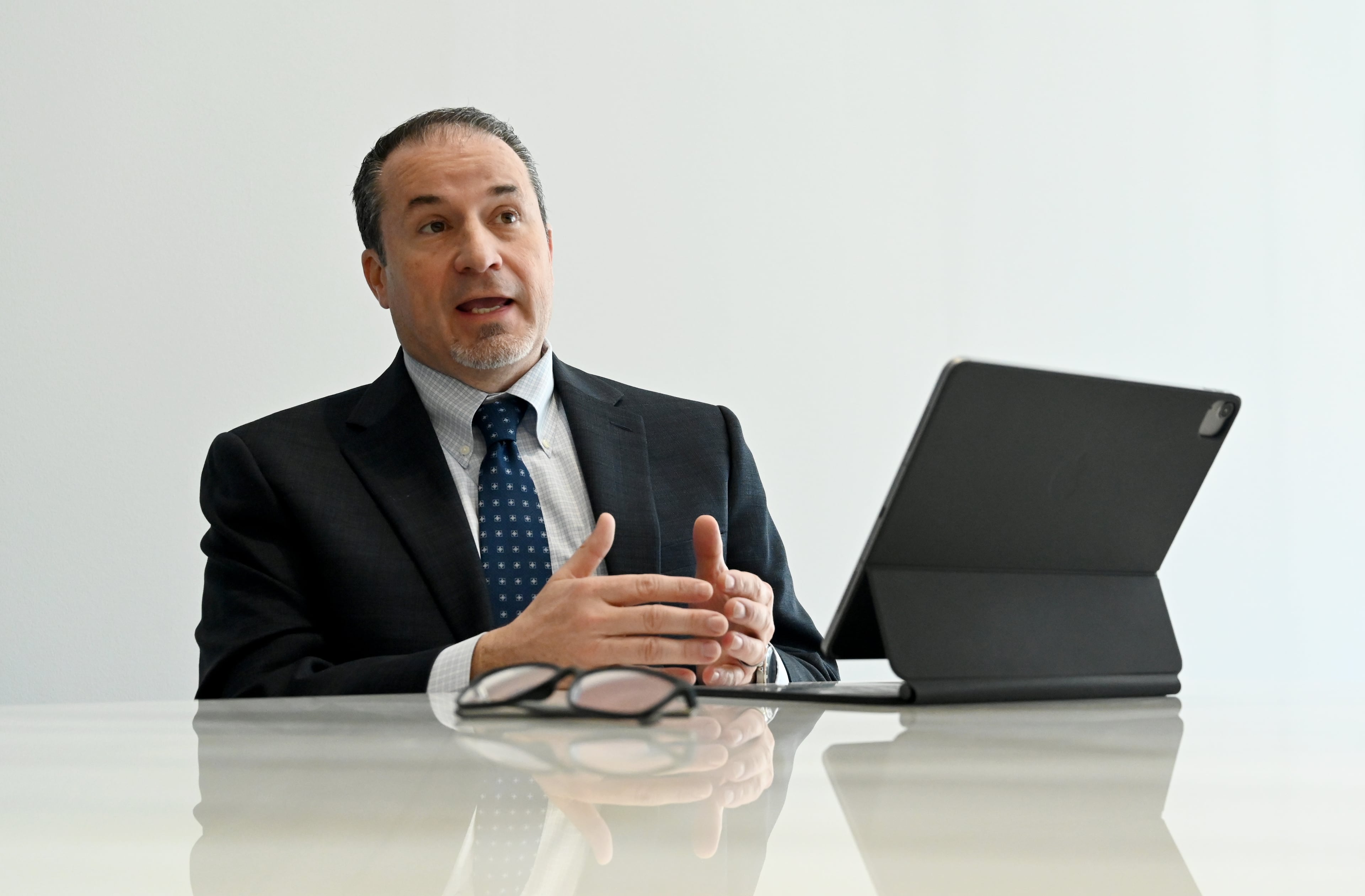
“Accommodating the service growth is accommodating a lot of the fleet growth that we’ve experienced,” said Jeannine Haas, Gulfstream’s chief marketing officer.
“You can’t have one without the other. We’ve made a long-term commitment, since the very first airplane that was delivered, that we would stand by our customer for the life of the aircraft.”
Gulfstream has grown its mobile repair workforce by more than 40% in a year and a half, Izzard said.
These more than 150 technicians are stationed strategically around the world based on where Gulfstream planes tend to fly.
They will preemptively place teams in Bozeman, Montana, for instance, for ski season, or on location for events like the Masters golf tournaments, he said.
It’s all part of “the battle for customer experience support,” Cowburn said.
“If you’re in Kazakhstan and you have an aircraft break, how fast they can help you recover that situation becomes a real defining point of our relationship with the (manufacturer).
“It’s equally as important as the hard products themselves,” he said.
What’s next?
The question of what’s ahead for Gulfstream is a closely-guarded secret.
But there are employees thinking about it, Neal promised, looking even 30 years out.
“We have teams within Gulfstream that meet continuously to try and define the future,” he said.
“It’s going to be less specific the farther out, but we’re always thinking about where we think technologies will be, where do we think (airspace) regulations will be.”
Geographically, Neal said Gulfstream is looking for growth in Europe and Southeast Asia.
Technology-wise, he noted Gulfstream has been public about its exploration of supersonic business aircraft, currently banned by the Federal Aviation Administration.
“Things like that, we continue to stay on top of,” Neal said.
“We’re always looking at what’s possible.”
— Staff writer Adam Van Brimmer contributed reporting.
About the Author

As a business reporter, Emma Hurt leads coverage of the Atlanta airport, Delta Air Lines, UPS, Norfolk Southern and other travel and logistics companies. Prior to the Atlanta Journal-Constitution she worked as an editor and Atlanta reporter for Axios, a politics reporter for WABE News and a business reporter for the Arkansas Democrat-Gazette.