Hear that? 30 songbird species welcome a new day in spring.
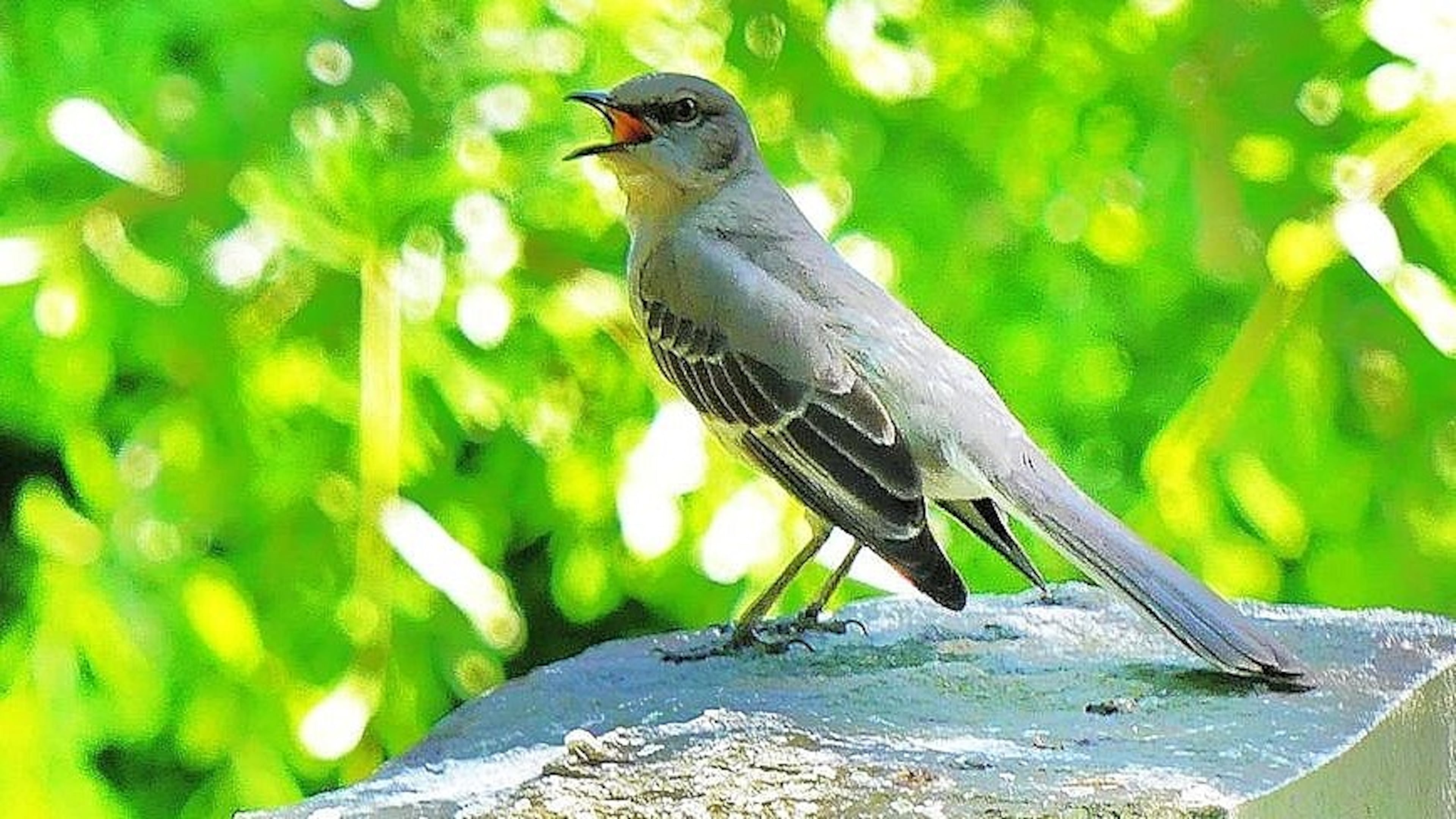
Heading into late April, bird nesting moves into high gear. With it comes a revving up of one of the most remarkable events of spring — the daily “dawn chorus,” when dozens of songbird species burst into spirited song well before daybreak.
After sunrise, many birds will sing only sporadically during the day. But at that magical time before the sun fully rises, all the birds are singing their little hearts out in unison, seemingly vying to outdo each other.
As early as 4 a.m., the daily songfest may crank up in woodlands, wetlands, meadows, city parks — or in your own yard. On an early morning in April, I like to linger in bed for a short time and listen to the exuberant singing flowing from the woods in back of my home in Decatur.
At the first thin streak of daylight, I can detect a range of vibrant, mnemonic melodies — the American robin‘s “cheerily cheer-up, cheerio”; the tufted titmouse’s loud “peter, peter, peter”; the northern cardinal‘s “what cheer, what cheer”; the Eastern towhee’s “drink your teaaaa”; the Carolina wren’s ringing “tea-kettle, tea-kettle”; the Eastern bluebird’s’ warbling “turr, turr-hee, turr-hee”; the Eastern phoebe’s hearty “fee-bee, fee-bee”; and on an on.
A large chorus of birds
Depending on the location and habitat, some 30 songbird species may be heard before the concert tapers off with the rising sun. Although males do most of the singing, females in a few songbird species also perform. Both male and female cardinals, for instance, sing.
The males sing, of course, to attract mates and defend territories. But I like to think that many of the creatures also belt out songs just for the pure joy of it. In any case, birdsong enriches our lives. “Thank you. God, for the birds that sing,” says a simple, well-known childhood prayer.
Scientists debate over why birds sing so vigorously before the sun comes up. One theory holds that the air is calmer then, allowing sound to travel farther. Another hypothesis is that birds spend most of the daylight hours foraging for food and have less time for singing.
Birds do sing in the evening, too, sometimes referred to as a “dusk chorus,” but it’s typically less intense, shorter, and less synchronized than the dawn chorus.
Enjoy it while it lasts
The choruses will reach a crescendo around mid-May and then gradually diminish. By late July, when nesting season is mostly over, many birds will cease singing altogether.
But until then, we can enjoy nature’s free symphonies. To add to your avian listening pleasure, here are some tidbits:
—It’s hard to imagine spring in Georgia without a singing mockingbird, the famed mimic that can imitate almost any sound, including vocalizations of other birds and animals. In “To Kill a Mockingbird,” author Harper Lee wrote: Mockingbirds “don’t do one thing but sing their hearts out for us.”
—When it’s raining, most birds stay quiet — except for the robin, which keeps singing even during a steady drizzle.
—With as many as 3,000 distinct song types, the brown thrasher, Georgia’s state bird, has one of the largest vocal repertoires of any songbird in North America.
—The wood thrush, a bird of mature woodlands, often is regarded as Georgia’s sweetest singing bird with its haunting, flutelike *ee-oh-lay” refrain. Henry David Thoreau said of the wood thrush: “This is the only bird whose note affects me like music. It lifts and exhilarates me.”
—The male red-eyed vireo continues singing incessantly even after the dawn chorus ends for the day. “It is the undisputed champion of vocal endurance in Georgia in spring and early summer,” say the authors of the book “Birds of Georgia.”
—The red-winged blackbird’s “oak-a-lee” song inspired Georgia’s beloved poet, Sidney Lanier, who also was an accomplished musician. His composition, “Black Birds,” mimics the bird’s song on the flute.
IN THE SKY: From David Dundee, retired Tellus Science Museum astronomer: The Lyrid Meteor shower peaks on Wednesday at about 20 meteors per hour — after dark and until dawn in the northeast. The moon is first quarter on Thursday (April 23) and full on May 1. Over the next two weeks, Mercury, Venus, Mars and Saturn can’t be easily seen. Jupiter is high in the west at dusk.
Charles Seabrook can be reached at charles.seabrook@yahoo.com.