Supreme Court ruling on race-based redistricting prompts quick action in some states
Before the words were even written on a Supreme Court decision striking down a majority Black congressional district in Louisiana, some states already were taking steps to respond to it.
Wednesday's ruling significantly limits the use of race when drawing voting districts, weakening a Civil Rights-era law that has boosted minority representation in Congress.
The decision came in the midst of a special legislative session in Florida that Republican Gov. Ron DeSantis had called for congressional redistricting on the assumption the Supreme Court would rule as it did. Mississippi’s Republican governor also already had announced a special legislative session, contingent on the court’s ruling.
Here's a look at how some states are responding to the ruling:
Florida
Hours after the Supreme Court's decision, Florida's Republican-led Legislature approved new U.S. House districts that could help the GOP win up to four additional seats in the November midterm elections.
DeSantis had called a special legislative session without knowing when the Supreme Court would issue its opinion in the Louisiana redistricting case. But DeSantis was pretty confident in how the court would rule.
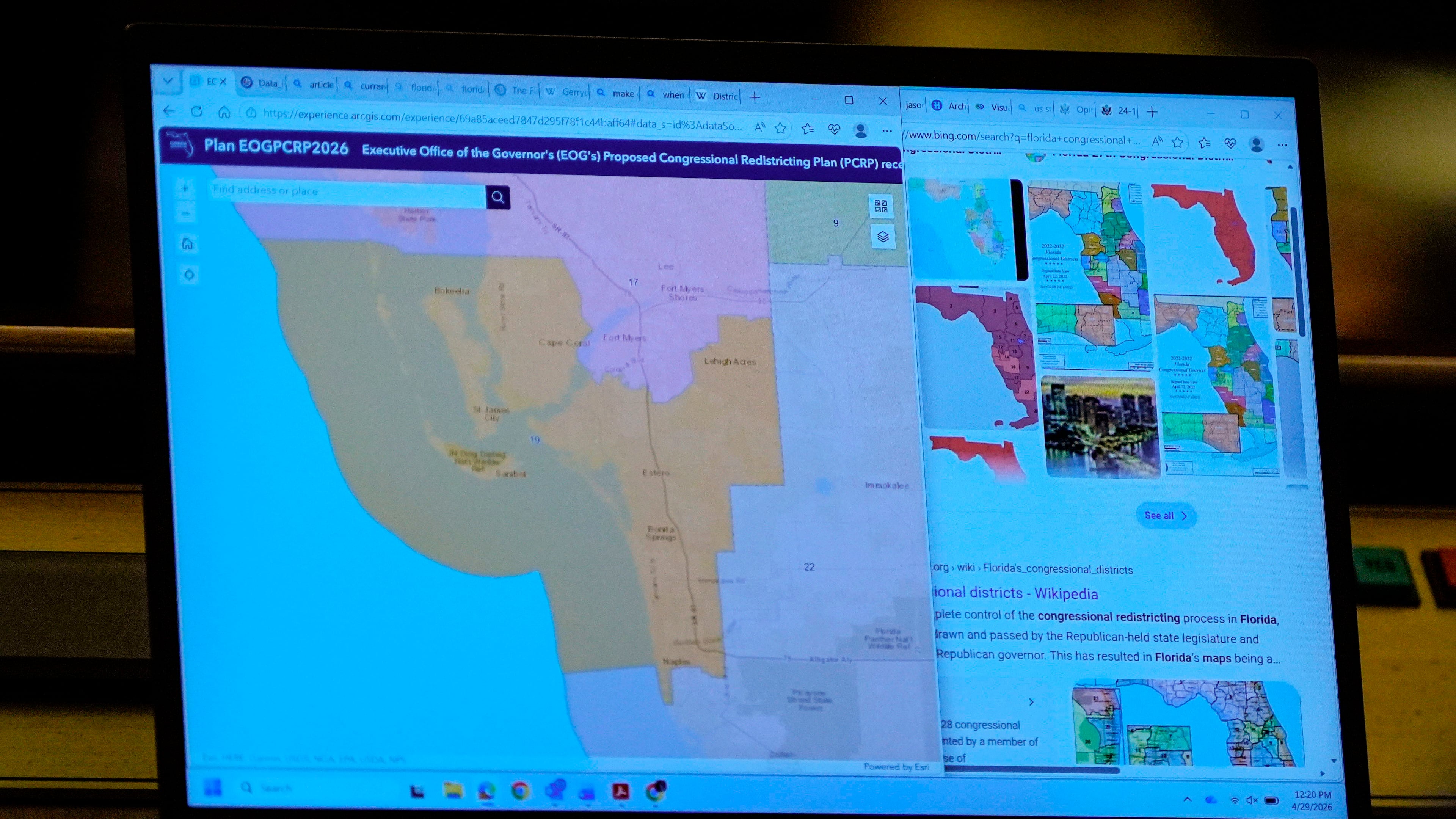
He unveiled a new U.S. House map on Monday that, among other things, redraws a southeastern Florida district that DeSantis said was created to help elect a Black representative in an attempt to comply with the federal Voting Rights Act.
"Properly understood, the Fourteenth Amendment forbids the government from divvying up the citizenry based in whole or in part upon race,” DeSantis wrote in letter Monday to lawmakers.
A Florida constitutional amendment approved by voters in 2010 prohibits districts from being drawn to deny or diminish the ability of racial or language minorities to elect the representatives of their choice. But DeSantis had said he considers that amendment a violation of the U.S. Constitution.
Whether that's true remains to be determined. The Supreme Court's decision does not automatically undo state constitutional protections against racial discrimination in voting districts, said Ruth Greenwood, director of the Election Law Clinic at Harvard Law School.
Mississippi
Late last week, Mississippi Gov. Tate Reeves, a Republican, announced he would call a special legislative session to redraw voting districts for the state Supreme Court. He said it would begin 21 days after the U.S. Supreme Court ruled in the Louisiana case.
A federal judge last year had ordered Mississippi to redraw its Supreme Court voting districts after finding that they violated Section 2 of the Voting Rights Act by diluting the power of Black voters. Mississippi lawmakers had been waiting on a decision in the Louisiana case before moving forward, but their legislative session ended earlier this month.
Reeves said in his proclamation that the U.S. Supreme Court's decision would provide guidance to lawmakers on whether “race-conscious redistricting” violates the U.S. Constitution.
Louisiana
State lawmakers last year voted to delay Louisiana's primaries from April 18 to May 16 to allow time to respond to a Supreme Court decision on the state's congressional districts, which were at issue in the case decided Wednesday. But it took longer for that decision to come than some lawmakers had anticipated.
Early voting is to begin Saturday. It was unclear Wednesday whether Louisiana's Republican-led legislature could attempt to redraw congressional districts ahead of the November general election.
House Speaker Phillip DeVillier and Senate President Cameron Henry said in a statement that they are reviewing the ruling and consulting with others “to “determine next steps to be taken in the best interests of Louisiana voters and our state.” Republican Gov. Jeff Landry also said he is speaking with leaders to figure out their options.
Alabama
A federal court in 2023 ordered the creation of a new near-majority Black district, which led to the election of Alabama's second Black representative in the U.S. House. Alabama is under a court order to use the new map until after the next census in 2030. But an appeal pending with the Supreme Court argues that the map is an illegal racial gerrymander.
Alabama Attorney General Steve Marshall praised Wednesday's decision in the Louisiana case. He said he will “act as quickly as possible to apply this ruling to Alabama’s redistricting efforts and ensure that our congressional maps reflect the will of the people, not a racial quota system the Constitution forbids.”
But that could still take awhile. The state’s primaries are set for May 19, and Republican Gov. Kay Ivey said the state is “not in position to have a special session at this time.”
Tennessee
The Tennessee General Assembly ended its annual session last week. But Republican U.S. Sen. Marsha Blackburn, who is running for governor, said on social media Wednesday that the Republican-controlled legislature should reconvene and redraw Tennessee’s only Democratic congressional district in favor of Republicans. The district currently centers on Memphis, which is majority Black.
Tennessee’s Republican House and Senate leaders said they are discussing the possibility of redistricting. But Senate Speaker Randy McNally said there are some obstacles to changing the districts. The candidate qualifying period ended in March, and the primary is in August.
“With the filing deadline passed and qualified candidates already running for election, redistricting congressional seats at this time would present several logistical challenges,” McNally said.
Illinois
Fearing the Supreme Court would undermine the Voting Rights Act, the Democratic-led Illinois House last week approved a proposed amendment to the state constitution adding protections for race-based redistricting.
The measure would make it a priority to draw legislative districts that ensure voters have the opportunity to elect representatives of their choice “on account of race.” The creation of “racial coalition or influence districts” — where the bulk of voters are minorities — would rank higher in priority than districts that are contiguous or compact.
But Senate President Don Harmon said Wednesday the amendment won't pass this session, to allow time for legal experts to review the court ruling.
“The last thing we want is to act in haste and risk unintended consequences down the road," he said. "Too much is at stake for too many.” ___
Lieb reported from Jefferson City, Missouri. Associated Press writers Kim Chandler in Montgomery, Alabama; Sara Cline in Baton Rouge, Louisiana; Jonathan Mattise in Nashville; and John O'Connor in Springfield, Illinois, contributed to this report.