US, Israel and Iran agree to a 2-week ceasefire but much remains unclear and some attacks continue

TEHRAN, Iran (AP) — Iran, the United States and Israel agreed to a two-week ceasefire in an 11th-hour deal that headed off U.S. President Donald Trump's threat to unleash a bombing campaign to destroy Iranian civilization. But hours after the announcement, Iran and Gulf Arab countries reported new attacks Wednesday.
It was not clear if the strikes would scuttle the deal, which U.S. Vice President JD Vance called “fragile.”
Even before the new attacks, much about the agreement was unclear as the sides presented vastly different visions of the terms.
— Iran said the deal would allow it to formalize its new practice of charging ships passing through the Strait of Hormuz, a crucial transit lane for oil. But the details were not clear, nor was whether ships would feel safe using it. It also was unclear whether any other country agreed to this condition.
— Pakistan, which helped to mediate the deal, and others said fighting would pause in Lebanon, where Israel has launched a ground invasion against the Iran-backed Hezbollah militant group. Israel said it would not, and strikes hit Beirut on Wednesday.
— The fate of Iran's missile and nuclear programs — the elimination of which were major objectives for the U.S. and Israel in going to war — also remained unclear. Trump said the U.S. would work with Iran to remove buried enriched uranium, though Iran did not confirm that.
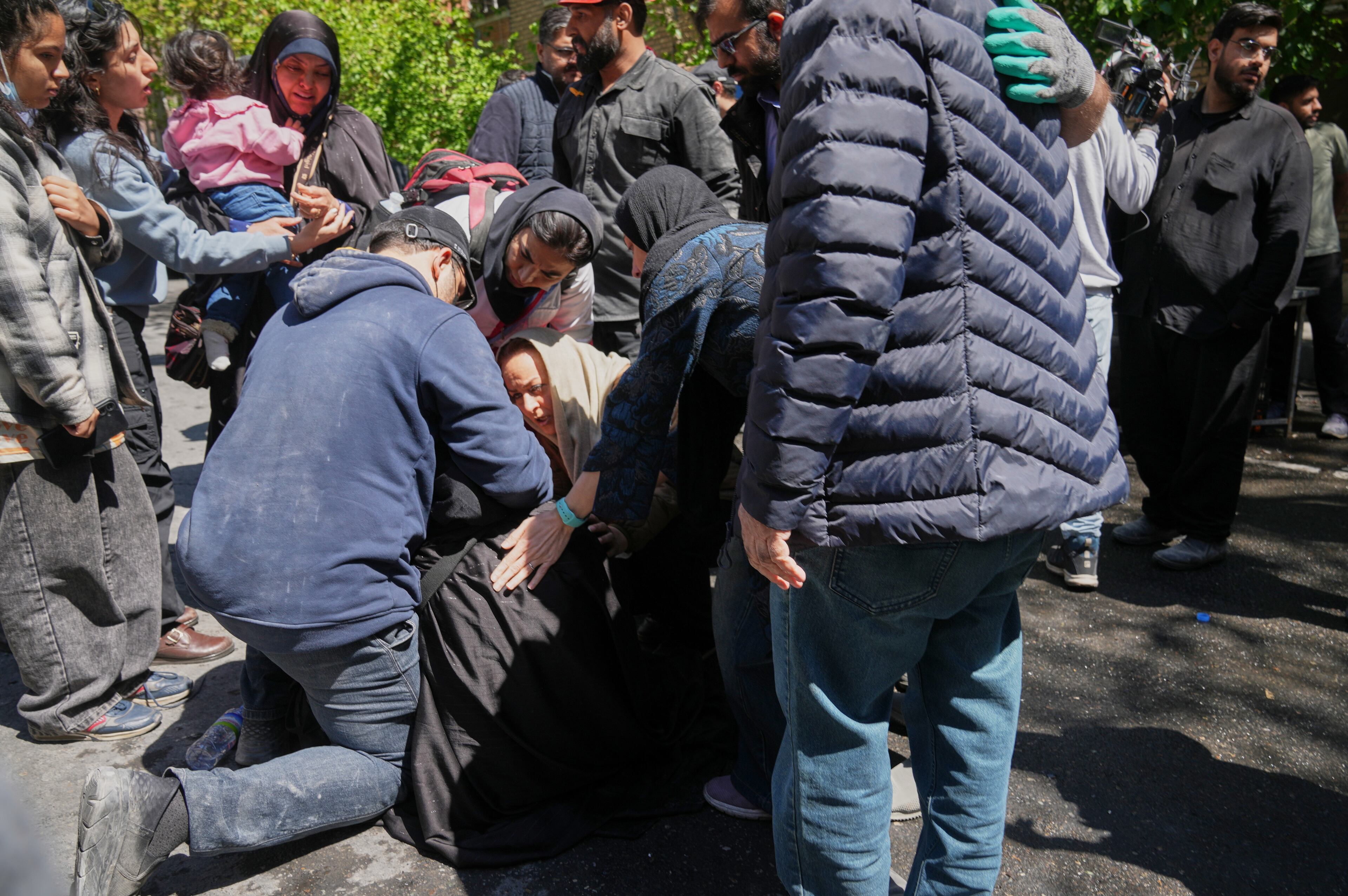
In the streets of Tehran, pro-government demonstrators screamed: “Death to America, death to Israel, death to compromisers!” after the ceasefire announcement and burned American and Israeli flags.
The chants underscored the anger animating hard-liners, who have been preparing for what many assumed would be an apocalyptic battle with the United States. Trump warned Tuesday that “a whole civilization will die tonight,” if a deal wasn’t reached.
Varying reports of ceasefire’s terms
Trump initially said Iran proposed a “workable” 10-point plan that could help end the war the U.S. launched with Israel on Feb. 28. But when a version in Farsi emerged that indicated Iran would be allowed to continue enriching uranium — which is key to building a nuclear weapon — Trump called it fraudulent without elaborating.
Vance later said the deal was being misrepresented within Iran, though he did not offer details.
Iran’s demands for ending the war include a withdrawal of U.S. combat forces from the region, the lifting of sanctions, and the release of its frozen assets.
In his post Wednesday, Trump said: “We are, and will be, talking Tariff and Sanctions relief with Iran.”
It’s not clear if other Western nations would agree to that — and the other points are likely nonstarters.
Pakistan said that talks to hammer out a permanent end to the war could begin in Islamabad as soon as Friday.
Israel backed the U.S. ceasefire with Iran, but Prime Minister Benjamin Netanyahu said early Wednesday that the deal does not cover fighting against Hezbollah.
Israeli Chief of Staff Lt. Gen. Eyal Zamir said Israel will continue to “utilize every operational opportunity” to strike Hezbollah. The Israeli military said it struck more than 100 targets within 10 minutes Wednesday across Lebanon, the largest wave of strikes since March 1.
Loud booms could be heard throughout Beirut, and smoke rose from several points. It was not immediately clear what was targeted.
Hezbollah has not confirmed if it will abide by the ceasefire, though the group has said it was open to giving mediators a chance to secure an agreement. An official, speaking on condition of anonymity because he was not authorized to comment publicly, said the group would not stop firing at Israel unless Israel agreed to do the same.
Iran and Oman will collect shipping fees in Strait of Hormuz
While Iran could not match the sophistication of U.S. and Israeli weaponry or their dominance in the air, its ability to control the Strait of Hormuz since the war began proved a tremendous strategic advantage: Iranian attacks and threats deterred many commercial ships from passing through the waterway, through which 20% of all traded oil and natural gas passes in peacetime.
That has roiled the world economy and raised the pressure on Trump both at home and abroad to find a way out of the standoff.
The ceasefire may formalize a system of charging fees in the strait that Iran instituted — and give it a new source of revenue.
The plan allows for both Iran and Oman to charge ships, according to a regional official who spoke on condition of anonymity to discuss negotiations they were directly involved in. The official said Iran would use the money it raised for reconstruction.
That would upend decades of precedent treating the strait as an international waterway that was free to transit and will likely not be acceptable to the Gulf Arab states, which also need to rebuild after repeated Iranian attacks targeting their oil fields.
Iranian Foreign Minister Abbas Araghchi said passage through the strait would be allowed under Iranian military management — further clouding the picture of who would be allowed to transit the waterway.
News of the ceasefire sent stock markets surging worldwide, and oil prices plunged back toward $90 per barrel.
Fate of Iran’s nuclear and missile programs remains unclear
U.S.-Israeli strikes have battered Iran and its leadership, but they have not entirely eliminated the threats posed by Tehran's nuclear program, its ballistic missiles or its support for regional proxies, like Hezbollah. The U.S. and Israel said addressing those threats was a key justification for going to war.
Trump said Wednesday that the U.S. would work with Iran to “dig up and remove” enriched uranium that was buried under joint U.S-Israeli strikes in June. He added that none of the material had been touched since. Any retrieval is expected to be an intensive undertaking.
There was no confirmation from Iran on that.
Defense Secretary Pete Hegseth told a Pentagon briefing Wednesday that the U.S. would do “something like” last June's joint strikes with Israel on Iranian nuclear sites if the country refuses to surrender its enriched uranium voluntarily.
Tehran insisted for years that its nuclear program was peaceful, although it enriched uranium up to 60% purity, a short, technical step from weapons-grade levels.
Iran referred to its nuclear program differently in two versions of the ceasefire plan that it released. The version in Farsi included the phrase “acceptance of enrichment” for its nuclear program. That phrase was missing in English versions shared by Iranian diplomats with journalists.
Hegseth said the U.S. military has done its part “for now” but stands ready to ensure Iran complies all the ceasefire's terms.
Gen. Dan Caine, chairman of the U.S. Joint Chiefs of Staff, said more than 13,000 targets have been struck in Iran, destroying 80% of the country's air defense systems and attacking 90% of its weapons factories.
More than 90% of Iran’s regular naval fleet has been sunk, “including all major surface combatants” with 150 ships now “at the bottom of the ocean,” Caine told reporters at a Pentagon briefing.
Airstrikes reported in the hours after the deal is announced
Shortly after the ceasefire announcement, Bahrain, Israel, Kuwait, Saudi Arabia and the United Arab Emirates all issued warnings about incoming missiles from Iran. That fire stopped for a time, then hostilities appeared to restart.
An oil refinery on Iran’s Lavan Island came under attack, according to Iranian state television. Its report said that firefighters were working to contain the blaze but no one had been hurt. It did not say who launched the attack.
The island is home to one of the terminals that Iran uses to export oil and gas.
A short time later, the United Arab Emirates’ air defenses fired at an incoming Iranian missile barrage. Kuwait’s military forces, meanwhile, responded to an “extensive wave” of drone attacks.
Kuwaiti authorities said three power and water desalination plants have been severely damaged after 28 Iranian drones were launched on the oil-rich country Wednesday.
More than 1,900 people had been killed in Iran as of late March, but the government has not updated the war’s toll for days.
In Lebanon, where Israel is fighting Iran-backed Hezbollah militants, more than 1,500 people have been killed. and 1 million people have been displaced. Eleven Israeli soldiers have died.
In Gulf Arab states and the occupied West Bank, more than two dozen people have died, while 23 have been reported dead in Israel, and 13 U.S. service members have been killed.
___
Gambrell reported from Dubai, United Arab Emirates, Magdy from Cairo and Metz from Ramallah, West Bank. Associated Press writers Edie Lederer at the United Nations, Natalie Melzer in Jerusalem, Abby Sewell and Sarah El Deeb in Beirut, Mike Catalini in Trenton, N.J., and Michelle L. Price, Aamer Madhani and Joshua Bloak in Washington contributed to this report.
More Stories
The Latest