85-year-old French widow caught in Trump's immigration crackdown describes her detention
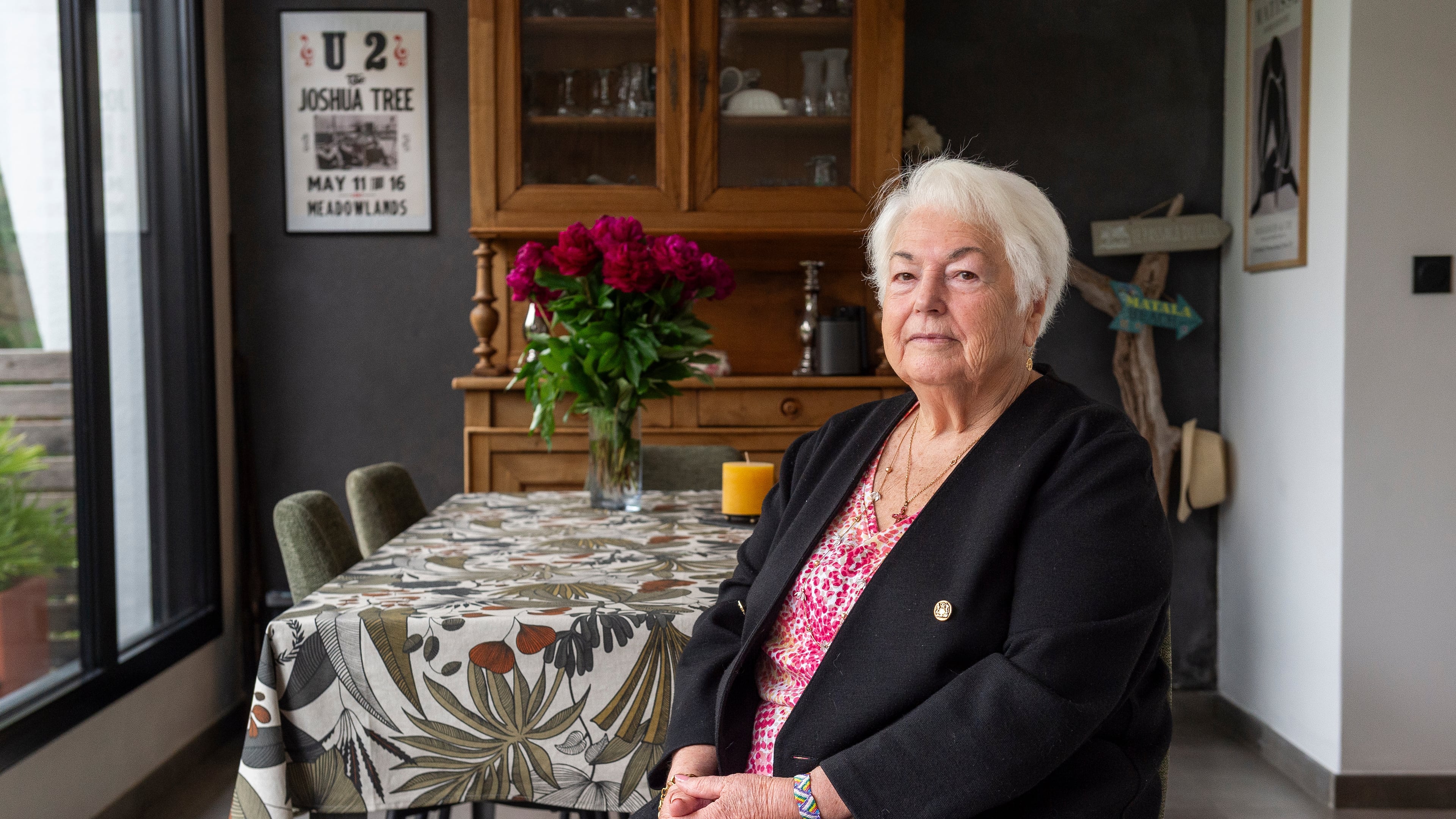
ORVAULT, France (AP) — At night, silence fell over the Louisiana immigration detention facility where 85-year-old Marie-Thérèse Ross was held. Then the wailing began.
’’Children crying, and even babies,” said Ross, the French widow of a U.S. military veteran, whose arrest last month as part of the Trump administration’s i mmigration crackdown made international headlines.
Ross spoke to The Associated Press on Monday about her 16 days in federal immigration custody after being arrested on April 1 in Alabama following an alleged visa overstay, and the late-in-life love story that brought her to the United States. She has been released and returned to France.
The experience in detention, she said, changed her, and her view of politics.
She was held in a dormitory-style room with 58 other women, mostly mothers. ‘’Some of them didn’t know where their children were,'' she said. ‘’I think it’s terrible for a woman not to know where her children are.”
Her arrest in Alabama unfolded so quickly that she barely understood what was happening. Five men, who identified themselves as immigration officers, banged on her door and windows at 8 a.m. before handcuffing her and placing her in a vehicle, she said. She was still wearing her bathrobe, slippers and pajamas.
She was transferred two days later to a facility in Basile, Louisiana. Later that month, she was freed. She is now recovering in a suburb of Nantes in western France with her family. French Foreign Minister Jean-Noel Barrot had publicly called for her release, saying that U.S. Immigration and Customs Enforcement methods are “not in line” with French standards.
Ross had entered the U.S. to start a new life with William B. Ross, a retired U.S. soldier she had met when he was stationed in France in the 1950s and she was a secretary at NATO.
Between 1962 and 2022, they stayed in touch via William's wife, who was friends with Marie-Therese. “After we both became widowed, we decided to spend holidays together,'' Marie-Therese Ross said. ‘’Then feelings came back, and we decided to marry last year.'' She crossed the Atlantic and moved in with him in Anniston, Alabama.
After he died of natural causes in January, a dispute emerged over his estate.
His sons rerouted mail from the Alabama residence, leading their stepmother to miss an immigration-related appointment, an Alabama judge noted in a court order. The judge accused one son — a former Alabama State Trooper who now works as a federal employee — of using his position to prompt the detention of his stepmother, and urged a federal investigation into what happened.
The stepson denied involvement in her arrest. Marie-Therese described warm relations with William's sons before he died. After his death, she said, they ‘’transformed.''
The U.S. Department of Homeland Security said Tuesday that Ross overstayed her 90-day visa and that U.S. Immigration and Customs Enforcement detention facilities are “regularly audited and inspected” to comply with national standards.
“All detainees are provided with proper meals, quality water, blankets, medical treatment, and have opportunities to communicate with their family members and lawyers. ICE has higher detention standards than most U.S. prisons that hold actual U.S. citizens," the department said.
At the detention facility in Louisiana, Ross described strict rules, constant shouting from guards and condescending treatment.
“The prison was clean, the food was OK, but it was the way they spoke to us,” she told the AP. “The guards could not speak without yelling.”
She described the place as noisy. ’’Everybody was talking loudly so everybody could hear what they were saying, but when silence came, you could hear children crying and even babies crying,″ she said. ’’There’s babies in this jail.″
Despite the conditions, Ross described moments of solidarity among detainees. “During the night, if my bed cover slipped away, I felt a small hand putting it back,” she said. “I didn’t know who it was, but they pampered me because I was older than them.”
She said the women called her “Grandma.” She kept a handmade friendship bracelet given to her by another detainee, woven from strips of colored plastic, a gift she wears today.
Family members said Ross is still struggling with memory gaps and emotional distress following her detention. She said she wants to seek medical follow-up in France to address symptoms consistent with post-traumatic stress and is receiving support.
Ross said she continues to think about the women she met in custody, most of them from South America. Many were mothers separated from their children.
Her experience changed the way she sees the United States and its immigration policies, Ross said. Her husband was a Trump supporter and they used to watch Fox News together. But she was shocked to learn firsthand how immigrants are treated inside immigration facilities.
She used to view the U.S. as a “country of freedom, where people are not arrested based on how they look, and where those who are detained are treated fairly and with respect.” But the women she met did not deserve to be detained, she said. “Their only fault was to be South American.”
As she recovers in France, Ross still thinks about them: “When I left this jail in Louisiana, I told them that if I ever had the chance to speak about them, I would do it, to help them.”