Board of Peace envoy Mladenov says ceasefire hinges on Hamas' disarmament
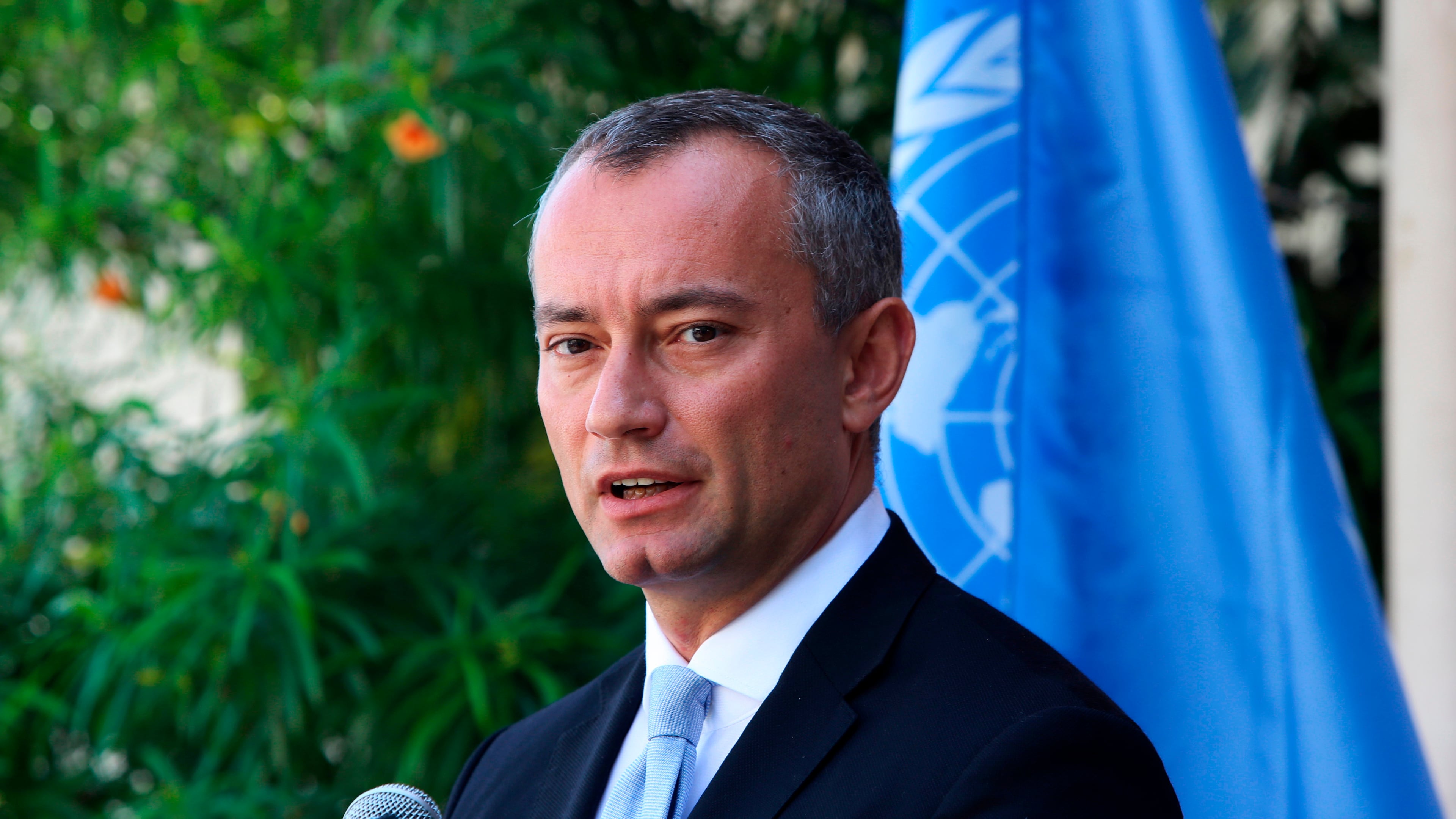
JERUSALEM (AP) — Nickolay Mladenov, the top diplomat overseeing the U.S.-brokered ceasefire in Gaza, on Wednesday acknowledged that the truce was stalled, saying the deadlock over disarming Hamas had paralyzed reconstruction of the war-battered territory.
Mladenov expressed frustration with the status quo that has emerged since the ceasefire was reached last October and said his office is addressing violations by both sides on a daily basis. But he repeatedly cited the disarmament issue as a central sticking point, saying Hamas' obligation to give up its arsenal is “not negotiable” and that progress on all other issues — including reconstruction, Israeli troop withdrawals and the establishment of a new Palestinian government — was being held up.
“You cannot build a future with armed groups running the streets, hiding in tunnels and stockpiling weapons. You cannot deliver reconstruction with militias on every corner,” Mladenov told foreign reporters in Jerusalem. He did not say what was planned if Hamas does not disarm, but warned that without it, Gaza faced a future of prolonged “misery.”
President Donald Trump's 20-point ceasefire plan calls on Hamas to surrender its weapons and destroy its tunnels. The truce also envisions Israeli forces withdrawing, the arrival of a new technocratic Palestinian government along, deployment of an international security force, and rebuilding destroyed swaths of the Palestinian territory after more than two years of war.
The Palestinian militant group has sought to link any demilitarization to Israeli troop pullbacks. Israel’s military remains in control of more than half of Gaza.
“The only way that we believe that we can ensure that Israeli withdrawal takes place to the perimeter is if we have the full elements of the plan unfolding in Gaza,” Mladenov said, speaking after a meeting in Jerusalem with Israeli Prime Minister Benjamin Netanyahu.
Rights group says Israel has pushed deep into Gaza
Mladenov stated plainly that the plan envisioned in the ceasefire was off to a rocky start. He also said conditions remain dire and miserable, where nearly all of the territory's 2 million people have been displaced. Many remain in tent camps lacking basic services.
“Seven months since the ceasefire, the door to the future of Gaza is still closed," he said. "It is not what the Palestinians were promised, and it is not what they deserve. And it is not giving Israel the security to move forward, as the Israeli people also want.”
He accused both sides of violating the ceasefire but said it had mostly held and staved off the return of full-scale war.
The ceasefire gave Israeli military control of half of Gaza east of a “yellow line,” hemming Palestinians into squalid tent camps along the beach where rights groups say food, water, and healthcare are in short supply, and rodent infestations are spreading disease.
Israel’s military has pushed deeper into Gaza, now controlling more than they were granted under the agreement. About 53% of Gaza lies behind the yellow line established in the agreement, but the Israeli rights group Gisha said in a Wednesday report that the military has also claimed “coordination control,” or control of aid groups’ movements, over an additional 11% of the territory in March.
The U.N. agency for Palestinian refugees, UNRWA, says that 10 facilities, including emergency shelters, are now off-limits.
Israel also has stepped up its attacks in Gaza since the U.S.-Iran ceasefire took effect last month, and many Palestinians fear a return of more airstrikes and full-scale war may be imminent.
U.S. officials, including Jared Kushner, have tied virtually every step forward in Gaza to Hamas disarming, unveiling glossy blueprints and mock-ups for the territory’s future. But they, too, have said much less about what happens if Hamas refuses or about the prospect of Gaza hardening into a landscape of indefinite ruin without reconstruction.
Mladenov said the Board of Peace has translated Trump’s original plan into a 15-point “detailed implementation roadmap” that has been discussed with Hamas representatives in Cairo many times. He said two versions of the proposal were presented to Hamas, the second “revised explicitly to address the questions and concerns that the Palestinian factions raised in our discussions.”
He did not say what the status of the proposal was.
Disarmament has remained a thorny element of the ceasefire.
Hamas has said repeatedly it is willing to hand over government power to the committee. Rather than immediately disarm, Hamas has said an interim administration, including a police force, is needed to restore order in parts of Gaza under its control until a technocratic committee takes over. Israel, meanwhile, has struck police stations and officers since the ceasefire, viewing them as instruments of Hamas rule.
Hamas has also been reluctant to give up its arsenal, including rockets, anti-tank missiles, and explosives. The group has sought to differentiate between heavy weapons, such as rockets, and light weapons like rifles and pistols, Hamas officials and mediators say, speaking on condition of anonymity to discuss the negotiations.
Mladenov said that Hamas is “consolidating its grip” on parts of Gaza it controls, imposing taxes on residents and blocking relief efforts to build temporary housing for displaced people. “To what end?” he asked. “To squeeze better terms of a negotiation?”
He also said that he could envision a role for Hamas in postwar Gaza if it disarms.
“We are not asking Hamas to disappear as a political movement,” Mladenov said. “A political party that disavows armed activity can compete in national Palestinian elections.”
Israeli leaders have said they want to destroy the militant group that has governed Gaza for two decades and orchestrated the attack on Israel on Oct. 7, 2023, killing some 1,200 people and taking 251 as hostages.
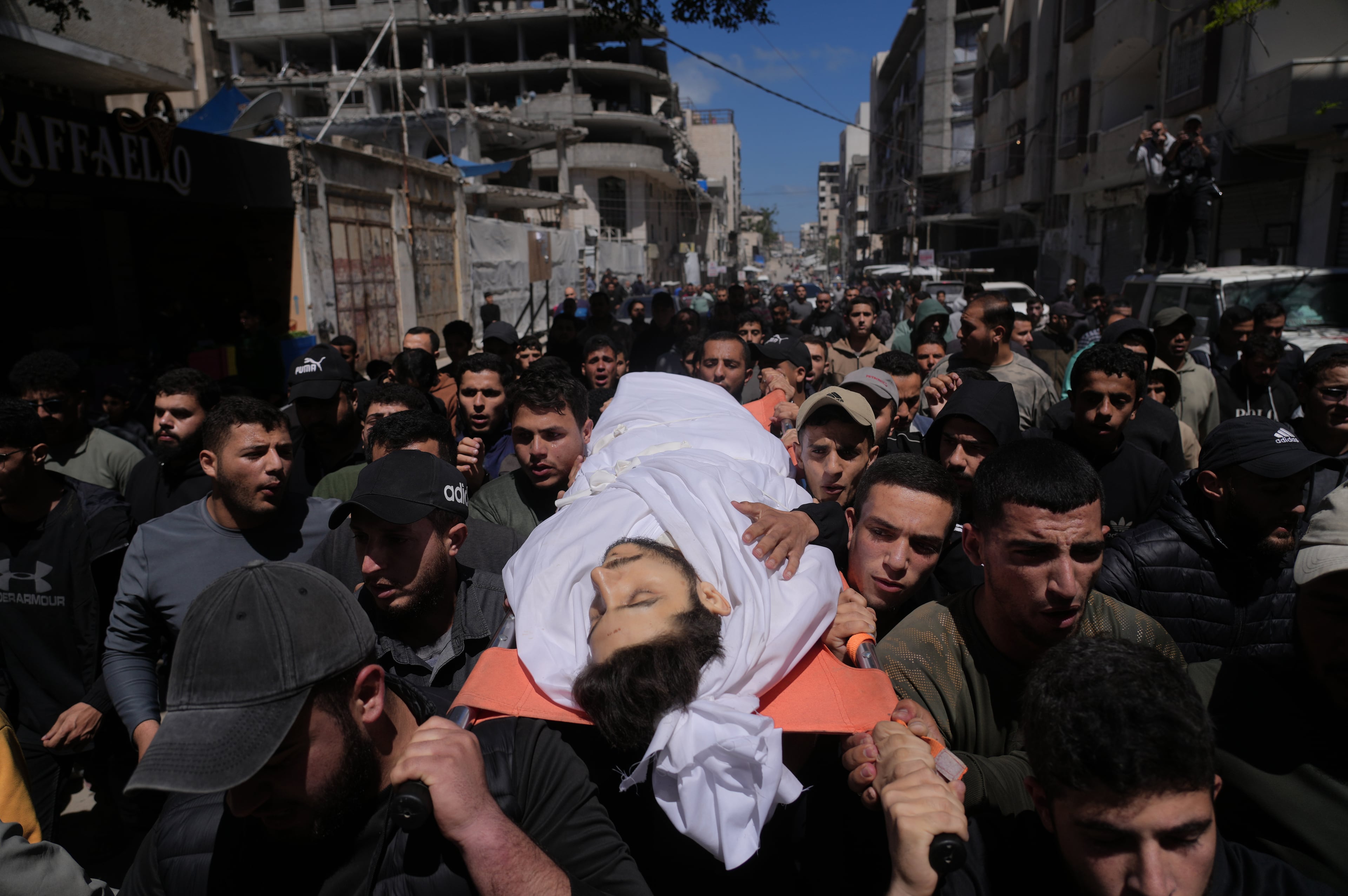
Israel’s ensuing offensive has killed over 72,724 Palestinians, including at least 846 since the ceasefire took hold last October, according to local health officials.
More Stories
The Latest