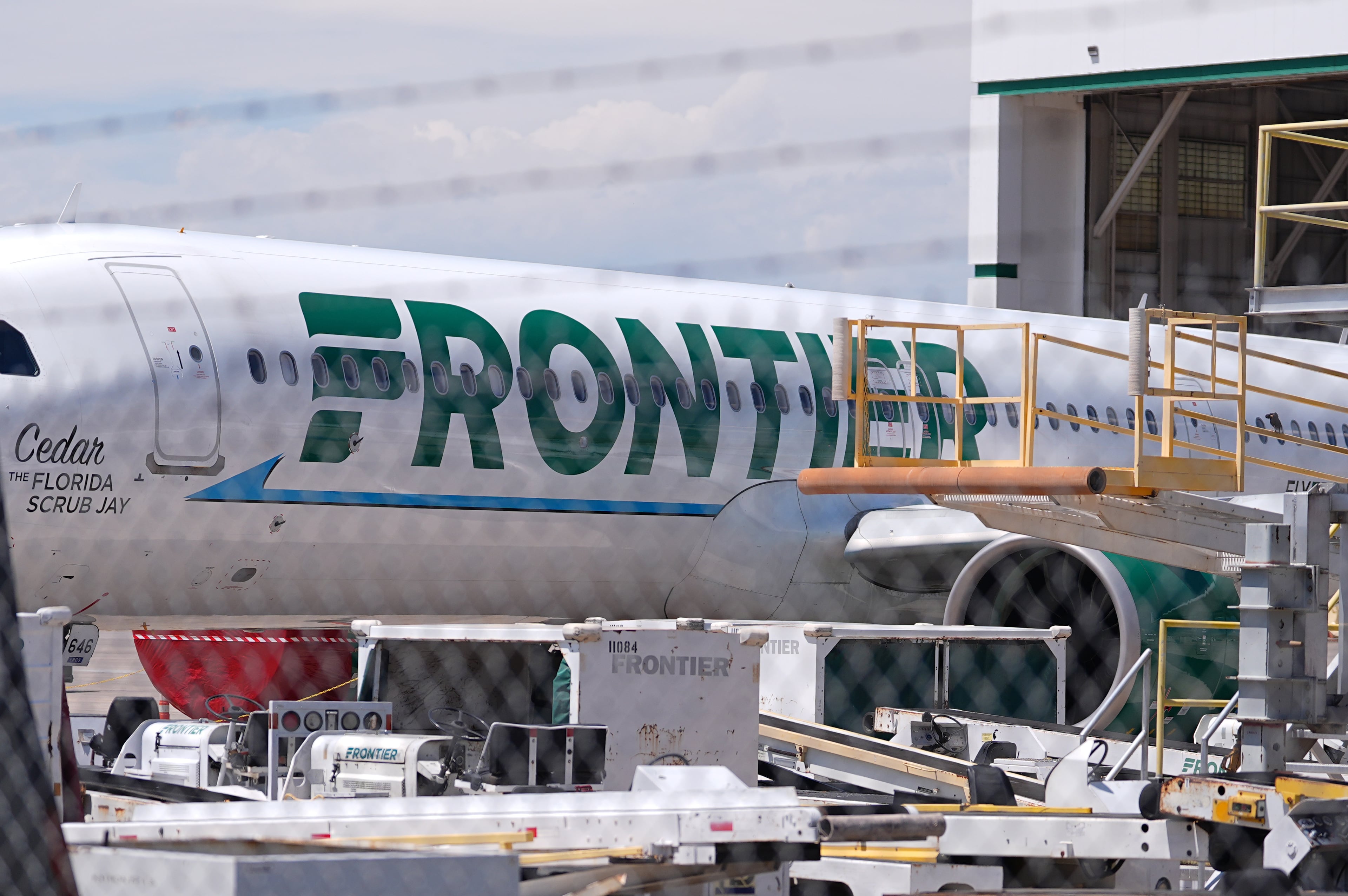
Denver runway fatality reveals a weakness in airport security
In less than three minutes, an intruder exploited a security gap at one of the nation’s busiest airports and stepped into the path of an airplane hurtling down a Colorado runway with 231 people aboard.
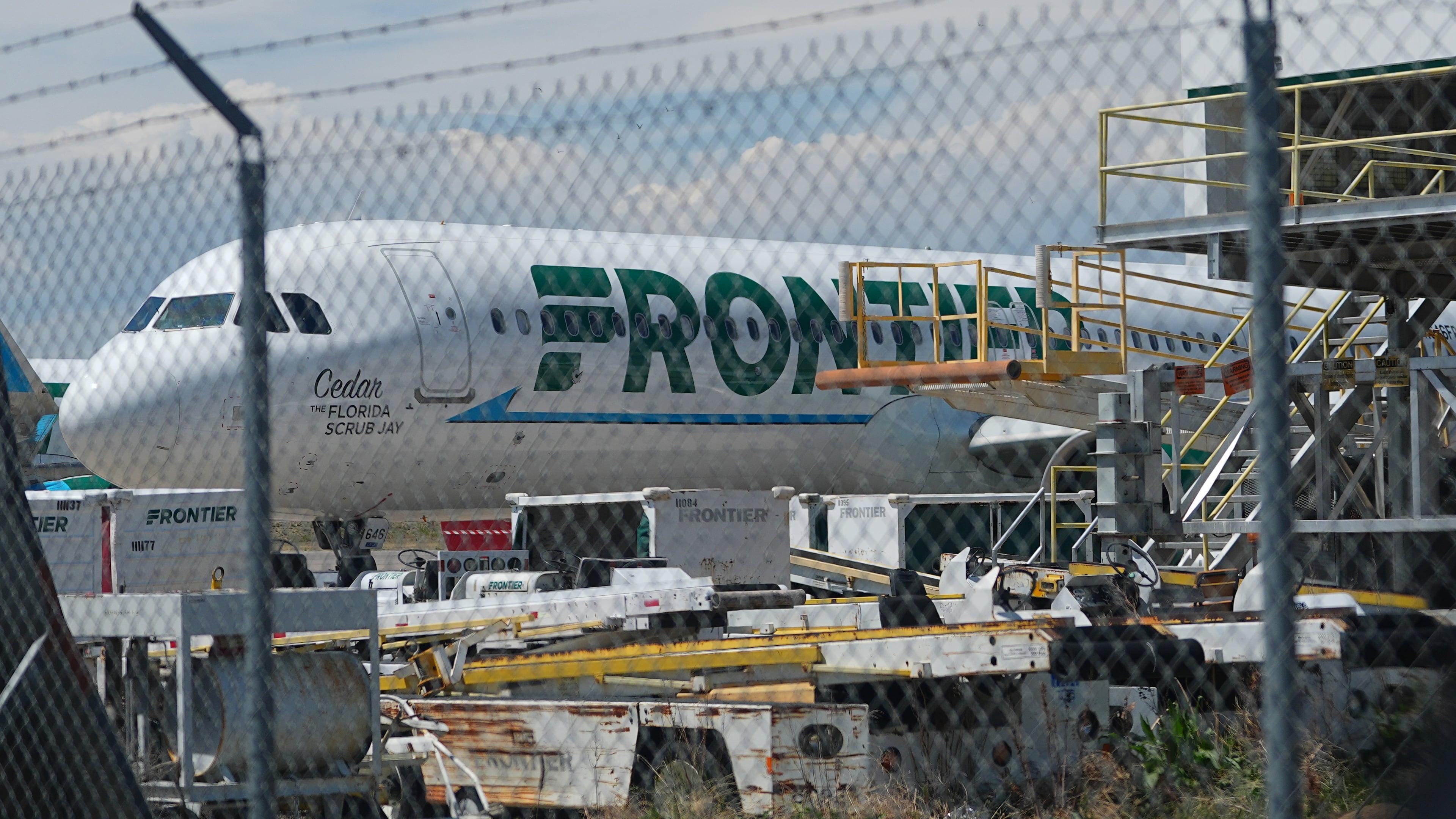
The 41-year-old man slipped unnoticed past motion detectors in a remote corner of Denver International Airport, which sprawls across open plains and covers an area twice the size of Manhattan. He quickly scaled an 8-foot perimeter fence topped with barbed wire, then walked unobstructed onto the runway where he was fatally struck by a Frontier Airlines jet as it attempted to take off late Friday night.
Surveillance video showed the man getting pulled into an aircraft engine that instantly burst into flames, forcing the pilot to abort the takeoff and evacuate the 224 passengers and seven crewmembers. Twelve people had minor injuries.
Aviation and risk experts said the Denver runway collision represents a clear security failure. They noted it could've been far worse if the pilot didn't safely stop the aircraft that was traveling 150 miles per hour (241 kph).
“People ought to be concerned. This was really an unprecedented risk. But now there is precedent,” said Eric Chaffee a law professor at Case Western Reserve University and an expert on risk, including in the aviation industry.
“The individual ended up with a bad result. But having somebody basically damage a plane is really quite concerning because of all those lives aboard any given aircraft,” Chaffee added. “There ought to be new measures put into place to prevent this type of tragedy."
15 seconds to scale the fence
Some aviation experts disagreed new regulations were needed. They said installing blanket surveillance or impregnable defenses around airports was cost prohibitive, given the relative rarity of dangerous events like Friday's collision.
The Denver medical examiner ruled the intruder's death a suicide.
Officials from the city-owned airport promised a review of their protocols defended their perimeter security program. During a Tuesday press conference Denver airport CEO Phillip Washington said the airport received “perfect scores” following federal inspections of airfield safety and perimeter integrity.
Airport officials said in response to questions from The Associated Press that annual inspections by the Federal Aviation Administration found two discrepancies over the past decade, both from 2019. One was a response vehicle that got delayed 20 seconds during an aircraft rescue firefighting drill, and the other was a problem with driver training records.
The airport did not answer questions about inspections of the perimeter fence and whether any problems have been found. Those fences are under oversight from a separate federal agency, the Transportation Security Administration.
The FAA referred questions about the perimeter security to TSA. The AP sent emails to TSA seeking comment on Denver’s inspection results and documents detailing its security protocols.
“Safety is something we take very, very seriously,” Washington told reporters Tuesday. He added that making the perimeter fence taller or topping it with razor wire wouldn’t necessarily have made a difference, because someone who was motivated could still find a way in.
During Friday's breach, an alarm from a ground detection sensor was triggered shortly before the intruder entered the airport along its eastern boundary, about 2 miles (3.2 kilometers) from the terminal. An airport worker watching video surveillance cameras attributed the alarm to a herd of deer — and missed the intruder.
It took the man about 15 seconds to scale the fence and two minutes more to reach the runway, Washington said. Airport officials didn't know he was on the runway until the pilot notified the control tower that the plane hit somebody.
Airport perimeter breaches are a regular problem, with perhaps dozens annually nationwide, said security expert Jeff Price, who managed security at the Denver airport in the 1990s. Denver International Airport is surrounded by about 36 miles (58 kilometers) of fence, which officials say is patrolled by security workers and continuously inspected.
The vast majority of airport trespassers don’t pose a real threat to others, according to Price and other experts. A man died at the Austin airport in 2020 after a Southwest Airlines jet struck him on a runway. Police later ruled it was a suicide.
Worries about copycats
Two law firms notified Denver officials Tuesday that they intend to sue on behalf of the Frontier passengers, seeking in excess of $10 million in damages. The firms alleged “multiple failures” in the airport perimeter security system, but did not provide specifics.
Steven Wallace, former director of accidents investigations at the Federal Aviation Administration, described the Denver fatality as a “one-off event” that would not justify costly improvements to airport perimeter security programs nationwide.
Wallace acknowledged that some perimeter fences can easily be breached. There are no set rules for their construction, and their primary role is to keep out wildlife that could interfere with flight operations, he said.
“I just don’t see how you’re going to think of and deal with every possible way a human could get into an airport,” he said.
Jim Hall, a former chairman of the National Transportation Safety Board, suggested there is now a higher likelihood for a repeat of Friday's collision given the potential for copycats. Hall said Denver should consider adding more personnel and surveillance to properly monitor its fence.
“With the amount of cameras and technology that is available, they need to address the problem,” he said. “They've had a failure and they don’t need to have another one."