Key Sens. Cruz, Cantwell look to break college sports logjam in Congress with a bipartisan bill
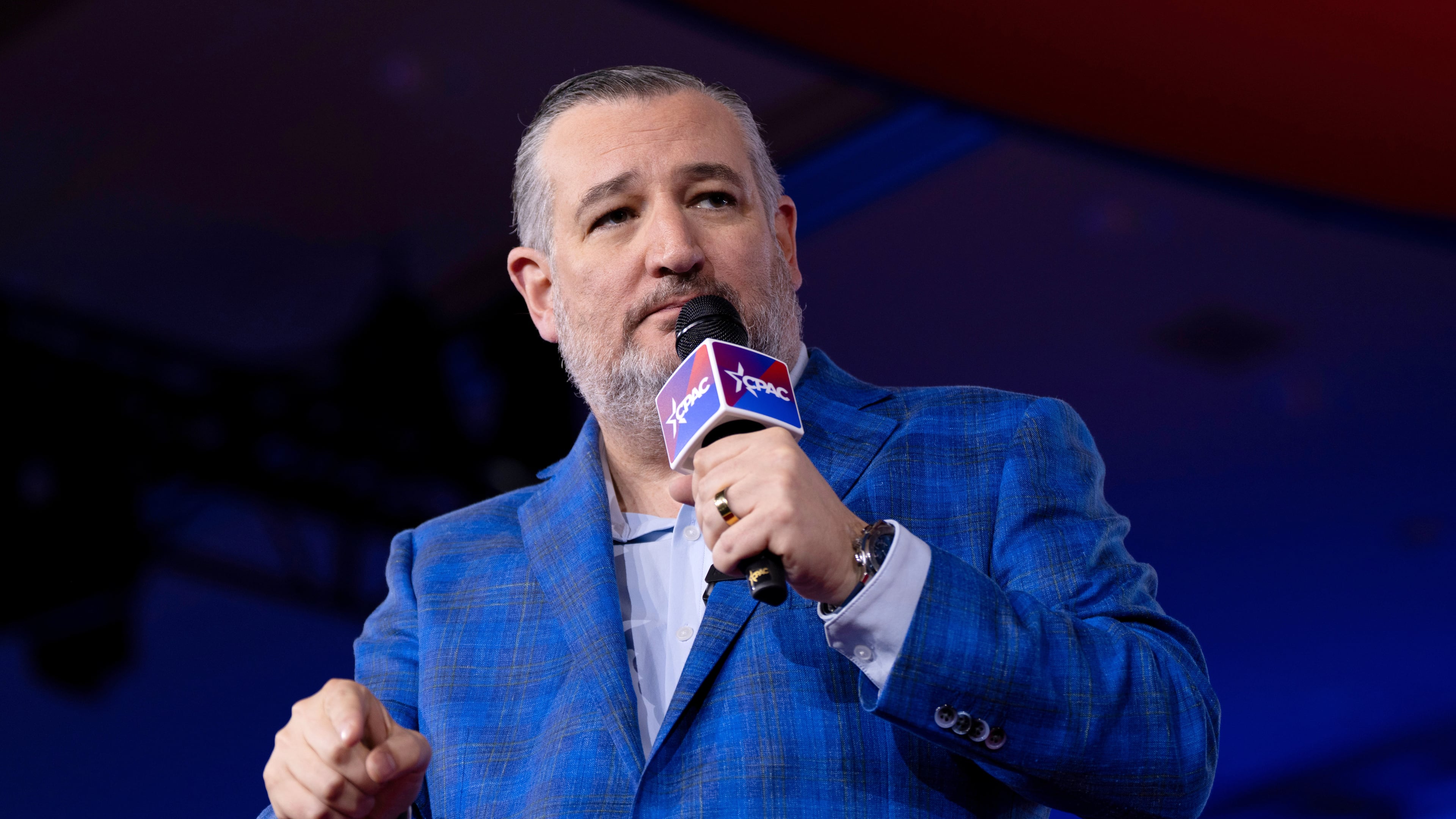
WASHINGTON (AP) — Two key senators involved in a long-simmering debate over fixing college sports will introduce a bipartisan bill designed to break a congressional logjam that would regulate payments to players, limit them to one “free” transfer over their careers and create a “Lane Kiffin Rule” to restrict coach movement during the season.
Sens. Ted Cruz, R-Texas, and Maria Cantwell, D-Wash., the chair and ranking member of the Senate Commerce Committee that oversees college sports, briefed The Associated Press on details of the bill they crafted in hopes it can get the 60 votes needed to clear the Senate.
“This is a stability bill, not just an NIL bill,” Cruz said, referencing the name, image and likeness payments that have led to football rosters with $30 million payrolls and reshaped the industry.
Cantwell said she and Cruz teamed on the legislation "because he and I really do believe the college sports system is in a bit of chaos.”
The bill looks very much like a “best of” pair of legislative proposals — one called SCORE, another called SAFE — that have gone nowhere over the past several months. It contains two elements the NCAA has supported: a limited antitrust exemption and a clause that would preempt much of the patchwork of state laws currently regulating NIL.
College sports has been looking to Washington for help as it grapples with rising costs of paying players and an out-of-control transfer portal that have threatened smaller sports, many involving women, that make up the backbone of the U.S. Olympic pipeline.
This bill, called the Protect College Sports Act (PCSA), would offer what Cruz and Cantwell said was very “targeted” antitrust protection — which was part of the largely Republican-backed SCORE Act that many Democrats opposed. That would be in exchange for what Cruz said would be “public-facing protections" for athletes in 10 areas, including guarantees for health insurance and scholarships and more stringent regulations for NIL deals from third parties.
“I think it's better predictability,” Cantwell said. “Why did we do it? Because when you've got thousands of athletes being cut, hundreds of programs being cut, the risk to the whole infrastructure was too high to not try to get better predictability.”
The bill would limit players to one unrestricted transfer over the course of their college careers — a widely supported idea across the country — and would adopt something close to the five-year eligibility period that the NCAA appears ready to enact next month.
The bill also tries to regulate coaching movement. Kiffin's sudden move to LSU from rival Mississippi while the Rebels were preparing for the College Football Playoff last season put a fine point on an issue that has only gotten worse in an era where teams spend millions to fill out rapidly shifting football rosters: Schools have less patience (and more money) to devote to hiring coaches for a quick fix.
Under terms of the bill, midseason coaching changes would be prohibited.
“It's not fair or right to poach a coach in the middle of the season while the team is still competing," Cruz said. "There’s a reason the NFL has a rule that you can’t do that. Obviously, NFL teams hire coaches away from each other but they don’t do so in the middle of the season.”
The bill would rework the Sports Broadcasting Act to allow conferences to pool their TV rights — a move proponents have said could add billions of dollars to the ecosystem in a conclusion the Southeastern and Big Ten Conferences believe is inaccurate.
The senators said leagues wouldn't be required to join the media pooling but those that do would have to use a percentage of any increase from that to support women's and Olympic sports. That alone could be a dealbreaker for the SEC.
“If you do nothing, then obviously, all these other women's and Olympic sports and less revenue-driven activities are going to suffer,” Cantwell said. “I've heard directly from my institutions, they say they're counting on this. Not creating this stability now would be a missed opportunity.”
The SCORE Act, which garnered little support from Democrats, was on the House schedule last week but was abruptly pulled off when the Congressional Black Caucus and NAACP came out against it.
But even if it had squeaked by in the razor-tight House, it had virtually no chance of passing as written in the Senate, where it would need 60 votes to break a possible filibuster.
“The Congressional Black Caucus and I have the same objective: stop the ‘SEC SCORE Act,’” said Cantwell, referencing the SEC as one of dozens of conferences who have supported that bill.
Some Democrats were reluctant to support a bill, like SCORE, that prohibited college athletes from being classified as employees of their schools. The new bill takes what Cantwell said was a “neutral” stance on the issue of employment.
“Senator Cruz and I have been very concerned about producing a bill that's not just about the 1% of athletes who go on and have a professional career," she said. "We took care of the entire ecosystem and have opportunities for athletes to continue to have that collegiate experience.”
___
AP college sports: https://apnews.com/hub/college-sports