Southern California chemical tank at risk of exploding as 50,000 residents are ordered to evacuate
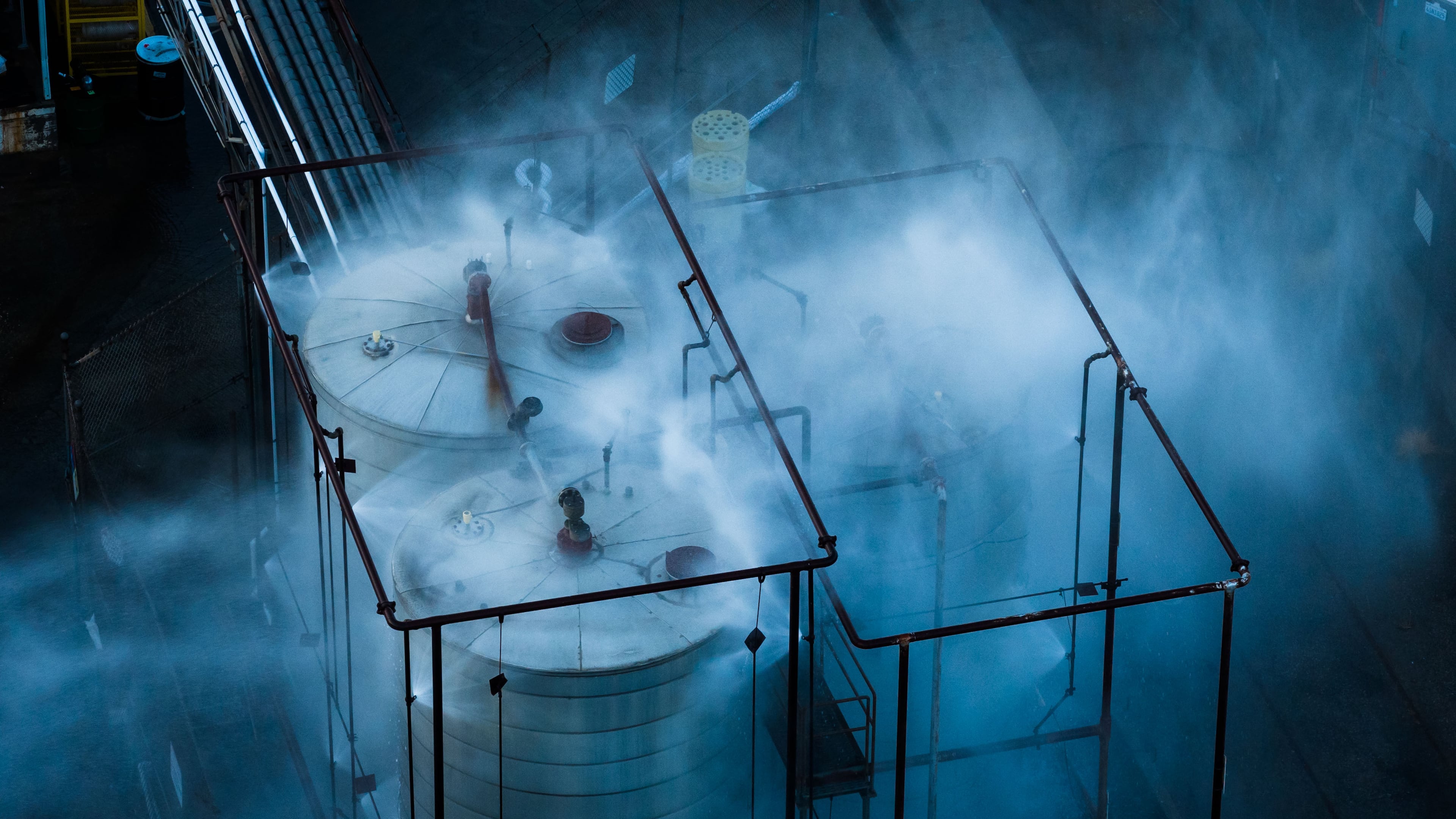
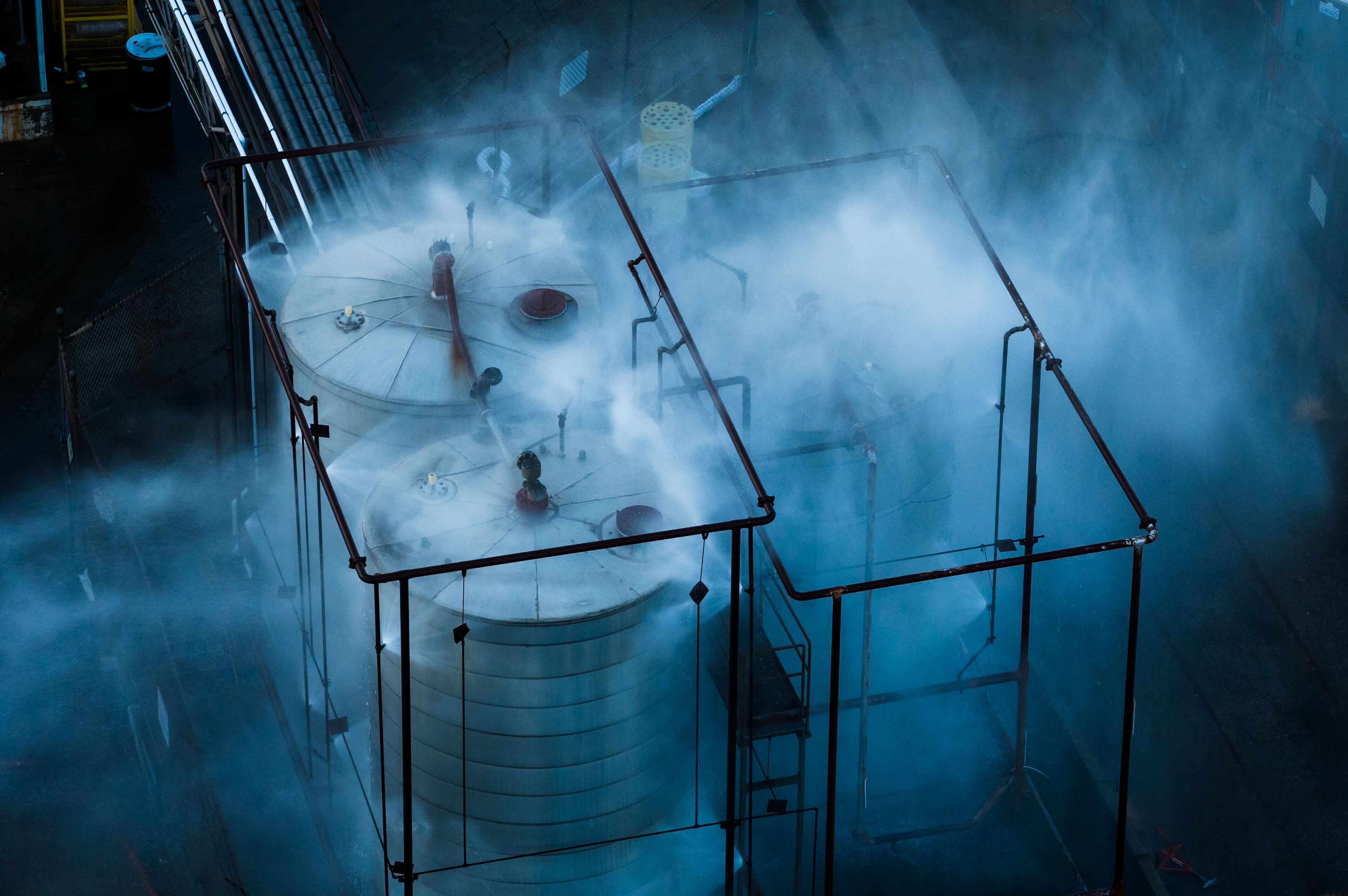
A damaged chemical tank in Southern California may have cracked — potentially lowering the risk of a cataclysmic explosion — though an evacuation order remains in effect for some 50,000 area residents with no timeline on when they can return, fire officials said Sunday.
TJ McGovern, the interim fire chief for the Orange County Fire Authority, said in a video posted on social media that fire officials were able to evaluate the tank more closely last night and spotted a potential crack that could be relieving some of the pressure inside. But he cautioned that the information is still being vetted and validated.
“With this new information, it could change our trajectory and our strategy to this event," McGovern said. "Last night, this operation that we did gave us positive intel to make educated decisions today in the positive light. We’re not there yet, but this was a step in a right direction.”
Orange County Fire Authority Capt. Wayhowe Huang told The Associated Press earlier Sunday that it does not appear that any of the highly volatile chemicals in the tank have leaked.
“There’s still the danger of a possible explosion. We’re not taking that off the table,” Huang said. “We’re still operating as if that is the risk.”
Firefighters have been spraying the outside of the tank with water hoses in an effort to cool the chemicals heating up inside and prevent an explosion.
Lee Zeldin, head of the U.S. Environmental Protection Agency, said Sunday that the “most likely scenario” at this point is a “low-volume release,” where officials will be able to “monitor, neutralize, and contain the threat.”
"The Orange County Fire Authority is working to keep the temperature of the tank down. That is very important,” he said on CNN, adding that keeping the temperature under 85 degrees F (29.4 degrees C) is key.
The pressurized tank overheated Thursday and began venting vapors at a company site in Garden Grove, about 40 miles (60 kilometers) south of downtown Los Angeles, according to the Orange County Fire Authority.
No injuries have been reported. Air monitoring tests have so far found that air pollution around the evacuation zone is so far within normal limits, and specialized equipment has been deployed to ensure no gas is released from the compromised tank, state and federal environmental officials said Saturday.
Meanwhile, some Garden Grove residents filed a class-action lawsuit on Saturday against GKN Aerospace Transparency Systems, the company that operates the facility where the tank is located.
Lawyers for residents living in the evacuation zone argued in their federal court lawsuit that regardless of what happens next, property values in the surrounding community are sure to be impacted.
“There is no good outcome here for the people who live nearby,” the lawyers wrote in a statement. “In the best-case scenario, a slow, controlled leak still forces residents out of their homes for an indefinite period, disrupting families, businesses, and daily life. In the worst case, a catastrophic explosion could send a plume and debris across a far wider area, damaging thousands of properties and exposing residents to serious health risks.”
Spokespersons for the company didn’t comment on the lawsuit itself, but pointed to an earlier statement on the incident in which they apologized to residents and businesses that have been forced to evacuate.
“The situation remains ongoing and we are fully focused on working with emergency services, specialized hazardous, material teams, and the relevant authorities to ensure the safety of the local community, our employees and everyone else involved," the statement read.
Officials said the valves on the tank are broken or “gummed up,” which prevented crews from removing the chemical or relieving the pressure on the tank, said Craig Covey, Orange County Fire Authority division chief.
Firefighters’ first hope is to find a way to cool off the chemical inside the tank so it won’t leak or explode. If that is not possible, Purdue University engineering professor Andrew Whelton said it would be best if the tank sprang a leak so the chemical could be mostly contained. An explosion that could spread the chemical over a broad area and send shrapnel flying would be the worst-case scenario.
If the temperature inside the tank continues to increase, the pressure will continue to build as the methyl methacrylate converts from a liquid to a gas, because officials said the pressure relief valves on the tank were no longer working. Whelton said it’s unlikely that firefighters would consider creating a hole in the tank because of fears that could create a spark that might ignite the volatile and flammable gas.
Drones were monitoring temperatures at 10-minute intervals to watch for any spikes and planning was underway to ensure a possible leak could quickly be prevented from spreading into waterways or the ocean, Covey said in an early evening post on social media platform X.
“Sitting back and allowing these tanks to fail is unacceptable,” Covey said, adding there was no guarantee tanks will not breach and leak. “Our goal is to protect your homes — no damage to them — and protect the environment.”
Tank wasn't cooling as first thought
Efforts to cool the tank appeared to be working Friday, but Covey backtracked the following day, saying a reading conducted by drones actually showed the temperature on the outside of the tank, not the inside.
“Unfortunately I do have to report that the temperature was 90 degrees,” Covey said, up from 77 Fahrenheit (25 Celsius) the previous morning.
Cooling the tank is important because the liquid chemical's flashpoint is 50 Fahrenheit (10 Celsius), according to the National Institute for Occupational Safety and Health.
Residents are frustrated and stressed
Initially people in Garden Grove were ordered to leave. Evacuation orders were then expanded to some parts of five other Orange County cities including Cypress, Stanton, Anaheim, Buena Park and Westminster. Some people with pets planned to sleep in their cars.
Several shelters remained open Saturday, including at three high schools.
Marco Solano, 32, spent Friday night at his parents’ home, frustrated by the situation and monitoring the news to see if he could go home.
“I don’t think that they should have dangerous chemicals in a neighborhood area, especially that dangerous that they have to evacuate people,” Solano said. “But again, it's not up to me. I don’t make the laws. I don’t make the rules. We just have to do what is best I guess.”
Solano, who has multiple jobs, said he felt very tired and weak and believed the stress of the chemical leak was exacerbating his anemia and ulcerative colitis.
“This has been affecting me quite a bit,” he said.
Solano also said he went to his apartment after work Friday to grab belongings and saw other residents who had not evacuated, and he was worried for them.
Exposure could lead to health problems
The damaged tank is located at GKN Aerospace, which makes parts for commercial and military aircraft. It holds 6,000 to 7,000 gallons (22,700 and 26,500 liters) of methyl methacrylate, used to make plastic parts.
Exposure to methyl methacrylate can cause serious respiratory problems and even render someone unconscious. It can also cause neurological problems and irritate the skin, eyes and throat, according to fact sheets about the chemical. But Orange County health officials said the chemical is easy to smell and residents may notice it over a large area without being harmed.
Whelton said the volume of chemical in the tank is much smaller than in the disastrous 2023 train derailment in East Palestine, Ohio, which he studied when more than 115,000 gallons (435,000 liters) of vinyl chloride was released after officials blew open five tank cars and burned the chemical.
“Many of these are acute, fast-acting effects. But the longer somebody stays in contact with it, the more potential for significant damage that occurs,” Whelton said.
If there is an explosion, officials said they expect “severe structural damage and significant harm” in the blast zone closest to the tank.
If an explosion releases the chemical into the air, Whelton said, it will be crucial to conduct detailed air monitoring specifically for methyl methacrylate and not just generic tests for volatile organic compounds as officials did in East Palestine. General tests, often completed with handheld detectors, may not be capable of detecting the chemical. Indoor tests of buildings and homes may also be needed before residents return home.
The weather will be an important factor in determining where a plume of chemicals would go in the event of an explosion. Officials were developing maps to predict different scenarios about which areas would be most affected.
Meanwhile containment barriers have been set up to prevent the chemical from getting into storm drains or reaching creeks or the nearby ocean in the event of a spill, Covey said.
Emergency declaration
Gov. Gavin Newsom declared a state of emergency in Orange County, making state resources available to local agencies and letting state-owned properties and fairgrounds be used for shelters if necessary.
Garden Grove is next to Anaheim, home to Disneyland’s two theme parks, which were not under evacuation orders. Park officials said they were monitoring the incident and supporting employees impacted by evacuations.
GKN agreed to pay state regulators more than $900,000 in 2025 to settle violations involving recordkeeping, permitting issues and nitrogen oxide emissions, according to a report on the South Coast Air Quality Management District website.
___
Associated Press writers Dave Collins in Hartford, Connecticut, and Michael R. Blood in Los Angeles contributed.