Toyota settles ‘smart key’ suit over Atlanta man’s death on eve of trial
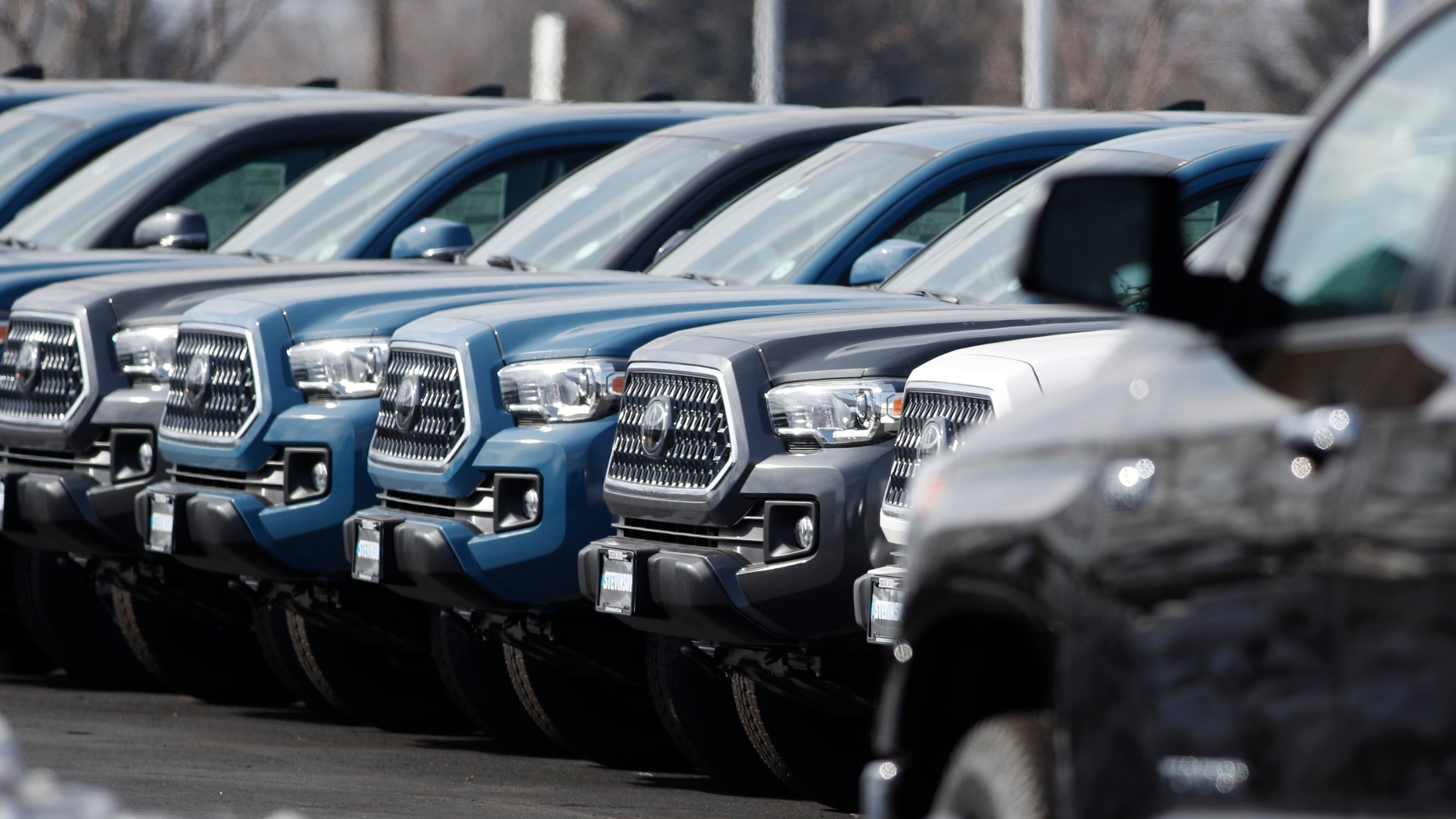
On the eve of a federal jury trial, Toyota has settled a lawsuit blaming it for the fatal carbon monoxide poisoning of an Atlanta man who unwittingly left his 2017 Tacoma idling in his garage after entering his attached home with the truck’s “smart key” fob.
Lee Griffin had been mowing his lawn on July 4, 2022, before he returned his Tacoma to its spot in the garage, closed the driver’s door and walked inside his home with the key fob while the truck was still idling, case records show. He and his wife, Caroline Griffin, went to sleep while their home filled with carbon monoxide from the vehicle, the key fob on the kitchen counter.
Caroline Griffin woke to find her husband’s cold body slumped over the toilet and called 911 before he was declared dead and she was hospitalized from carbon monoxide poisoning, according to her lawsuit. Griffin blames Toyota for failing to put an automatic engine shut-off in the Tacoma or warning customers of the associated risk.
A Toyota spokesperson declined to comment on the case Tuesday. The carmaker denied any wrongdoing in court filings, attributing Lee Griffin’s death and his wife’s injuries to “human error.”
Details of the settlement are confidential.
A jury trial was scheduled to begin Wednesday in federal court in Atlanta. Last week, U.S. District Judge Thomas Thrash Jr. closed the case, noting the parties had informed him via email of their settlement.
Last year, the judge ruled the case should be decided by a jury, largely denying Toyota’s request to end some of the claims before trial.
“Just because running a car in a garage is an open and obvious danger does not mean that it is open and obvious that a car will continue to run and emit carbon monoxide after the key is taken out of the vehicle,” Thrash said in a June order.
Caroline Griffin is represented in the case by attorneys who won the largest jury verdicts in Georgia in different wrongful death cases against Ford Motor Company. Those cases, about the weakness of truck roofs, confidentially settled last year after jury verdicts of $2.5 billion and $1.7 billion.
Ramsey Prather, one of Caroline Griffin’s attorneys, said she pursued the case against Toyota because she didn’t want anyone else being poisoned by carbon monoxide from a vehicle mistakenly left running. He said she’s still suffering from the effects and has been through “a horrible ordeal.”
“This is a problem in all Toyota cars and trucks that were sold before 2020 that have keyless ignition,” Prather told The Atlanta Journal-Constitution. “Toyota’s U.S. safety monitor admitted in his deposition that if Mr. Griffin’s truck had been equipped with automatic engine shut-off, he would not have been killed by carbon monoxide poisoning.”
Lee Griffin’s Tacoma, which he bought new in 2017, had a “smart key” system that beeped three times when the driver parked it, left the engine running, closed the door and exited with the key fob, case records show.
On July 4, 2022, Lee Griffin likely didn’t hear the beeps because he had been wearing noise-isolating earbuds to listen to music while mowing the lawn, according to the court record. The 55-year-old had tinnitus and partial hearing loss.
In her 2023 complaint, Caroline Griffin said that at the time of her husband’s death, Toyota knew of at least 16 other instances in which a Toyota vehicle had killed a person when it failed to shut off and filled an enclosed space with carbon monoxide. She alleged Toyota had known about the deadly danger since 2006.
“Toyota has itself documented more than 100 incidents of carbon monoxide poisoning in these Toyotas,” Prather said Tuesday. “It was very important to Mrs. Griffin to pursue this case and to hold Toyota accountable.”
The judge’s order from June mentions a spreadsheet created by Toyota for a separate case, listing 117 different instances in which a person has reported or made a claim alleging they exited a Toyota vehicle with the key fob and the engine continued to run.
Toyota said in pretrial filings that it ruled out automatic engine shut-off until 2020, when it was able to implement the feature without creating a new safety risk. Previously, Toyota engineers were worried about a car shutting off after the operator intentionally left the engine running while a child, elderly person or pet was inside.
“Unfortunately, some hot car incidents have occurred with vehicles equipped with automatic engine shut-off, validating Toyota’s earlier concerns over the potential safety tradeoffs inherent in this new technology,” the company said in a pretrial summary.
Toyota said its 2017 Tacoma and smart key system complied with all applicable federal motor vehicle safety standards.
“This tragic incident was the result of human error rather than any defect in the vehicle,” the company said about the Griffins.
Caroline Griffin alleged Toyota was years behind other vehicle manufacturers and has no excuse for failing to warn her husband and other customers of the risk of their vehicles not shutting off. She noted there were several years between Toyota implementing automatic engine shut-off and her husband’s death.
“To state the obvious, a $40 Mr. Coffee machine has had an automatic engine shut-off since at least the early ‘90s, and the danger of a coffee hotplate is far less than the danger of a running car engine spewing carbon monoxide for hours,” she said in her pretrial summary.
About the Author

Journalist Rosie Manins is a senior courts and legal affairs reporter for The Atlanta Journal-Constitution.