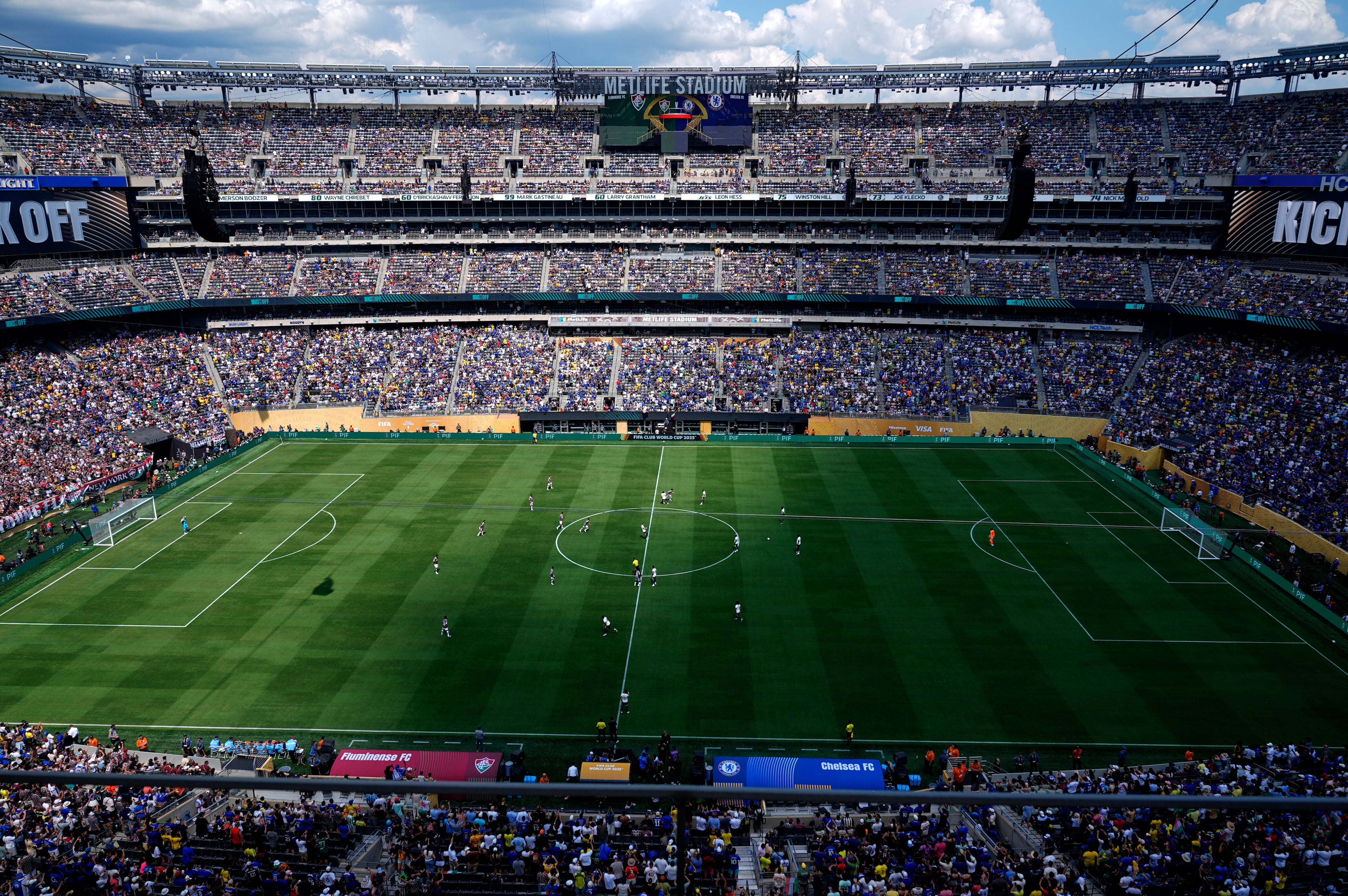
US hotel operators say promised boon from hosting World Cup hasn’t materialized yet

NEW YORK (AP) — The promised economic boon from the World Cup hasn’t matched expectations, at least not yet, for U.S. hotels.
Room bookings have been lighter than expected in most of the 11 U.S. cities hosting the world’s most watched sporting event, according to an April survey by the American Hotel & Lodging Association.
In several cities, including Kansas City, Boston, Philadelphia, San Francisco and Seattle, a majority of hotel operators said bookings were actually running behind typical seasonal demand. In others, including New York City, Los Angeles, Dallas and Houston, demand was flat so far compared with a regular spring and summer, according to the association.
The hotel association blamed travel concerns from international fans, worries about wait times for a U.S. visa and the cost of attending the tournament — including high ticket prices and transit costs in some cities— as major factors in the softer-than-expected demand.
“I think everyone had hoped the games would lead to an influx of bookings, but with all going on in the world and the USA’s involvement, events are playing out differently for everyone,” said Michael Black, general manager at the Cloud One hotel in Manhattan.
Concerns about softer-than-expected bookings extend to Mexico, which is co-hosting the games with the U.S. and Canada. Hotels in Mexico City, which hosts the tournament’s opening match on June 11, are about 30% to 36% booked, according to the Asociación de Hoteles de Ciudad de México.
High prices may be a factor
Many hotels jacked up their prices after the tournament's schedule was announced, anticipating that soccer fans would pay exorbitant rates if they were able to score tickets to a match.
Near MetLife Stadium in New Jersey, for example, one hotel that normally charges around $200 a night was advertising a rate of $800 on nights around June World Cup matches. The costs soar to more than $1,300 a night ahead of the July 19 final.
Many seasoned fans are probably still waiting for those prices to drop, said Ronan Evain, executive director of Football Supporters Europe, a Germany-based fan advocacy group.
“Fans that are used to traveling for tournaments know that this price will always go down,” Evain said. “There are many examples of hotel owners regretting that they priced too high and then panicking at the last minute and reducing prices.”
Others have already likely secured cheaper lodging farther from the stadiums or through Airbnb and other short-term rental platforms, he added.
Indeed, the metropolitan regions around Kansas City, Seattle, San Francisco, Dallas/Fort Worth and Miami/Ft. Lauderdale are all enjoying an uptick in short-term rental bookings compared with the same period last year, according to a recent report from AirDNA, a rental data firm that tracks bookings on Airbnb and Vrbo.
Airbnb said last week that the number of guests expected to stay at its rental listings during the tournament is expected to exceed earlier estimates and even end up surpassing the 2024 Olympic and Paralympic Games in Paris as the biggest hosting event in the company’s history.
Unrealistic expectations
More than 5 million tickets have been sold for the tournament so far, out of the more than 6 million expected to be offered for all 104 matches, according to FIFA.
While many of those attending the tournament will be travelers who need hotel rooms, global events like the World Cup also tend to discourage other types of visitors, said Andrew Zimbalist, an economics professor at Smith College in Massachusetts.
“The general problem is that soccer tourists — and expected congestion, high prices and security concerns — push away normal business travel and tourism,” he explained.
Vijay Dandapani, president of the Hotel Association of New York City, said city hotels are seeing a modest upswing in summer bookings -- around 10% compared with the previous year — but nowhere close to the windfall promised by FIFA and other tournament boosters.
In Vancouver, Canada, which is hosting seven matches, hotel occupancy is down from the same time last year, but the industry is optimistic business will pick up closer to the games, says Paul Hawes, CEO of the British Columbia Hotel Association.
In Kansas City, where some 90% of respondents to the American Hotel & Lodging Association survey reported bookings below expectations, tourism officials are still holding out for a record-breaking number of visitors.
“While hotel occupancy in Kansas City has not followed the trajectory originally predicted by FIFA, there are positive indicators for Kansas City on the horizon,” said Derik Detter, market research director at Visit KC.
Jon Bortz, CEO of Pebblebrook Hotel Trust, a real estate investment company that owns dozens of hotels nationally, is equally positive.
Overall, he said, occupancy rates are up at its many host city properties compared with last year, though he acknowledged cities like Boston with more marquee matchups are performing better than cities like San Francisco that host less in-demand games.
“We haven’t seen anything that would cause us to think it’s going to be less than what we were expecting,” he said. “Maybe other people had much grander expectations.”
___
Associated Press reporters David Skretta in Kansas City, Missouri, Carlos Rodriguez in Mexico City and Jim Morris in Vancouver contributed to this story.
___
Follow Philip Marcelo at https://x.com/philmarcelo