‘Where Peachtree Meets Sweet Auburn’ still captures Atlanta’s spirit 30 years later
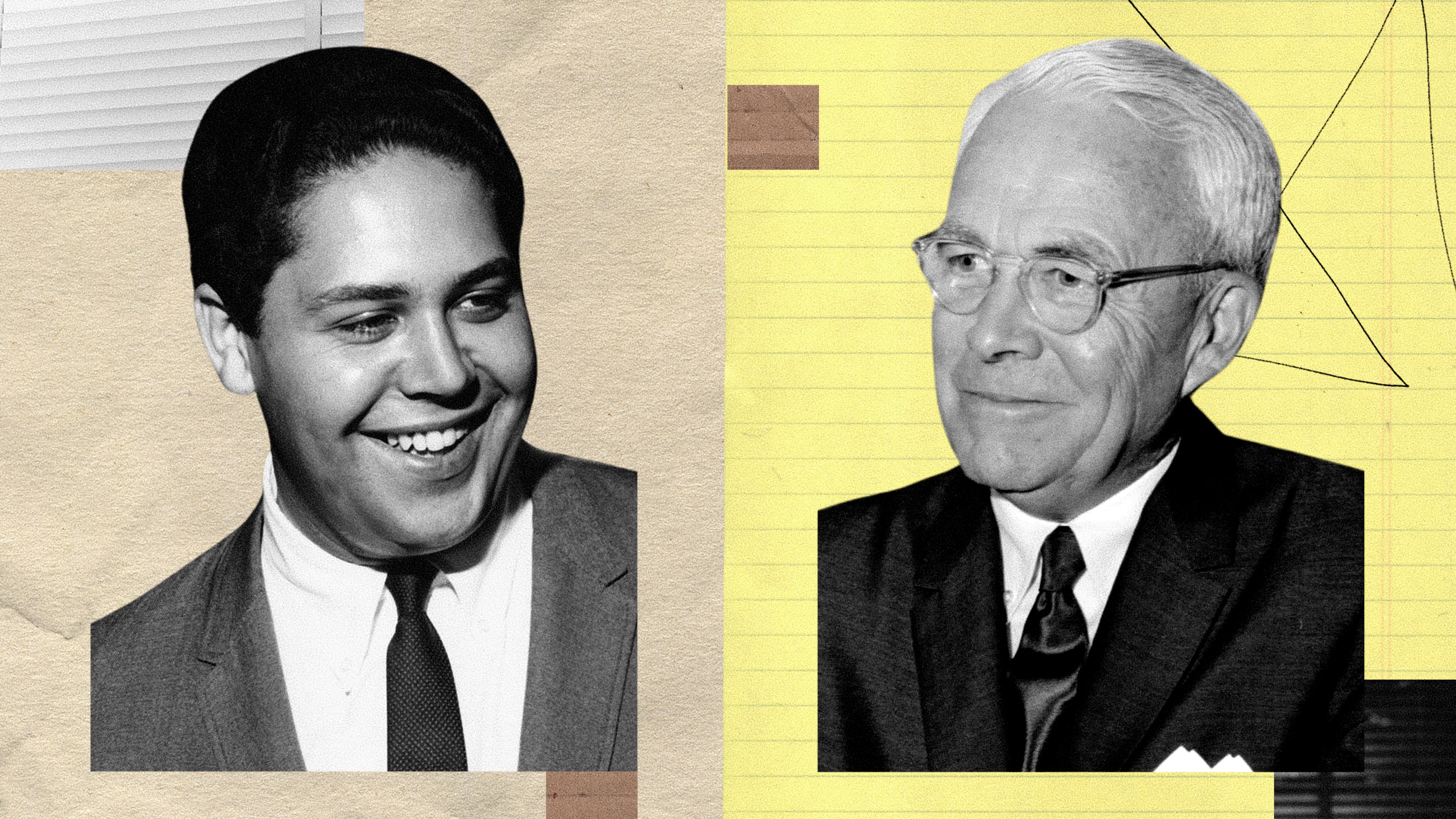
Two towering figures of Atlanta history — one a descendant of a white Confederate soldier and the other the progeny of a freed enslaved Black man buried in Kennesaw — shared more in common than meets the eye.
Former mayors Ivan Allen Jr. and Maynard Jackson Jr. transformed the city and led it to becoming the “King of the South,” guided by a visionary purpose, stricken by grief over family losses and intent on moving Atlanta forward faster than comfortable for the powerful people of their era.
Allen, who once advocated for a program to relocate discontented Black Georgians out the state, became the first white pro-civil rights mayor in the South, defeating segregationist (and future Peach State Gov.) Lester Maddox in his 1961 election, thanks to Black voters. The two-term mayor oversaw the desegregation of public schools, advocated for racial harmony and welcomed the entry of professional sports into the city.
Jackson, the first Black mayor of Atlanta and of a major Southern city, introduced the joint venture program at the airport that now bears his name (Hartsfield-Jackson Atlanta International Airport), which created economic opportunities that earned the city its “Black Mecca” moniker. He presided for three terms — first from 1974 to 1982, and then from 1990 to 1994 — preparing Atlanta to host the 1996 Summer Olympics and putting the city on the global stage.

In 1996, “Where Peachtree Meets Sweet Auburn” published and told Allen and Jackson’s stories through a series that connected the two men and their ancestors. Former AJC reporter Gary M. Pomerantz wrote the book he called “a labor of love” — his first of six — and I interviewed him recently via video conferencing to talk about the book’s 30th anniversary.
Pomerantz moved to San Francisco in 2001 and teaches in the Department of Communication at Stanford University.
I learned about the book when I met Gigi Pedraza, founder and executive director of the Latino Community Fund Georgia, in October. I was coming upon my five-month anniversary at the AJC and still felt overwhelmed by the size, scope and breadth of metro Atlanta. She sent me a copy of the book and assigned it to me as critical homework for understanding the history of Atlanta and how that history impacts the city today.
Over the course of three months, I slowly read the tome — which The New York Times in 1996 described as “a reasoned and scintillating book” — and I made it a point to visit the places and landmarks mentioned in it.
Peachtree Street — the location of AJC’s newsroom — served historically as the white business district while the Sweet Auburn neighborhood played the same role for the Black community over decades of legalized racial segregation. Peachtree Street and Auburn Avenue intersect in downtown.
History connected Jackson and Allen, as did their devotion to their families.
They both experienced deep heartbreak, such as the death of Jackson’s father, Maynard Jackson Sr., in a state hospital, and the suicide of Allen’s son, Ivan Allen III. Allen’s father, former state Sen. Ivan Allen Sr., mentored his son, while Jackson’s grandfather, civil rights leader John Wesley Dobbs, guided his grandson.
The book offers a fascinating look at the past, but it is a must-read for longtime residents and newcomers alike because it reveals insight into the ethos of Atlanta.
As the city prepares to be on the global stage again with the World Cup this summer and as it continues to grapple with challenges that include income equality, affordable housing and public transit efficiency, Pomerantz’s seminal work offers points to ponder about how to avoid the mistakes of the past and keep Atlanta’s regional — and global — dominance going.
Below find excerpts from our 35-minute interview, edited for length and clarity.
AJC: Why did you choose the approach you did with the book, the chronology, characters and focal point?

Pomerantz: Well, you know, it’s funny. It all seems so obvious now. You know the Allens and the Dobbses (Jackson’s ancestors), of course, but it wasn’t obvious to me at all. It was almost like I needed a search party carrying lanterns to find my narrative through line. But through my research, I came to understand that in the South, you are who your family is.
I mean, I remember in one interview someone said almost in passing that Maynard Jackson, “Oh, he’s from the Kennesaw Dobbses.” And it just stopped me because that dated to the days of slavery. And later I would find a document from 1851 that showed Maynard’s great-great grandfather as a slave valued at $800 named Wesley. And he was owned by the Cobb County farmer Josiah Dobbs.
So, you know, I considered other families. I thought the families was the way to do it, to try to get into Atlanta’s story intimately. I thought about the Woodruffs and the Candlers and the Herndons and the Kings, and I understood that Peachtree and Sweet Auburn carried powerful symbolism as the yellow brick roads for dreamers in the South.
So, essentially, I tried to figure out which families best represented the symbolism of Peachtree and Sweet Auburn, and I was searching for families that had multiple generations of civic leadership. And then I created a timeline of flashpoints in Atlanta’s history. You know, the burning of the city in 1864, the 1895 Cotton States (and International) Exposition, the 1906 race riot, the 1939 “Gone With the Wind” premiere, the 1968 funeral for Dr. (Martin Luther) King (Jr.). And I tried to place those two families at these events and have them through interviews. And I conducted more than 500 interviews for this book.
AJC: Atlanta’s a very different city from the time of Mayor (Bill) Hartsfield, who you referenced significantly at the beginning of the book, to the 1996 Summer Olympics. Did you get a sense that city leaders really believed that Atlanta had become a global city? Was there a sense of impostor syndrome?
Pomerantz: I’ve often wondered about Atlanta and wondered when I was working on this project: Is Atlanta like the gangly teenager stumbling into the future, unsure of its footing? Or is it more like (Democratic political strategist) James Carville, cunning and sophisticated and always manipulating the variables behind the scenes?
I mean, let’s trace it along the arc of time. You know, in 1895, the Cotton States Exposition comes to Atlanta. Booker T. Washington gives his famous “Atlanta Compromise” address and Atlanta becomes crowned as “King of the South.” It’s a regional city. It’s the hub of the South.
Then, the 1939 “Gone With the Wind” premiere — Hollywood comes to Atlanta, of all things. And all the stars are there and 300,000 people lined Peachtree Street. That’s double the amount that actually fought in the combined armies in the Battle of Atlanta.
But Mayor Hartsfield, wanting to publicize his book on a national basis, sent letters to the editors of Life magazine in New York. “You must cover this. You must cover this.” And Life magazine did cover it. So, Atlanta’s vying to be a national city, and then in 1996, Atlanta brought the Summer Olympics to the city and it became more of a globally well-known place.
Look, if you’re going to get anywhere in life, you need to dream big dreams and Atlanta has dreamed across the arc of time. Big dreams. And look how far it’s come.




AJC: Were there surprising things in your research about the people and about the subjects that you were covering?
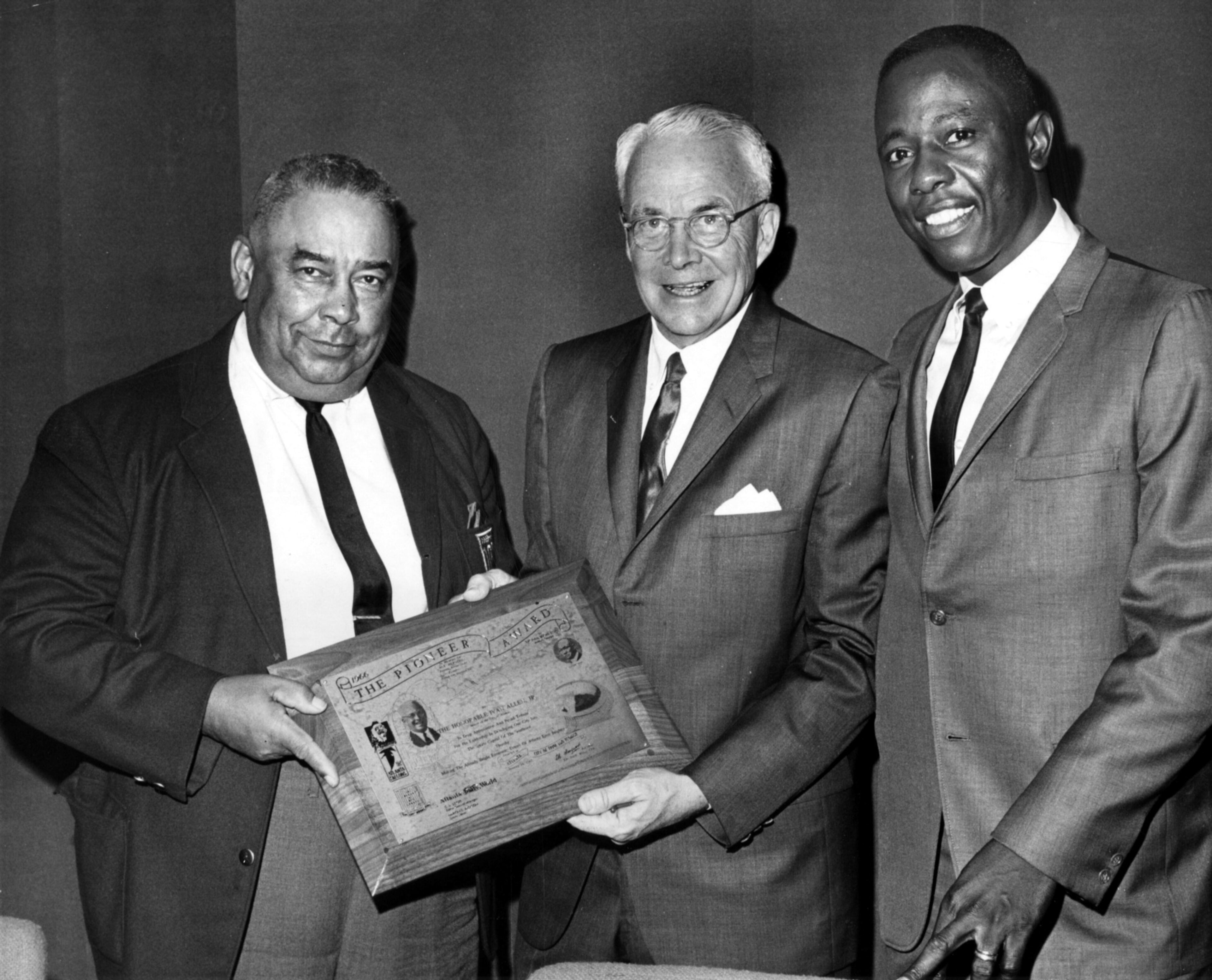
Pomerantz: One of the things that surprised me most was how much Maynard Jackson and Ivan Allen Jr. were alike. One was from the Black aristocracy of Atlanta. The other was from the white aristocracy of Atlanta.
One was a Morehouse man. The other was a Georgia Tech man. And yet from a young age, both faced really high expectations from their family.
Both were expected to achieve something big and important. You know, Grandpa Dobbs thought Maynard should become a lawyer. “The Senator,” Ivan Allen Sr. — who had briefly been a state senator in Georgia, which is where the nickname comes from — … was a son of a Confederate cavalryman and he thought Ivan Jr. might become Georgia’s governor.
Over five years I’m doing a lot of interviews. I interviewed Ivan Allen Jr. 16 times. He had a lot of time on his hands at that point. I interviewed Maynard Jackson during his third term as mayor six times. And in the interviews, both not only absolutely loved Atlanta, but they were both charmers. To spend time with both of them was to realize how they got elected. Maynard liked to say, by the way: “There are two kinds of people: Those that live in Atlanta and those that want to.”
That surprised me how much they were alike. I should have assumed it, perhaps, given both became mayors, but there it was.




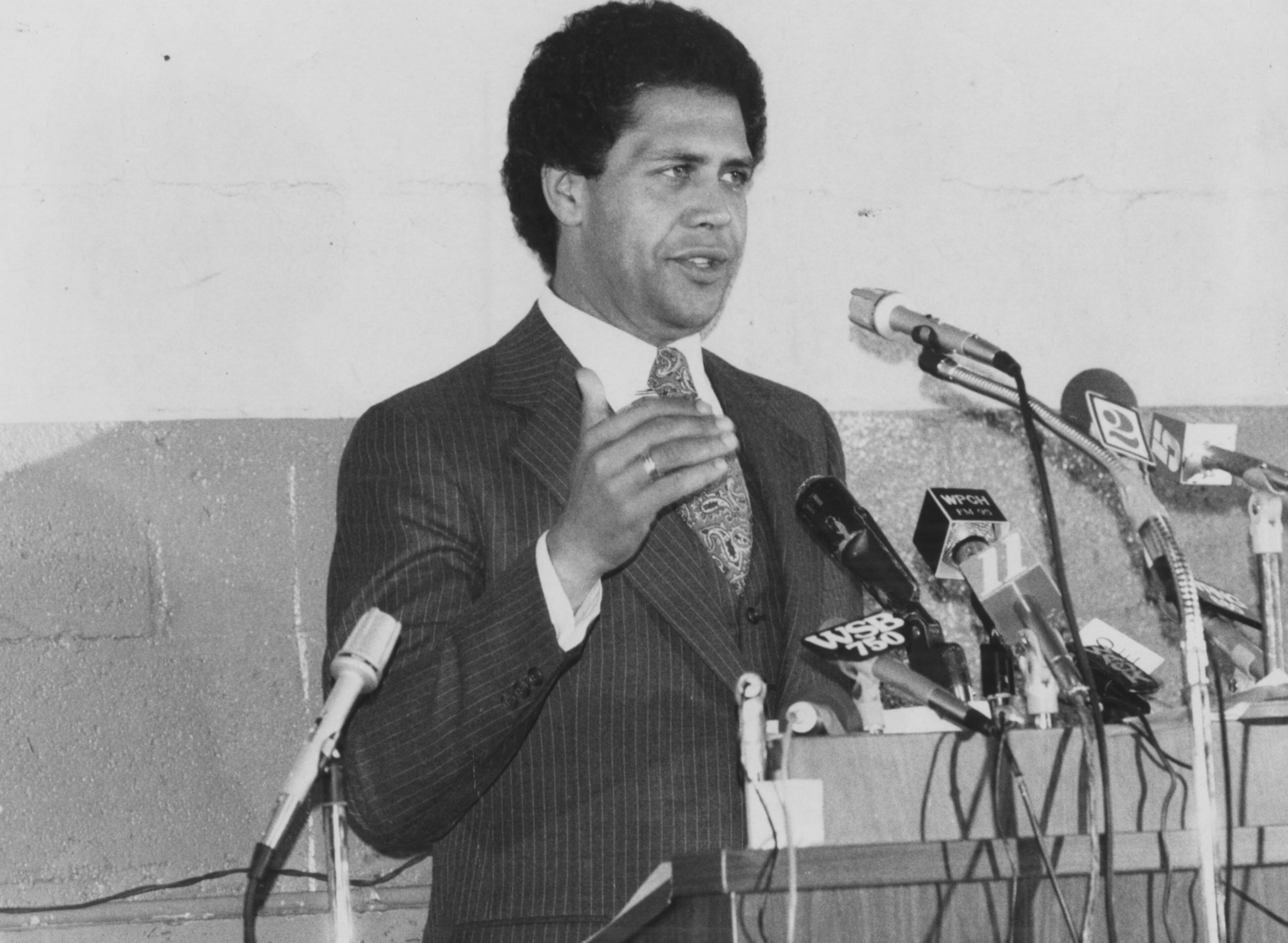


AJC: Would you delve a little bit about into that transformation of Mayor Allen and the regrets of Mayor Jackson?
On Maynard Jackson Jr.
So, when Maynard won the 1973 Atlanta mayor’s race, he was 34 years old. I mean, think about that. Everything seemed possible for him at that moment and for Atlanta because in the years that followed in that first term, everything he did was historic. It was as if Atlanta’s City Hall had become an extension of the Civil Rights Movement.
Maynard sought to right history’s racial wrongs immediately. He was not a gradualist. He created a joint venture program for the expansion of the Atlanta airport. He liked to say he got the airport built on time and under budget. And he did.

He made enemies among white business leaders in the process, the so-called power structure. And when Jackson left office in 1981, he paid a price for his political and racial conviction. He was a bond attorney, but none of Atlanta’s leading law firms would hire him. It was a way to get back at him for his mayoralty. He accepted a job from a Chicago firm, Chapman and Cutler, working from Atlanta.
And then Andrew Young served two terms, and Maynard Jackson came back in 1989 to win a third term as mayor, but everything was different.
Cities across the nation were struggling. Funding from the Reagan administration was drying up. There were intractable problems in the urban core: Crack cocaine, homelessness, crime, plus Jackson was no longer historic. Andy Young ran for governor of Georgia against Lt. Gov. Zell Miller in 1990 and won less than 20% of the white vote outside Atlanta in the Democratic primary.

So, Maynard understood the message in that if a Black candidate as credentialed as Andy Young — who had been Atlanta’s two-term mayor, he’d been a congressman and he was the U.N. ambassador under President (Jimmy) Carter — if such a candidate couldn’t get even 20% of the white vote outside Atlanta, then a Black candidate could not win statewide in Georgia. That was the thinking.
So, Atlanta City Hall was no longer a steppingstone to becoming senator or governor or even president. It was. It was the only stone.
On Ivan Allen Jr.
Now, with Ivan Allen Jr., in 1957, he was an Atlanta moderate, briefly making a run to become governor, which is what his father wanted. And during that 1957 campaign early on, he suggested a 1 cent sales tax to fund a program that would relocate discontented Black Georgians out of the state, perhaps even to Africa.
It was hardly a new idea. The concept of African colonization dated to antebellum times.

But just four years later, and long after he dropped out of the governor’s race, Allen ran for mayor of Atlanta against the ardent segregationist Lester Maddox. He would win that 1961 race and two years later become the only elected official in the South to testify in support of President (John F.) Kennedy’s public accommodations bill, which was the precursor to the 1964 Civil Rights Act.
Now, growing up among the elites of white Atlanta, Allen knew Black Atlantans primarily as butlers, chauffeurs, yard men and maids, but in 1959 and 1960, as president of the Atlanta Chamber of Commerce, he began to meet prominent Black Atlantans like Morehouse College President Benjamin Mays and Citizens Trust Bank President L.D. Milton and the Rev. Martin Luther King Sr. and Rev. Dr. Martin Luther King Jr., his son. These men were Ivan Allen Jr.’s intellectual equals and more.

So, the question became, how does one switch from endorsing a state-funded African relocation program to testifying for John Kennedy’s public accommodations bill six years later? Some would say that it was political expediency that created that dramatic transformation.
But I disagree. I think Ivan Allen Jr. began to transform on a more human level. I mean, to deny that possibility is to deny the human capacity to change.
AJC: Describe the impact of the 1961 mayoral election on Atlanta’s trajectory.
If Lester Maddox had won that mayor’s race — and he won the white vote in Atlanta — it’s worth noting the Black vote saved not only Mayor Allen but saved the city from itself. If Maddox had won, I believe Atlanta’s entire modern history would have been delayed. Atlanta wouldn’t have held the night or hosted the 1996 Summer Olympics. It might have at a later date held an Olympics, but I think everything would have slowed if Maddox had won that race.
AJC: When “Where Peachtree Meets Sweet Auburn” published in 1996, a book party was held at the City Grill at the Hurt Building near the intersection of Peachtree and Auburn. Pomerantz shared this observation from the evening:
Pomerantz: There were four Atlanta mayors there, including Ivan Allen Jr. and Maynard Jackson Jr. There were members of old Atlanta, new Atlanta, Black Atlanta, white Atlanta, and then, when the night ended, I sensed Black Atlantans going one way and white Atlantans going another way to their homes. And, you know, when I started into this book, I wanted to describe the Atlanta I was feeling day-to-day, which is to say a city that was, in at least in 1996, integrated by day, but segregated in all matters of the heart, primarily where you live, where you prayed.
And, you know, you would ask me about the impact of the book when it came out, and the response was affirming … but honestly, the best response of all to the book is the fact that 30 years later, people are still talking about it.
Interested readers can purchase “Where Peachtree Meets Sweet Auburn” online or at their favorite bookstore. The Atlanta History Center in Buckhead holds artifacts and offers more facts about the lives of Ivan Allen Jr. and Maynard Jackson Jr.
David Plazas is the AJC’s opinion editor. Email him at david.plazas@ajc.com.
About the Author

David Plazas joined the AJC as opinion editor in 2025. His goal is to create the ultimate platform for conversations, debates and idea exchanges in the South. He spent 25 years at the USA TODAY Company working his way from reporter at The News-Press in Fort Myers, Florida, to statewide opinion and engagement editor at The Tennessean in Nashville.