Greg Sankey leaves door open for change at close of SEC Spring Meetings
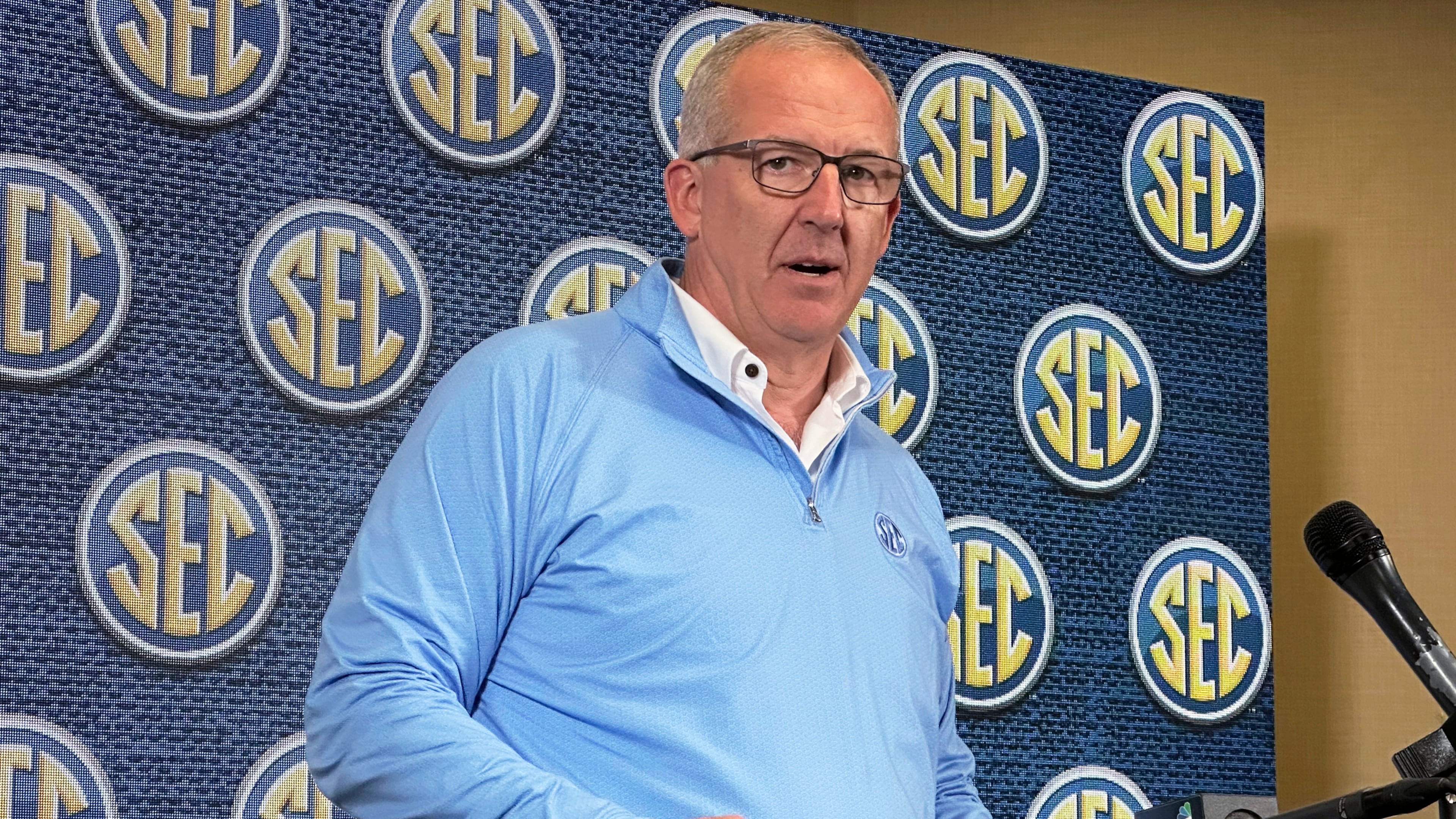
MIRAMAR BEACH, Fla. — Greg Sankey put a cap on the SEC Spring Meetings on Thursday, noting “effective” communication, even though no new bylaws were put in place or even voted on.
Sankey, in the wake of the SEC’s threat to “break away” with its own set of rules and enforcement, noted that despite the lack of new bylaws, there is a provision for something called “Commissioner’s Regulation,” which could open the door for immediate change if needed.
“We did have a long conversation about how do we adapt to the environment in a more timely fashion from our own policy standpoint, rather than waiting from Destin (spring meetings) to Destin (next year’s spring meetings) to change some of our policies,” Sankey said.
“Half of our manual is bylaws, half of our manual is commissioner regulations — commissioner’s regulations can change quickly (but still require a vote of athletic directors), bylaws require a three-week notice.” he said. “So we thought about how we go through the summer being able to change some of our own policies.”
The timeliness of Sankey’s reminder of SEC governance seemed appropriate amid a fluid landscape filled with rules and enforcement inconsistencies that have left leadership frustrated with the lack of stability.
University of Georgia leadership has been among the more vocal on the potential, and possible need for the SEC to provide leadership in rules and governance on rules that would provide order amid chaotic times.
“What I hope will happen,” UGA president Jere Morehead said, “is that we will take definitive steps and not just talk about it again. We’ve been talking long enough.”
Morehead commented on the SEC Network during the meetings that collegiate sports is worse off than it was a year ago.
A new bill was introduced in the U.S. Senate — the “Protect College Sports Act” — that addresses many of the issues involving eligibility, transfers and NIL dealings.
But a segment of the bill providing an option to pool media rights if 75% of the 138 football subdivision schools were in an agreement, hit a sour note with Sankey.
So much so that the SEC issued a statement during Sankey’s final press conference on Thursday that stated, “… the SEC does not support assigning its media rights to a third party and remains firmly committed to independently conducting its media negotiations.”
The Big Ten is likely to reject the media pooling stipulation of the new bill as well.
The Big Ten and SEC hold the largest media rights packages, per school, among the Power 4 conferences.
The 18-member Big Ten has an average payout of approximately $1.15 billion through 2030, while the 16-member SEC’s average payout averages $710 million through its current contract running through 2034, per Yahoo Sports.
Sankey noted conversations will continue as collegiate sports leaders look to solve the challenges brought about by the newer NIL and transfer legislation in the wake of last year’s House vs. NCAA settlement.
“There’s agreement that in the middle of going through this change we have to come together, rally together for solutions both here and nationally,” Sankey said.
“We’re going through transformation, we’re going through historic levels of change …. the middle of any process is messy.”
But, Sankey pointed out, “There’s also another side, which there are enormous benefits being enjoyed by young people participating in our teams in a healthy way.”
Sankey reiterated the SEC’s support of an expansion to a 16-team College Football Playoff field, from 12, but noted there will continue to be research done on the 24-team playoff.
About the Author
Mike covers Sports Business for The Atlanta Journal-Constitution and has 32 years of journalism experience, the past 10 for AJC.com and DawgNation. Mike is a Heisman Trophy voter & former Football Writers President named National FWAA National Beat Writer of the Year in 2018 and inducted into the Greater Lansing Area Sports Hall of Fame in 2024