The discipline divide: Students examine why schools punish Black girls more

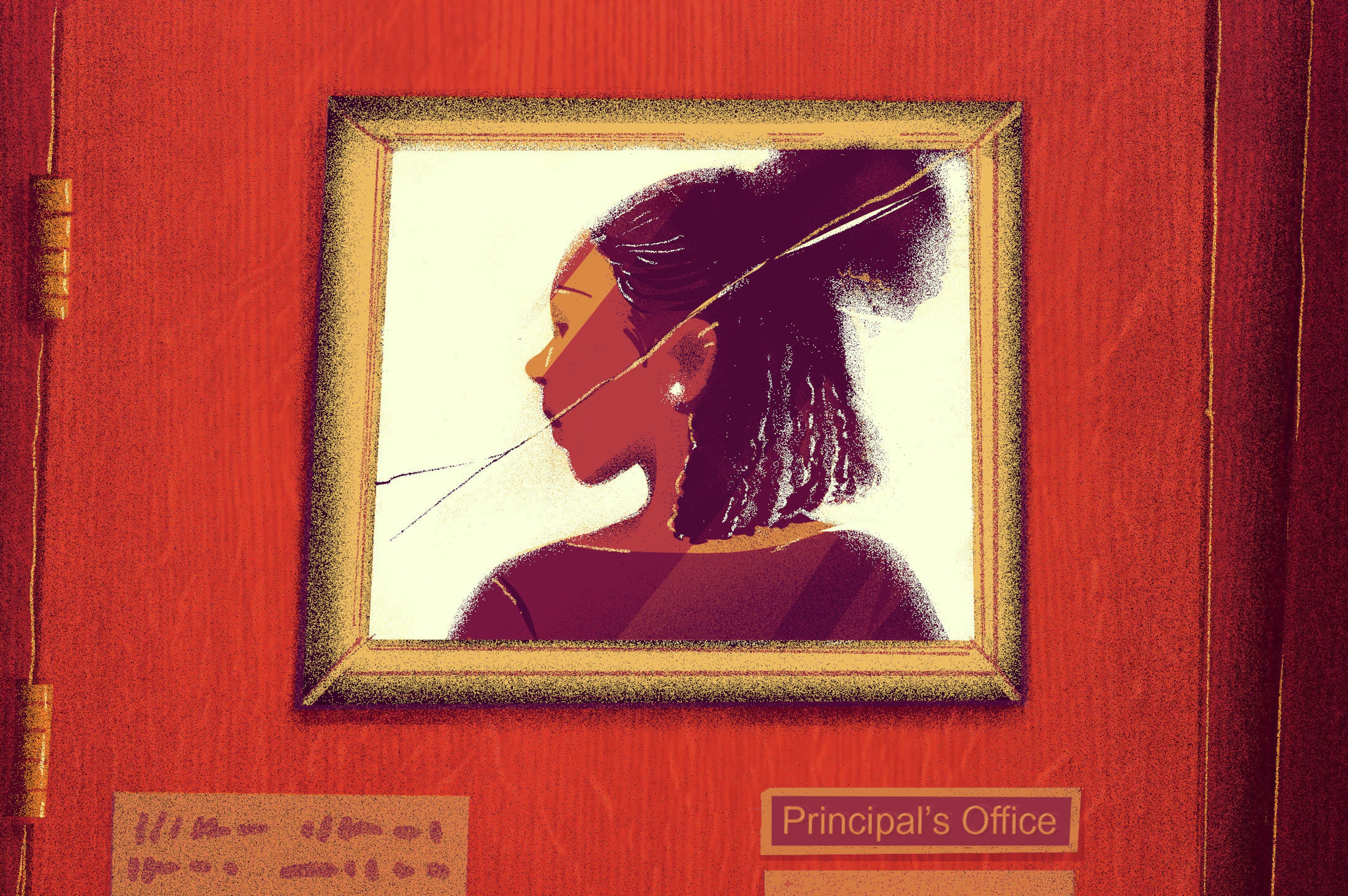
Black girls don’t break more school rules than their non-Black peers, but data show they receive harsher punishments when they step out of line. A group of Georgia high school students wanted to find out how those exclusionary discipline practices, like suspensions and expulsions, can shape Black girls’ educational experiences.
They embarked on a monthslong research project, led by Makiah Lyons, an attorney for the Intercultural Development Research Association, which has a field office in Georgia. The nonprofit focuses on educational equity, and Lyons wanted to examine discipline disparities affecting Black girls since she was a legal intern for the group a few years ago.
“One of the challenges I was coming up against is that there really just wasn’t so much research that had happened in the South,” she said.
There was some data, though. A 2022 report from the federal Government Accountability Office showed nationally Black girls were more likely than their peers to receive exclusionary discipline. The analysis found during the 2017-18 school year, Black girls made up 15% of girls enrolled in public schools in the United States, but received 45% of out-of-school suspensions, 37% of in-school suspensions and 43% of expulsions. The report identified multiple forms of bias as factors that contribute to the higher discipline of Black girls.
The work by Lyons and the students resulted in a report published online in January called “Listen to us: Black girls speak out on biased discipline and its impact in Atlanta-area schools.” The research includes recommendations for schools, such as modifying discipline policies so that girls aren’t singled out. Terms like “disrespect” and “insubordinate behavior” should be clearly defined, they suggest. Students should also have the opportunity to make up missed work if they are removed from class, the group recommends.
Lyons and the students recently talked to The Atlanta Journal-Constitution about the research.
In Georgia, Black and white girls account for a similar percentage of public school enrollment, but Black girls are almost five times more likely to be suspended, six times more likely to be referred to juvenile court and 2.5 times more likely to be expelled, according to the Governor’s Office of Student Achievement.
State data from GOSA also showed Black girls face harsher discipline than Black boys, underscoring racial and gender inequities in how schools apply discipline policies.
The students reviewed state discipline data from the 2022-23 school year, the most recent numbers available when they began the project. They noticed that in several metro Atlanta districts, almost all of the girls who received exclusionary discipline were Black. That was true for Atlanta Public Schools, the City Schools of Decatur, and Clayton, DeKalb, Douglas and Fulton counties. All of those districts except Fulton and Decatur have majority-Black public school populations.
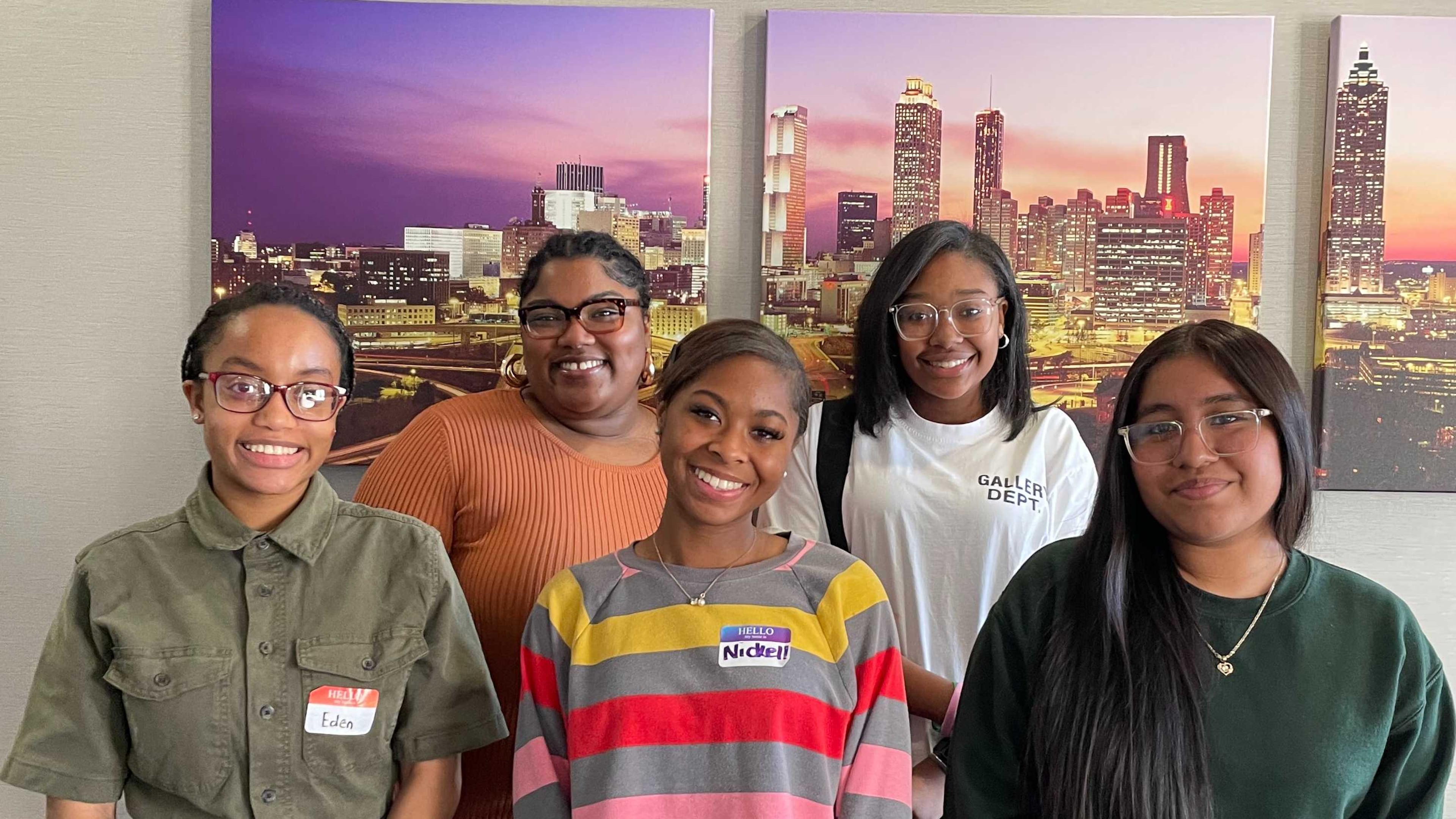
Lyons wanted to hear from girls who’d been affected by exclusionary discipline to understand their personal experiences — and she wanted students to lead the effort. So, she reached out to Cool Girls, an Atlanta nonprofit focused on girls’ self-empowerment. That’s how she met Nickell Brown, Betsy Garcia, Natiyya Carswell and Eden Frazier.
The four high school students worked on the project for about eight months during the 2024-25 school year. They held data workshops and focus groups with Black girls who’d been affected by exclusionary practices. Lyons said the work wasn’t always easy.
“We had a very hard time recruiting girls to talk about these experiences, because they are just not pleasant … and so we would have whole focus groups and nobody would show up, or we would get not a lot of interest in sharing,” she said.
But the girls kept at it, Lyons said. Students started to show up to talk about those not-so-pleasant experiences.
“They mentioned getting pulled out of class for defying dress code, even though … their white counterparts were able to wear the exact same clothing they were wearing, but (the Black girls) got in trouble for it, and they had to get sent out of class, and they were forced to go to detention or (in-school suspension), or even suspended from class sometimes,” Frazier said.
Garcia recalled similar stories. Girls committed minor infractions — talking back, disobeying directions, violating the dress code — and were often removed from class. Researchers refer to the practice as “school pushout.”
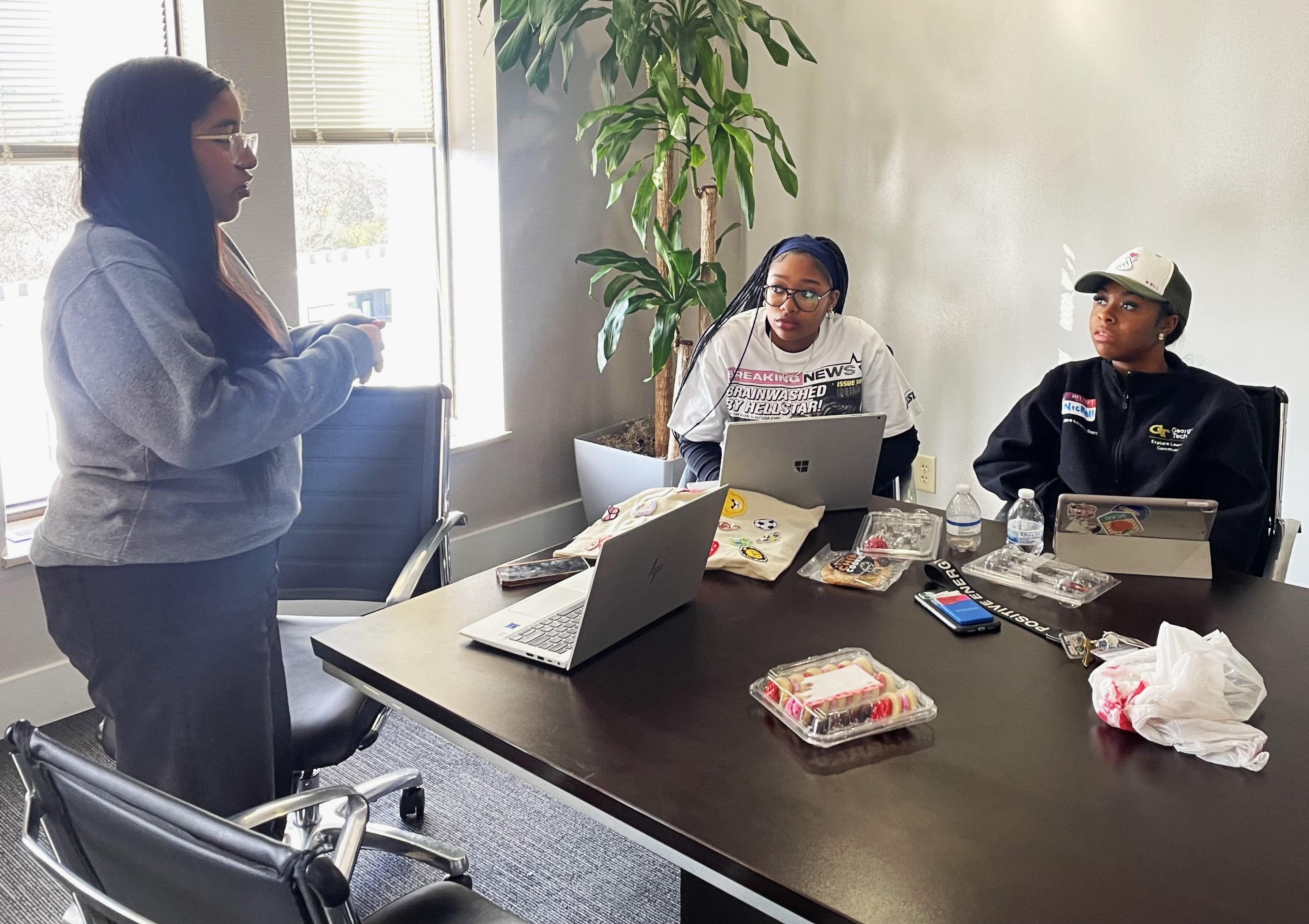
“(The students will) come back (after a suspension), and sometimes the teacher is on a whole different topic already, tests have happened, exams, quizzes have happened, and what happens is you have no one to help you, no one to support you, nobody to help you catch up,” she said.
Research shows the frequent use of exclusionary discipline practices can cause students to become disengaged from school, drop out or end up in the juvenile justice system. For Garcia, now a freshman at Agnes Scott College who previously thought about becoming a teacher, pulling students out of class is counterproductive.
“(Schools should be) helping these students realize that their actions aren’t the best or that they can make better choices, but they punish them and … set them up to not have a great future, which is the opposite of what school should be like,” she said.
Students have prompted dress code policy changes in some metro Atlanta school districts in recent years. APS modified its dress code in 2017 after students, including a female fifth grader who gained national media attention, urged the school board to scrap descriptions like “distracting” in the district’s policy.
The DeKalb County School District also updated its dress code in 2023 after students complained it discriminated against female students and students of color. Previously, students could face in-school suspension the first or second time they violated the rules. The updated code only penalizes repeat offenders. The new regulations also eliminated gender-specific language about clothing and avoided targeting students from specific cultures or religions.
Gwinnett, the state’s largest school district, has tried in recent years to address concerns that Black students are disciplined more frequently than the overall student body by moving away from suspensions in favor of less punitive actions such as relationship-building and restorative justice. The policy had a bumpy rollout, as some school officials and parents complained that incidents had increased since its implementation.
Brown, now a sophomore at Clark Atlanta University and planning to be a journalist, said she’s proud of the IDRA project and is glad she took part in it.
“I think we did a great job ... we got to show people this is a real issue that’s going on, because we always talk about young Black boys, but (there’s) never really a light shone on young Black girls,” she said.
Brown said it’s important for teachers and school administrators not to make assumptions about students based on their appearance.
“Let kids be kids,” she said. “Don’t try to make them feel like they should be less than because that builds up and that creates someone that’s kind of rebellious, because it’s like, ‘Oh, you want me to be like this? Well, I’m gonna be like that.’ So … don’t put stereotypes on young kids because that stays with them.”
BY THE NUMBERS: BLACK GIRLS AND SCHOOL DISCIPLINE
Black and white girls made up similar shares of the school population in Georgia during the 2022-23 school year; still, Black girls were:
- five times more likely to be disciplined.
- six times more likely to be referred to juvenile court.
- 2½ times more likely to be expelled.
Nationally, during the 2017-18 school year, Black girls made up 15% of the girls in U.S. public schools, but:
- received 45% of out-of-school suspensions.
- received 37% of in-school suspensions.
- received 43% of expulsions.
Sources: Georgia Governor’s Office of Student Achievement, U.S. Government Accountability Office
About the Author

Martha Dalton is a journalist for The Atlanta Journal-Constitution, writing about K-12 education. She was previously a senior education reporter at WABE, Atlanta's NPR affiliate. Before that, she was a general assignment reporter at CNN Radio. Martha has worked in media for more than 20 years. She taught elementary school in a previous life.