Going to the beach in Georgia? So are hungry birds and nesting sea turtles.
The traditional start of summer vacation season — Memorial Day — is little more than a week away. Soon, a steady stream of vacationers will be heading to Georgia’s beautiful beaches for some fun and relaxation.
But the beaches are not just vacation hot spots. Also heading there now are multitudes of migrating shorebirds, seabirds and sea turtles to nest, feed and rest. Great hordes of prehistoric-looking horseshoe crabs also are coming in to spawn. For all of these creatures, the coast’s patchwork of barrier islands, beaches, sandbars, salt marshes, tidal creeks and estuaries are vitally important for survival.
It sets the scene in May for some high-stakes drama — including a gluttonous feast for shorebirds. The gluttony kicks off when countless numbers of horseshoe crabs crawl upon sandy beaches and sandbars — mostly at night — to mate and lay billions of BB-size, greenish eggs.
As the eggs emerge from the females, hordes of squirming males frenziedly compete to externally fertilize the eggs.
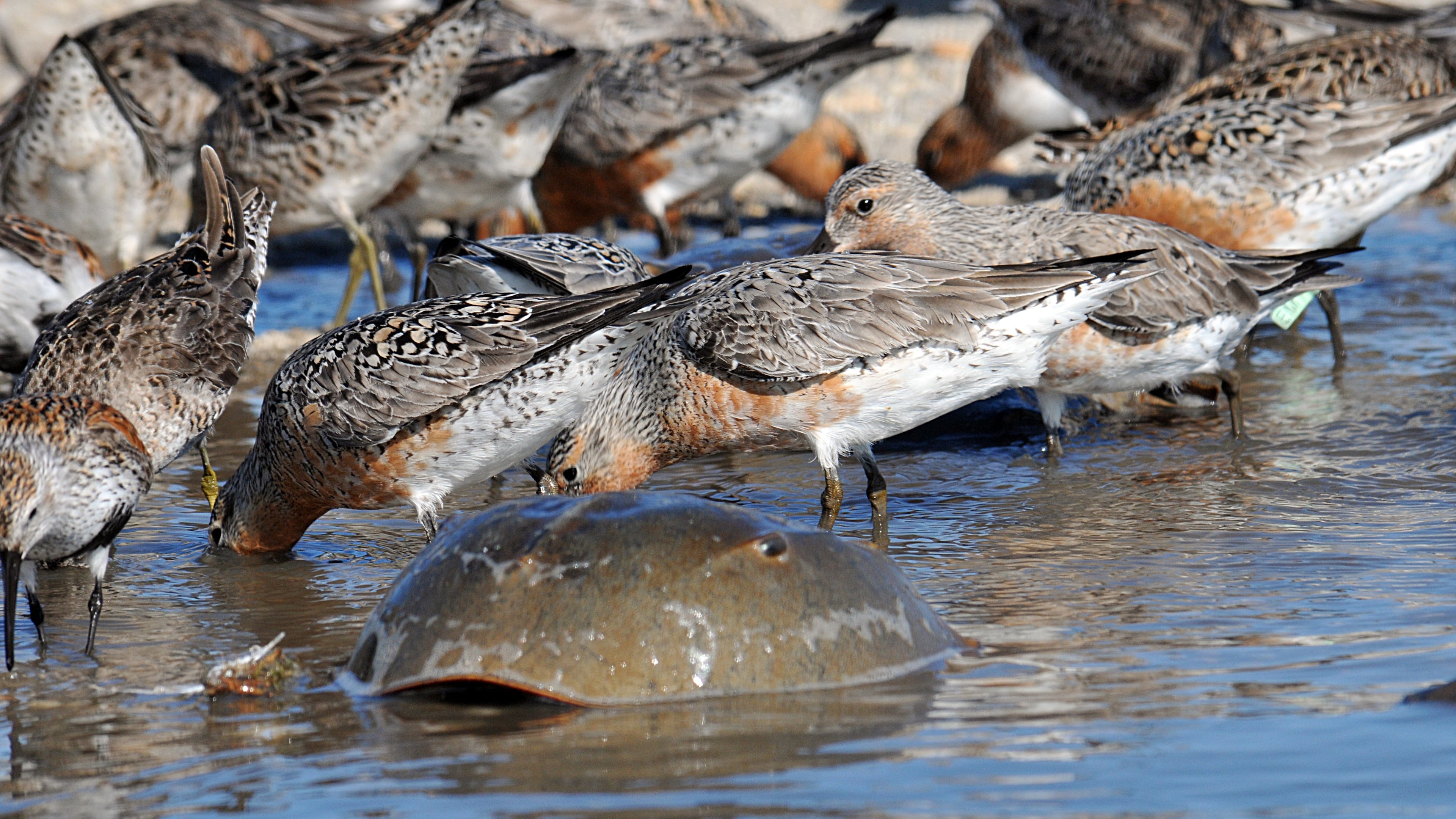
Then comes the feast. Following the nightly spawnings, swirling flocks of ravenous shorebirds — red knots, dunlins, plovers, sandpipers, dowitchers, sanderlings, turnstones, whimbrels — jostle each other to gobble up the eggs.
The eggs are a crucial energy source for the shorebirds, which are migrating from winter homes as far south as Argentina to summer nesting grounds in the Arctic. Scientists believe that shorebirds time their migrations to coincide with horseshoe crab spawning in May and June. (Shorebirds are a distinct group of water birds that live along the shore and share certain characteristics, such as round heads and long, pointed beaks for probing in sand,)
Georgia’s coast is a prime stopover for thousands of these long-distance travelers, whose voracious feeding restores body fat to fuel the rest of their grueling trek to the Arctic. The birds also feed on the abundant fiddler crabs and clams inhabiting salt marshes and mudflats, but horseshoe crab eggs are their primary food in spring.
Georgia’s importance for shorebirds was affirmed in 2017 when the Western Hemisphere Shorebird Reserve Network (WHSRN) designated the state’s barrier islands — from Tybee to Cumberland — a landscape of hemispheric importance for shorebirds.
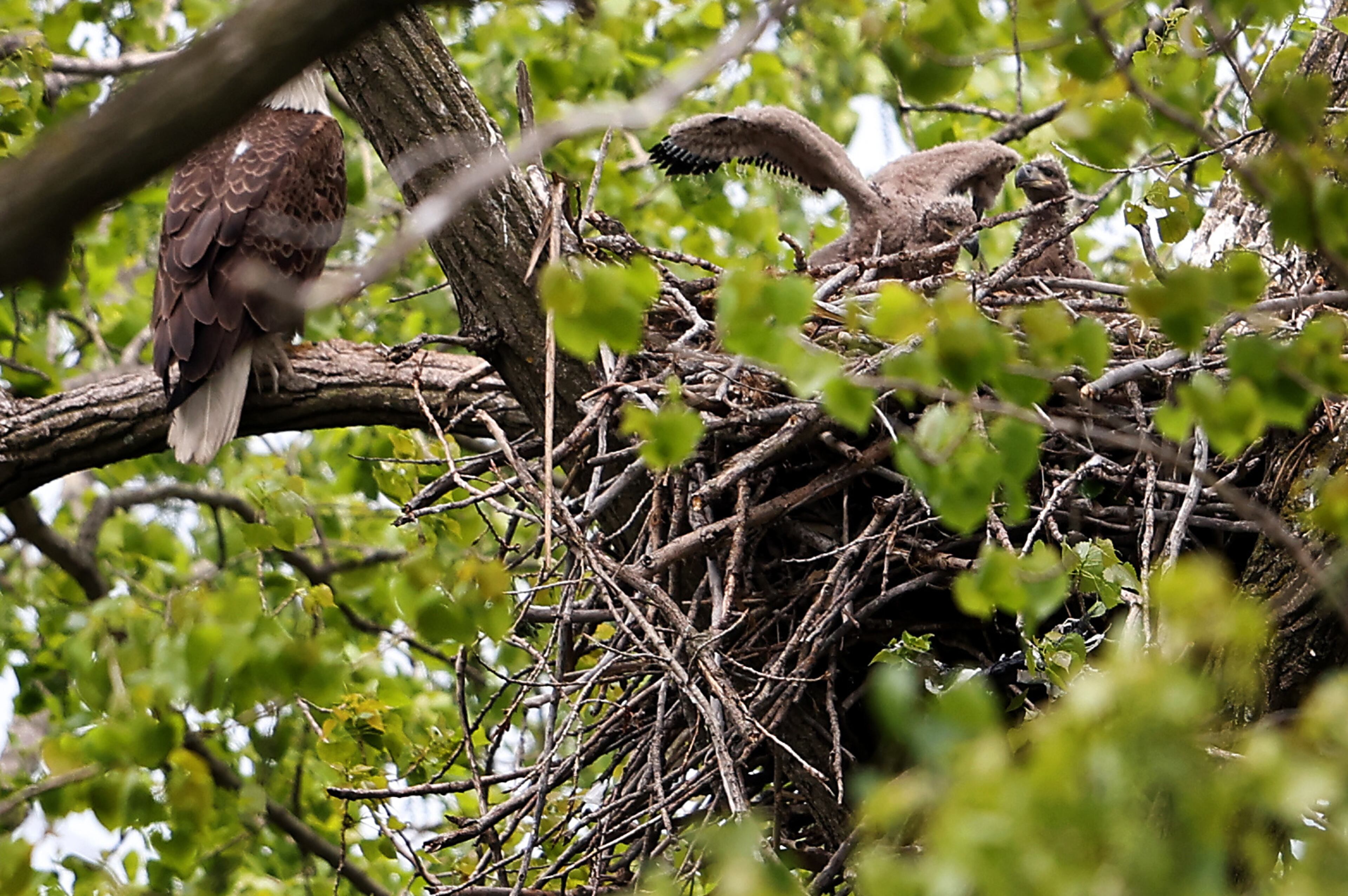
Some shorebirds, however, don’t head farther north. They stay in Georgia to nest on its beaches and other shoreline landforms above the high tide mark. They include oystercatchers, willets, black skimmers and Wilson’s plovers. Also raising their young on the beaches are colonies of seabirds, including royal terns, gull-billed terns and laughing gulls.
The state Department of Natural Resources warns beachgoers to avoid disturbing the birds. “Disturbance by people or pets can cause adult birds to abandon eggs and chicks, exposing them to heat and predators,” the DNR says.
Other creatures also are returning to the beaches for egg-laying — the sea turtles, primarily loggerheads. Their nesting season already has started: This year’s first nests were discovered on May 5 on Cumberland and St. Catherines islands.
Like other sea turtles, loggerheads – named for their large heads – crawl ashore on barrier island beaches, dig a hole at the base of sand dunes and lay their eggs, usually at night.
Now getting underway on all the beaches is daily monitoring of turtle nests by trained volunteers. When they find a nest, they mark and document it and screen it to protect it from predators such as raccoons and wild hogs. Nests too close to high tide may be relocated. Nests continue to be monitored until the baby turtles hatch 55-60 days after egg laying.
Georgia’s loggerheads are classified as “threatened” under the Endangered Species Act. The DNR also cautions beachgoers to avoid disturbing sea turtles. If you encounter one on the beach, says the DNR, remain quiet, still and at a distance; limit beach lighting as much as possible.
IN THE SKY: From David Dundee, retired Tellus Science Museum astronomer: The moon is new today and will be first quarter next weekend (May 23). Over the next two weeks, Mercury becomes visible low in the west around midnight. Venus is low in the west at sunset. Mars and Saturn are low in the east just before sunrise.
Charles Seabrook can be reached at Charles.seabrook@yahoo.com.