New round of Lebanon-Israel talks kicks off as fighting between Israel and Hezbollah continues

BEIRUT (AP) — A third round of direct talks between Israel and Lebanon kicked off in Washington Thursday, days before the expiration of a truce that reduced but did not stop the fighting between Israel and the Lebanese militant group Hezbollah.
Lebanese officials are hoping that the two-day negotiations will yield a new ceasefire deal and pave the way for tackling a series of thorny issues, including the withdrawal of Israeli forces from southern Lebanon and the disarmament of Hezbollah.
A U.S. State Department official described the full day of discussions on Thursday as “productive and positive” and said the U.S. looks forward to day two on Friday. The official spoke on condition of anonymity to describe the closed-door session and did not offer additional details.
The Trump administration has been pushing for a breakthrough between the two neighbors that have been officially in a state of war since Israel was created in 1948.
Hezbollah, however, is not part of those talks and has been vocally opposed to Lebanon engaging in direct negotiations with Israel.
Israel and the Iranian-backed militant group have continued to trade near-constant fire across the border despite a U.S.-brokered ceasefire on April 17. Initially a 10-day truce, it was then extended for another three weeks.
Talks move to a higher level
U.S. Secretary of State Marco Rubio, who attended the first Israel-Lebanon meetings in Washington in April, was with President Donald Trump on a visit to China and did not attend Thursday's session.
The current round of talks represents a step toward more serious negotiations, with higher-level envoys from Lebanon and Israel taking part after the initial preparatory sessions were headed by the ambassadors of the two countries to Washington.
Lebanon's envoy heading up Thursday's talks, Simon Karam, is an attorney and well-connected former Lebanese ambassador to the U.S. who recently represented Lebanon in indirect talks with Israel over implementation of the ceasefire that preceded the latest outbreak of war between Israel and Hezbollah. On the Israeli side, Deputy National Security Adviser Yossi Draznin was set to attend.
There are still large gaps in what the two sides want from the direct talks. Israeli officials have focused on disarming Hezbollah and described the negotiations as a precursor to a potential normalization of diplomatic relations. Lebanese officials have said they are seeking a security agreement or armistice that would stop short of normalization.
Trump has publicly called for a meeting between Lebanese President Joseph Aoun and Israeli Prime Minister Benjamin Netanyahu, while Aoun has declined to meet or speak directly with Netanyahu at this stage — a move that would likely generate blowback in Lebanon.
Lebanon hopes for ceasefire
A senior Lebanese official familiar with the negotiations in Washington said Thursday Lebanon wants a complete ceasefire first and then would negotiate withdrawal of Israeli forces. The issue of Hezbollah’s weapons would be dealt with politically in Lebanon after that, he said. The official spoke on condition of anonymity to speak frankly about the talks.
He said Lebanon is “relying heavily on the U.S. administration” to provide it with leverage in the negotiations with Israel and believes that Trump is “sincere” in his desire to help Lebanon.
The official said that when Trump and Aoun spoke recently, Trump did not pressure Aoun to meet or speak with Netanyahu and was understanding when Aoun explained his reasons for declining. According to the official, Aoun told Trump that if he went to Washington and shook hands with Netanyahu and the talks later fell apart, it could have internal repercussions in Lebanon and discredit Trump.
Aoun told Trump that if the two countries are able to reach a security deal, he would come to the White House and “inaugurate” it and Trump responded by saying “I like that,” the official said.
If Israel agrees to a ceasefire and withdraws from the territory it is occupying in southern Lebanon, the official said, he believes Hezbollah would agree to an arrangement under which it would hand over its weapons to the Lebanese army, which could keep some of them and destroy others. Under this plan, Lebanon could consider allowing individual Hezbollah fighters to join the Lebanese army if they meet eligibility requirements, he said.
Meanwhile, Israeli Ambassador to the U.S. Yechiel Leiter in an interview with Israeli news site Walla News Thursday said Israel aims “to negotiate for full peace as if Hezbollah does not exist — borders, embassies, visas, tourism, everything.” Despite Lebanese officials’ assertions that diplomatic normalization is not currently on the table, he said he believes “it is possible to reach such an agreement within a few months.” But, he added, “it would be conditioned on the success of the second track — dismantling Hezbollah.”
Hezbollah and Israel trade fire
Thursday’s talks opened hours after a Hezbollah drone exploded inside Israel, injuring three civilians, two of them severely, according to the Israeli military and hospitals. It was the first instance of civilians injured by Hezbollah projectiles since the ceasefire, according to reports from Israel’s rescue service, Magen David Adom.
Israel has struggled to halt frequent Hezbollah drone attacks on Israeli forces in southern Lebanon and over the border in northern Israel.
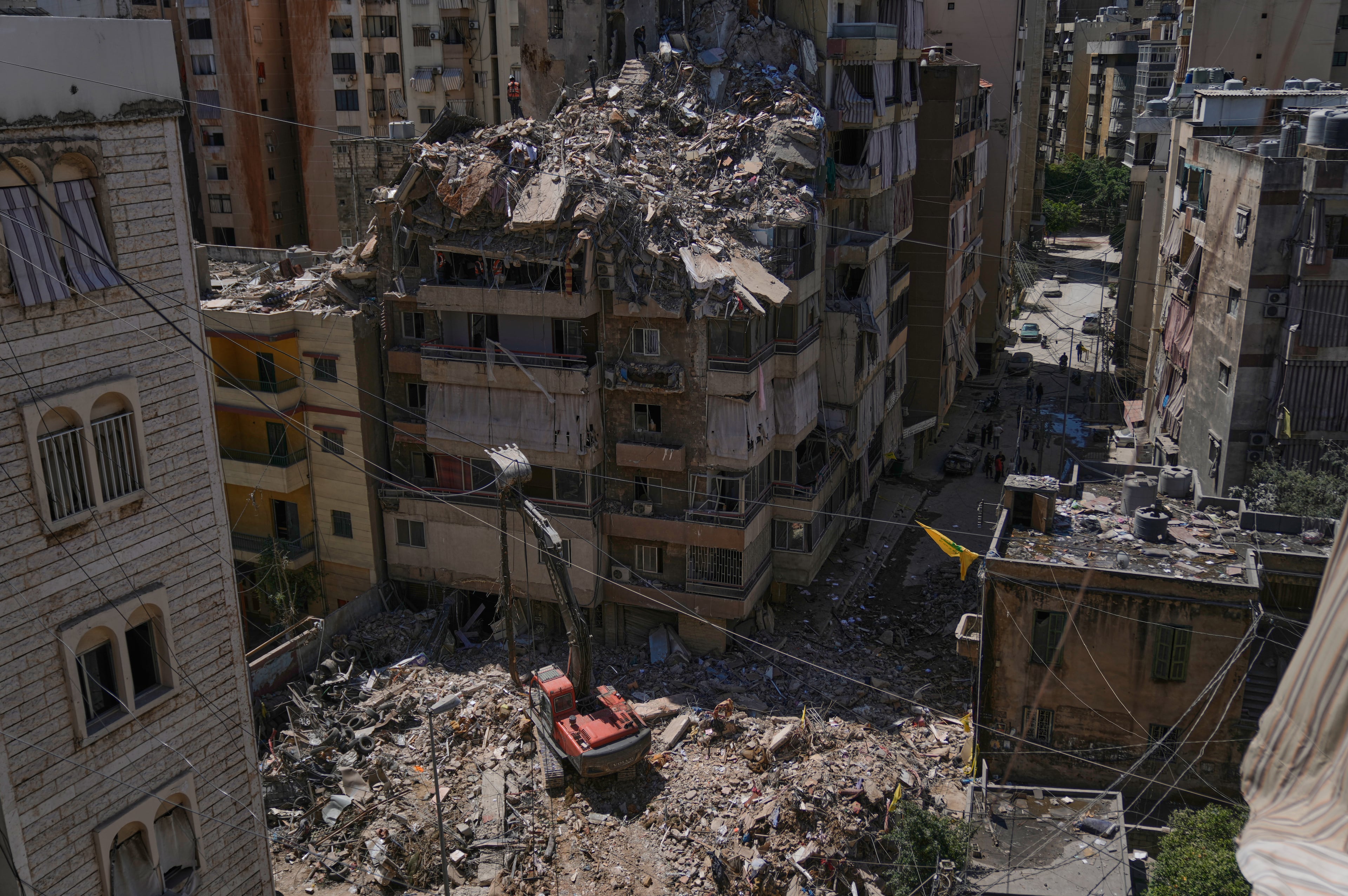
Israel has also continued to carry out strikes in Lebanon. On Wednesday, Israel struck seven vehicles in Lebanon — three of them on the main highway just south of Beirut — killing 12 people including a woman and her two children, the Lebanese Health Ministry said. Later strikes in southern Lebanon killed another 10 people, including six children, the ministry said.
Lebanon’s Health Ministry says that since the war began on March 2, 2,896 people have been killed — including around 400 since the nominal ceasefire was implemented — and 8,824 wounded. Eighteen Israeli soldiers, two Israeli civilians inside Israel and a defense contractor working in southern Lebanon have been killed on the Israeli side.
U.N. peacekeeping forces in southern Lebanon have also been caught in the crossfire and six have been killed.
___
Associated Press writers Joseph Federman in Jerusalem and Matthew Lee in Washington contributed.
More Stories
The Latest