Using technology like license plate readers to fight crimes protects Georgians
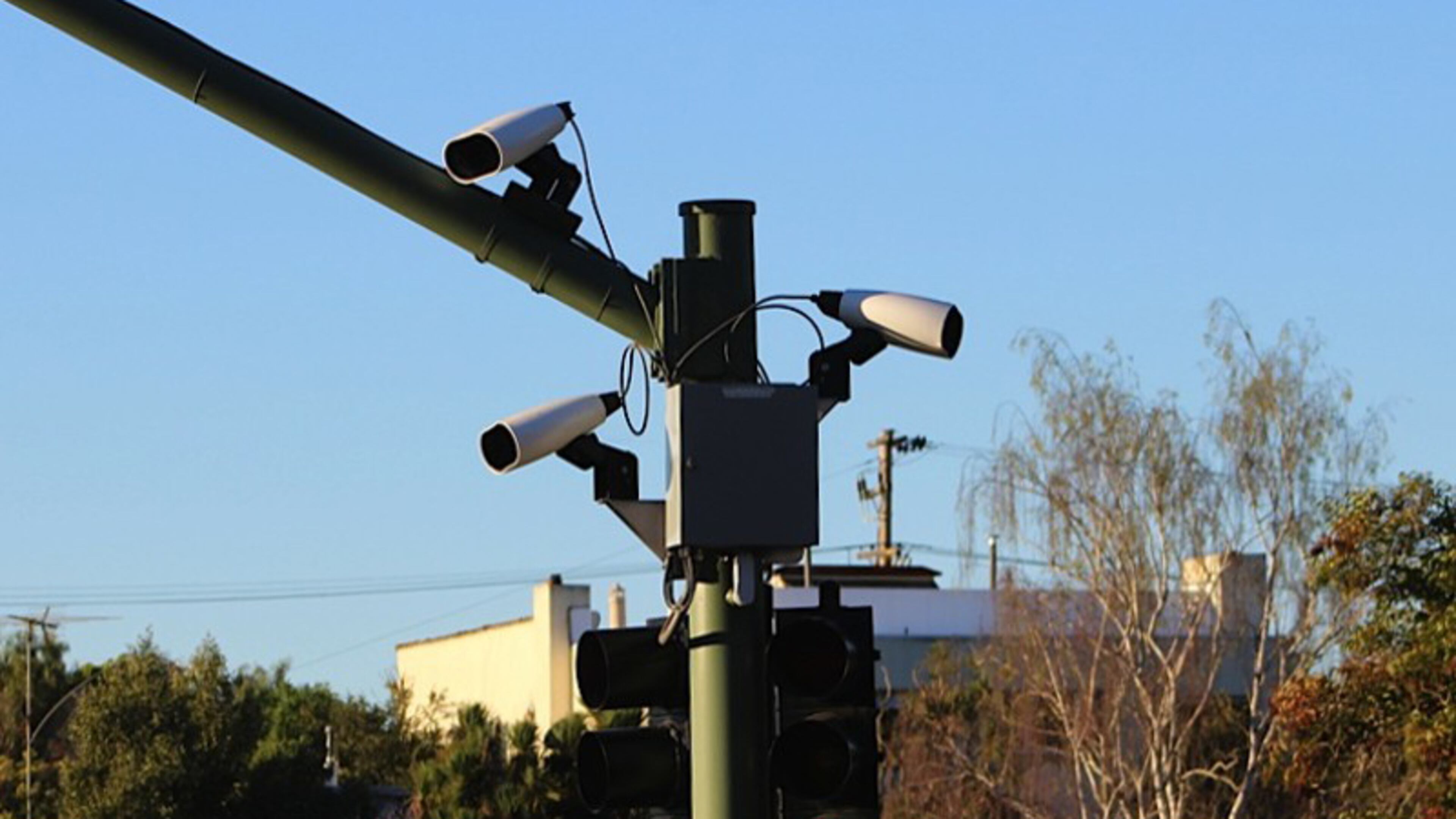
Each day, law enforcement officers across Georgia work to protect our communities, stop violent criminals and deliver justice for victims. That mission is constant, critical and essential to keeping our families and neighborhoods safe.
Yet every day, criminal threats are evolving, from more organized violent networks to complex human trafficking rings that can move victims quickly and unnoticed.
To keep up, Georgia’s law enforcement agencies must be equipped with tools that allow them to act just as swiftly in real time. When used responsibly, technology can make the difference between a case going cold and a victim being found.
One of the most effective modern tools is license plate reader technology, which many law enforcement officials cite among the most valuable crime-fighting tools in their arsenal.
These systems are simple in concept and powerful in practice. License plate readers positioned along public roadways capture license plates and compare them against databases of vehicles connected to crimes. When a match is identified, officers are alerted immediately.
How LPRs have helped law enforcement solve crimes

When a child is abducted, minutes can make the difference between recovery and tragedy. Time is constantly working against the authorities, and this is not theoretical.
A missing Washington state child was recently found in Georgia with a registered sex offender because LPR alerts helped law enforcement quickly locate the vehicle. Because of this technology, missing children are not statistics — they are found.
When traffickers move victims across jurisdictions, speed and coordination are critical.
LPR technology allows agencies to quickly identify vehicles of interest, track movement across regions and coordinate a rapid response. No criminal stops at the city or county lines. Now, neither does law enforcement.
We have also seen how this technology helps bring swift justice in the most tragic cases. After the senseless shooting of a 3-year-old in DeKalb County, suspects were identified and arrested within hours. LPR technology played a critical role in that case.
This is not just about solving one crime, it is about stopping the next one.
LPR technology is also helping locate vulnerable adults. In Cobb County, an 87-year-old man with dementia was reported missing after failing to attend an event. Local law enforcement was able to track his vehicle using LPRs and quickly narrow the search. He was safely located and reunited with his family.
Even outside law enforcement, community leaders recognize the value of this approach. As the NAACP Oakland Branch has been quoted, tools like these represent “a practical, effective step toward reducing crime and safeguarding our families, local businesses, and public spaces.”
We have a basic duty to keep our state and communities safe. What is also important to me as Georgia’s attorney general is that this technology operates within well-established constitutional boundaries.
Georgia has limits on use and safeguards against abuse
This year, I filed two separate amicus briefs in the 11th U.S. Circuit Court of Appeals addressing this very issue as it relates to both privacy and public safety.
These briefs, filed in United States v. Slaybaugh and Schemel v. City of Marco Island, address a fundamental question: Does the use of license plate reader technology violate any constitutional rights of our citizens?
In Slaybaugh, I argued the U.S. Supreme Court made clear in United States v. Knotts there is no reasonable expectation of privacy in vehicle movements on public roads. I also emphasized that stripping law enforcement of this tool would hinder investigations into violent crimes, kidnappings and human trafficking.
Critics of LPR technology often point to the Supreme Court’s decision in Carpenter v. United States, but that case addressed continuous, real-time cellphone tracking that can reveal the whole of a person’s private life. As I argued in Schemel v. City of Marco Island, license plate reader technology is fundamentally different. LPRs capture only limited observations of vehicles on public roads, not the kind of comprehensive surveillance the court addressed in Carpenter.
This technology is fundamentally different from the type of tracking the court has warned against. It is a momentary piece of data collected in public space, and courts across the country have consistently recognized that distinction and upheld its use.
Public safety is not an abstract concept. It is measured in lives protected, victims rescued and communities made safer.
Georgia has taken steps to ensure this technology is used responsibly. State law places limits on data retention, restricts access and imposes penalties for misuse. These safeguards ensure we are not only effective, but also faithful to the principles of citizen safety we are sworn to uphold.
As criminal networks become more sophisticated and mobile, law enforcement must be equipped to respond. LPR technology gives officers the ability to act faster, share information more effectively and protect the public more efficiently.
Georgia’s law enforcement officers are committed to keeping our communities safe. With the right tools, and the right safeguards, they are better equipped than ever to do just that.
Chris Carr is the attorney general for the state of Georgia. He is a candidate for governor in the May 19 Republican statewide primary election.