Atlanta parks are now among the top 20 in the U.S. We can’t go backward.

Atlanta has received exciting news: The city climbed from 21st to 18th nationally in Trust for Public Land’s 2026 ParkScore rankings, another milestone in Atlanta’s growing national reputation as a city with one of the best park systems in the United States.
At the start of Mayor Andre Dickens’ first term, Atlanta ranked 49th out of the nation’s 100 largest cities, and only 72% of residents lived within a 10-minute walk of a park.
Today, that number has grown to 85%, and Atlanta has entered the top 20 for the first time.
That progress deserves celebration. It reflects the leadership of Mayor Dickens and the Atlanta City Council, along with years of work by residents, advocates, nonprofit and philanthropic partners, the Department of Parks and Recreation and other city leaders.
Together, their investments have expanded access to green space and brought long-overdue attention to neighborhoods that historically lacked quality parks.
But rankings do not maintain parks.
If funding stagnates, city will lose ground
As Atlanta celebrates this achievement, residents are gathering for the city’s fiscal year 2027 public budget hearing, and we should recognize a simple truth: If Atlanta’s ParkScore is rising, our investment in parks — especially maintenance — should rise, too.
Because progress is fragile.
In recent years, the city of Atlanta has made meaningful commitments to parks funding. In 2023, the City Council doubled the Park Improvement Fund, dedicating 80% of the increase toward maintenance. Those investments are producing visible results. Atlanta now invests $312 per resident in parks, more than double the national ParkScore average.
Yet park maintenance was underfunded for decades, and increased funding for park maintenance remains an area that still needs attention.
As I recently shared with City Council, maintaining current funding levels while simultaneously adding new parks and amenities means we are effectively losing ground.
Anyone who uses Atlanta’s parks understands this instinctively. A park is only as welcoming as its daily condition. Residents notice whether grass is cut, restrooms function, playgrounds are safe, trails are clean and athletic fields are usable. Families are not thinking about rankings when they visit their neighborhood park. They are asking a simpler question: Does this space feel cared for?
Maintenance is not glamorous, but it is foundational.
Historic Fourth Ward and Cook parks are models
The good news is that investing in parks is also one of the smartest decisions a city can make with limited resources. Research from Trust for Public Land shows parks generate $3 in economic benefits for every $1 invested. Parks improve physical and mental health, reduce stormwater costs, support economic development, strengthen neighborhoods and provide free recreational opportunities for families.
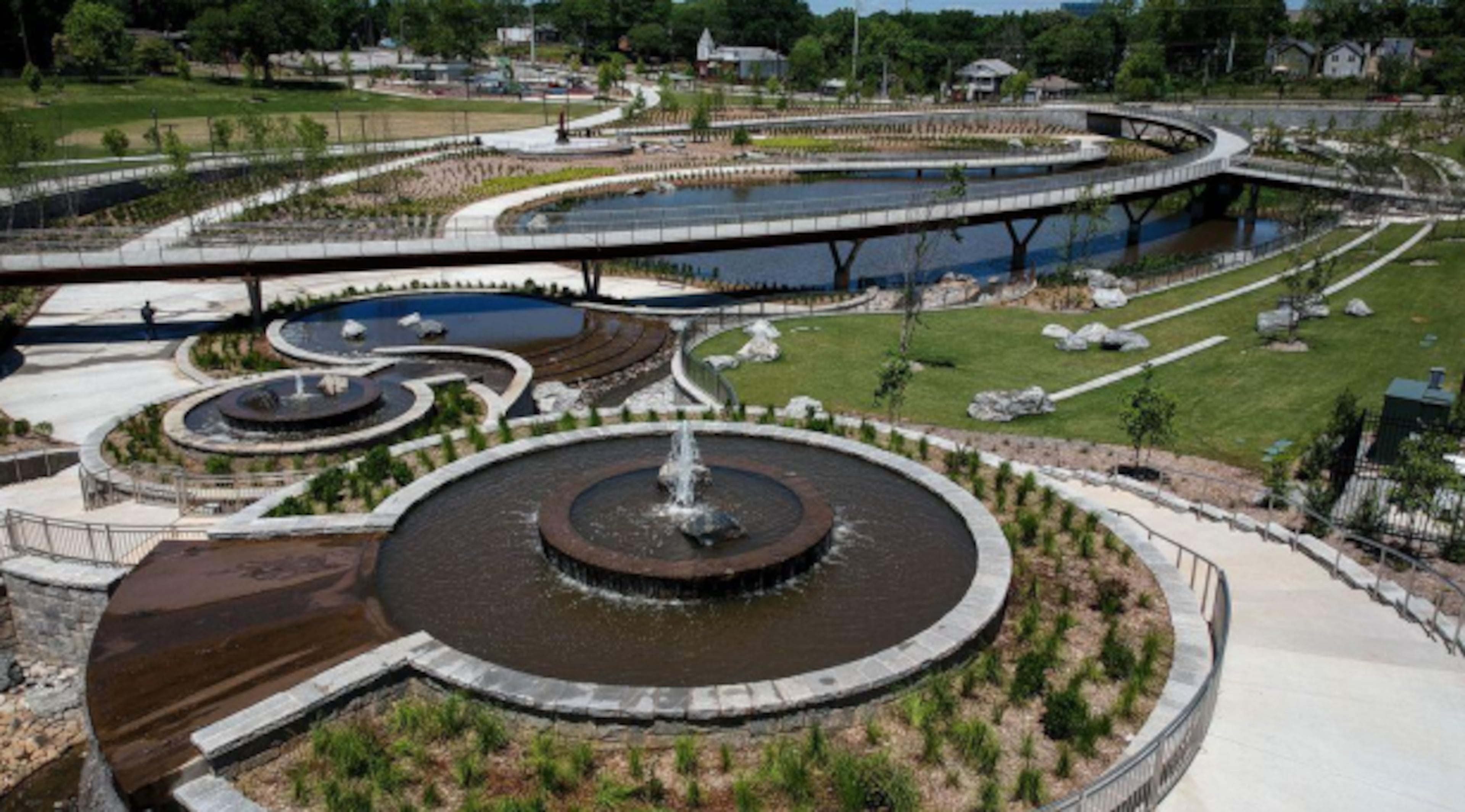
Atlanta already sees these benefits firsthand. Historic Fourth Ward Park and Cook Park help protect nearby communities from flooding while also serving as beloved public gathering spaces. Our parks support public health, climate resilience and community connection all at once.
Parks are essential infrastructure. We depend on them for mental health, physical health, and protection from the extreme heat and torrential floods driven by climate change. To keep essential infrastructure working, you must maintain it. Which is why it is vital not to cut funding for park maintenance in the city’s fiscal year 2027 budget. It should be increased to protect the city’s growing investment in our parks and our communities.
If Atlanta wants to continue improving quality of life for residents, we cannot afford to slow down now. We need greater transparency around park maintenance funding and sustained operational investment that matches the growth of our park system.
Atlanta’s rising ParkScore is an indicator that our investment in parks is paying off. But the real measure of success is whether every resident, in every neighborhood, can count on a clean, safe, welcoming park close to home.
That future is possible, but only if we continue investing in it.
Michael Halicki is president and CEO of Park Pride.
More Stories
The Latest


