Supreme Court challengers violated judicial rules, state watchdog alleges
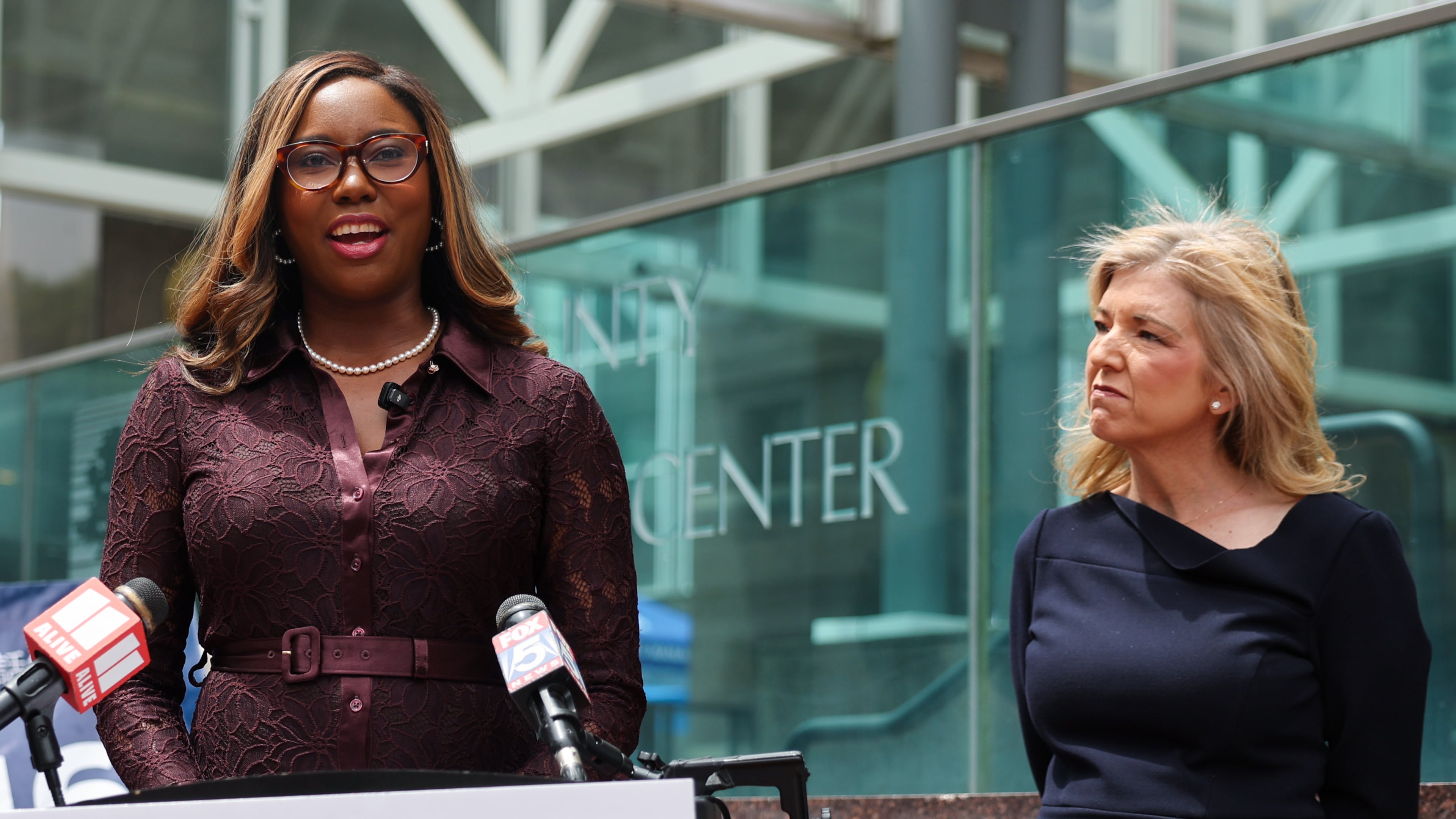
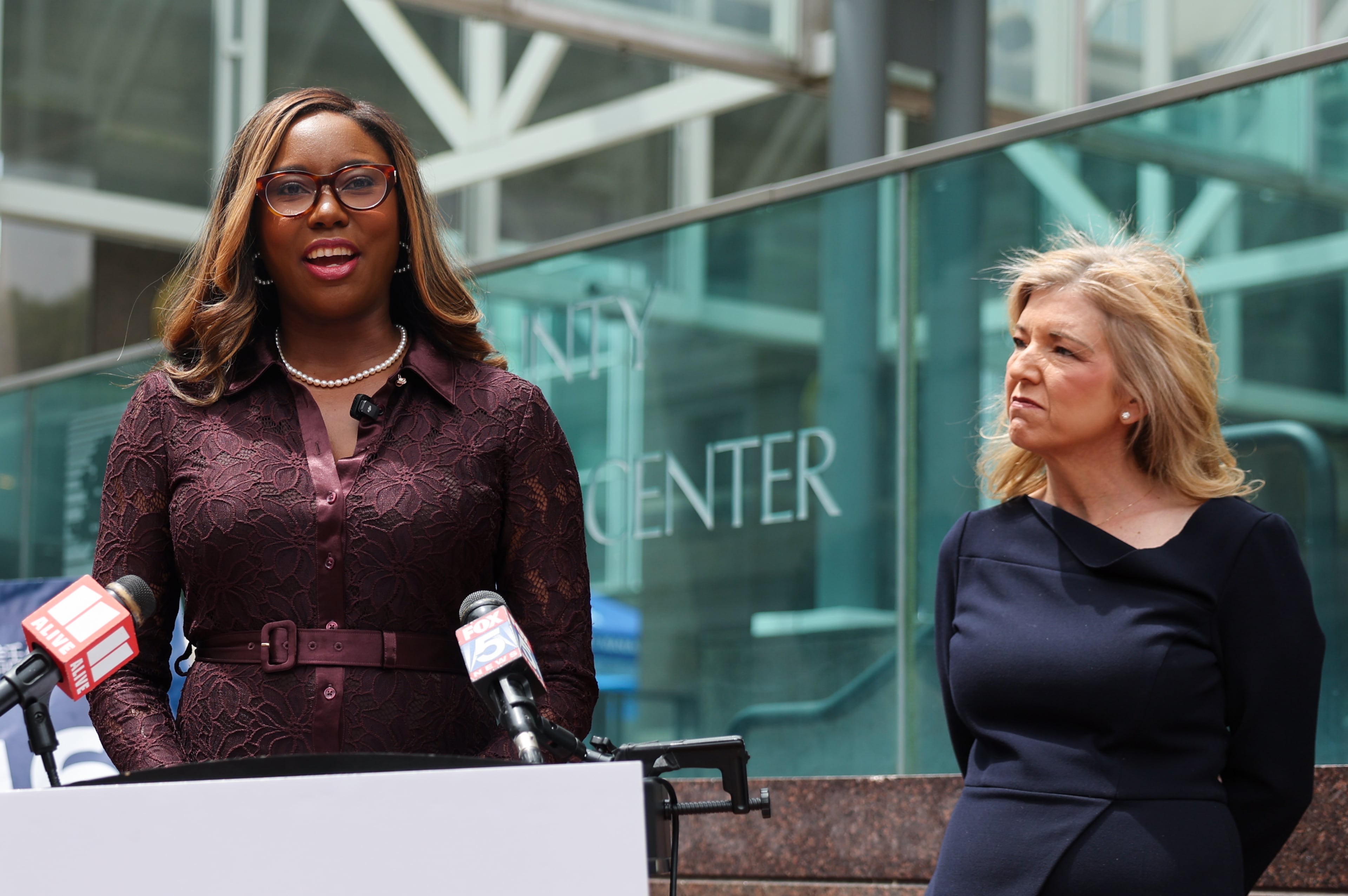
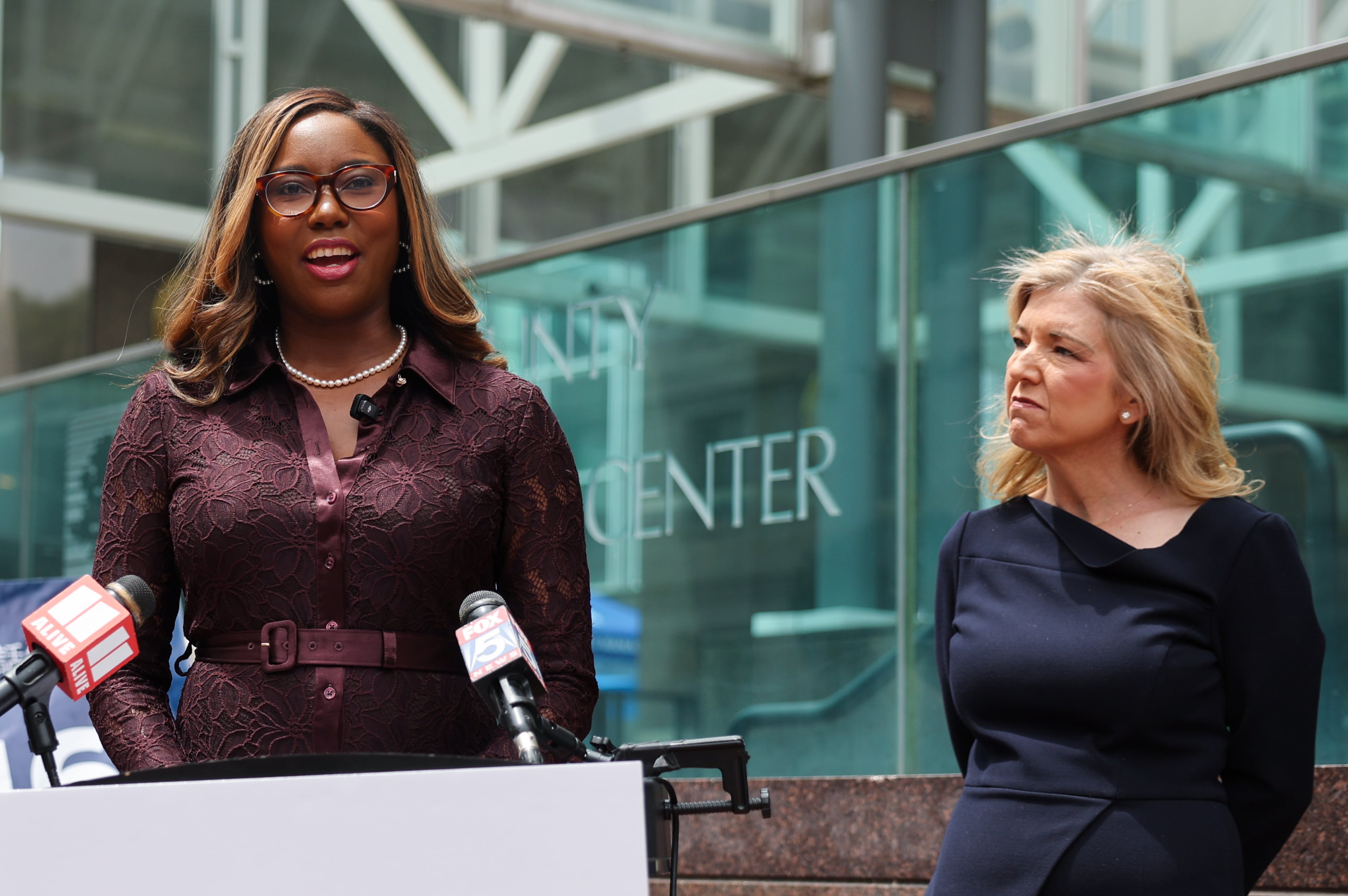
Two left-leaning plaintiff attorneys trying to unseat Republican-appointed justices of the Georgia Supreme Court have violated judicial conduct rules, the state’s judicial watchdog says.
Jen Jordan and Miracle Rankin, backed by former President Barack Obama and other Democrats, have been warned that their public endorsement of one another and promise to restore abortion rights is in violation of the Georgia Code of Judicial Conduct.
Judicial elections in Georgia are nonpartisan but races for the state Supreme Court have become highly politicized in recent years.
The Georgia Judicial Qualifications Commission, which investigates and prosecutes allegations of judicial misconduct, forms a special committee during election years to address allegations of ethical misconduct in campaigns for judicial office.
In statements that became publicly available Monday, the JQC committee said it “reasonably believes” that Jordan and Rankin violated the judicial code by publicly endorsing one another and promising to restore abortion rights. The code applies to judges as well as those vying for a seat on the bench. The committee said a full JQC investigation could result.
Race for Georgia Supreme Court
Georgia Supreme Court races used to be low-profile and sleepy. Not this year. Two prominent, left-leaning attorneys are trying to unseat incumbent justices in nonpartisan races.
The candidates: Learn about who’s on the ballot
Live updates: Georgia primary elections
Political battle: Supreme Court challengers violated judicial rules, state watchdog alleges
Sealed lawsuit: Supreme Court candidates sued the state in secret. A judge is keeping it that way.
Opinion: Secretive Georgia commission silences judicial candidates from speaking out
New strategy: Georgia Supreme Court races turn into partisan battleground
Georgia Voter Guide: The races, candidates and frequestly asked questions
Jordan and Rankin said the JQC’s attempt to silence them and other judicial candidates violates their free speech rights. Jordan called it “a purely political move to keep voters in the dark.”
“Georgians have made it clear that they care deeply about abortion rights and women’s health,” Jordan said Monday. “It is both my responsibility and my First Amendment right to keep talking about these serious issues that affect every person in our state, because voters deserve the truth.”
Rankin said she’s trying to educate Georgians about who she is and what she believes.
“They have chosen to attack my campaign because my message is resonating with voters — that judges should serve all Georgians, without fear or favor,” she said. “I trust that Georgians will see this for what it is.”
Charlie Bailey, chair of the Democratic Party of Georgia, said the JQC’s statements about Jordan and Rankin are “cynical, substanceless and toothless.”
“Even the JQC itself has said that this statement does not constitute a final determination, and we will continue to tell voters the truth about what’s at stake in this race,” he said.
The JQC’s public statements lift the lid on a federal court battle that has been fought in secret ahead of Tuesday’s judicial elections.
The case was filed under seal at the start of May by Jordan and Rankin, who sought to temporarily block the JQC committee members from taking certain actions during voting. Filings in the case, which is still being litigated, remained under seal until Monday.
Jordan is challenging Justice Sarah Hawkins Warren, Georgia’s former solicitor general. Rankin is challenging Justice Charlie Bethel, a former Republican state senator. Both Warren and Bethel were appointed in 2018 by then-Gov. Nathan Deal and defeated challenges in 2020.
Jordan and Rankin appeared together in a campaign advertisement, promising they’ll fight together for what’s fair, which violates a rule prohibiting judicial candidates from publicly endorsing other candidates for public office, the JQC committee said.
It said Jordan and Rankin also appeared at public events related to reproductive freedom and promised to restore abortion rights, in violation of a rule that prohibits judicial candidates from stating or promising how they will rule on issues likely to come before the court.
Under the state’s judicial conduct rules, judges and judicial candidates are supposed to be impartial.
Georgia’s anti-abortion law is still being litigated and the case is likely to return to the state Supreme Court.
In the last cycle of state Supreme Court elections in 2024, candidate John Barrow ran afoul of the JQC in the same way after focusing his campaign on abortion rights. Barrow, a former Democratic U.S. Congressman, ultimately failed in his bid to unseat Justice Andrew Pinson, who was appointed to the court by Gov. Brian Kemp in 2022.
A ruling in the Barrow case was the basis for Jordan and Rankin filing their case against the JQC committee under seal, court records show.
The JQC was able to publish its statements about Jordan and Rankin after appealing to the 11th U.S. Circuit Court of Appeals, which temporarily put on hold an earlier order preventing publication of the statements until after the elections.
The initial order was issued Friday under seal by Chief U.S. District Judge Leslie Abrams Gardner, the sister of former Georgia House Democratic leader Stacey Abrams.
In its appeal to the 11th Circuit, the JQC said its statements about Rankin and Jordan should be published before Tuesday’s elections so the candidates “do not succeed in securing an unfair electoral advantage and depriving Georgia’s voters of relevant information as they cast their ballots.”
In a divided ruling Sunday, an 11th Circuit panel said if it didn’t stay Gardner’s order and allow the JQC statements to be published, “the public will be harmed by not knowing about, and getting to evaluate for themselves, the credible allegations of misconduct.”
11th Circuit judges Kevin Newsom and Robert Luck, both appointed by President Donald Trump, formed the panel’s majority. Judge Embry Kidd, appointed by former President Joe Biden, dissented.
Kidd said the 11th Circuit shouldn’t have exercised its ability to issue an emergency ruling in the case, saying that is “typically reserved for life or death situations.” He indicated Rankin and Jordan’s claim that the JQC is violating their free speech rights has some merit, and said the potential harm to the candidates if the JQC statements are published outweighs the potential harm to the state.
“Importantly, any harm to the commission could be remedied by the imposition of postelection sanctions, including suspension and removal, if its investigation confirms that the candidates violated the code,” Kidd said. The same is not true for the candidates, since the bell of public misconduct allegations cannot be unrung."
Chuck Boring, an attorney for the JQC members, said they’re pleased with the 11th Circuit’s ruling, which “allows the Georgia JQC to continue to perform its constitutional and statutory duties.”
He declined to comment further on the case while it is still being litigated.
In an order Monday, Gardner said she granted Jordan and Rankin’s request to temporarily block publication of the JQC statements in part because the candidates’ comments about abortion rights are protected by the First Amendment. She said none of the challenged campaign language contained an explicit pledge by either candidate.
The judge also said the Georgia rule prohibiting judicial candidates from endorsing other candidates for public office is unlawfully vague.
Gardner said Jordan and Rankin recently self-censored their campaigns to avoid possible action by the JQC. She abstained from deciding whether Jordan and Rankin violated Georgia’s judicial conduct rules, saying that’s best handled by the JQC and the state Supreme Court.
“The immediate harm of a public statement alleging violations, without proper consideration of plaintiffs’ constitutional claims greatly (outweighs) the defendants’ right to make a public statement after only a preliminary review in what is supposed to be a confidential procedure according to the JQC’s own rules and Georgia statute,” Gardner said.
About the Author

Journalist Rosie Manins is a senior courts and legal affairs reporter for The Atlanta Journal-Constitution.