Georgia’s chaotic, unsettled primary season races to an unpredictable finish

Not so long ago, Georgia’s election cycle seemed headed toward a more predictable script with seasoned front-runners battling for the state’s top nominations. Instead, Tuesday‘s finale is shaping up to be one of the state’s most chaotic primary elections in decades.
A billionaire’s surprise campaign has turned the Republican race for governor into a $100 million free-for-all. The GOP contest for U.S. Senate has become a messy three-way scramble after Gov. Brian Kemp passed on a challenge to Democratic incumbent Jon Ossoff.
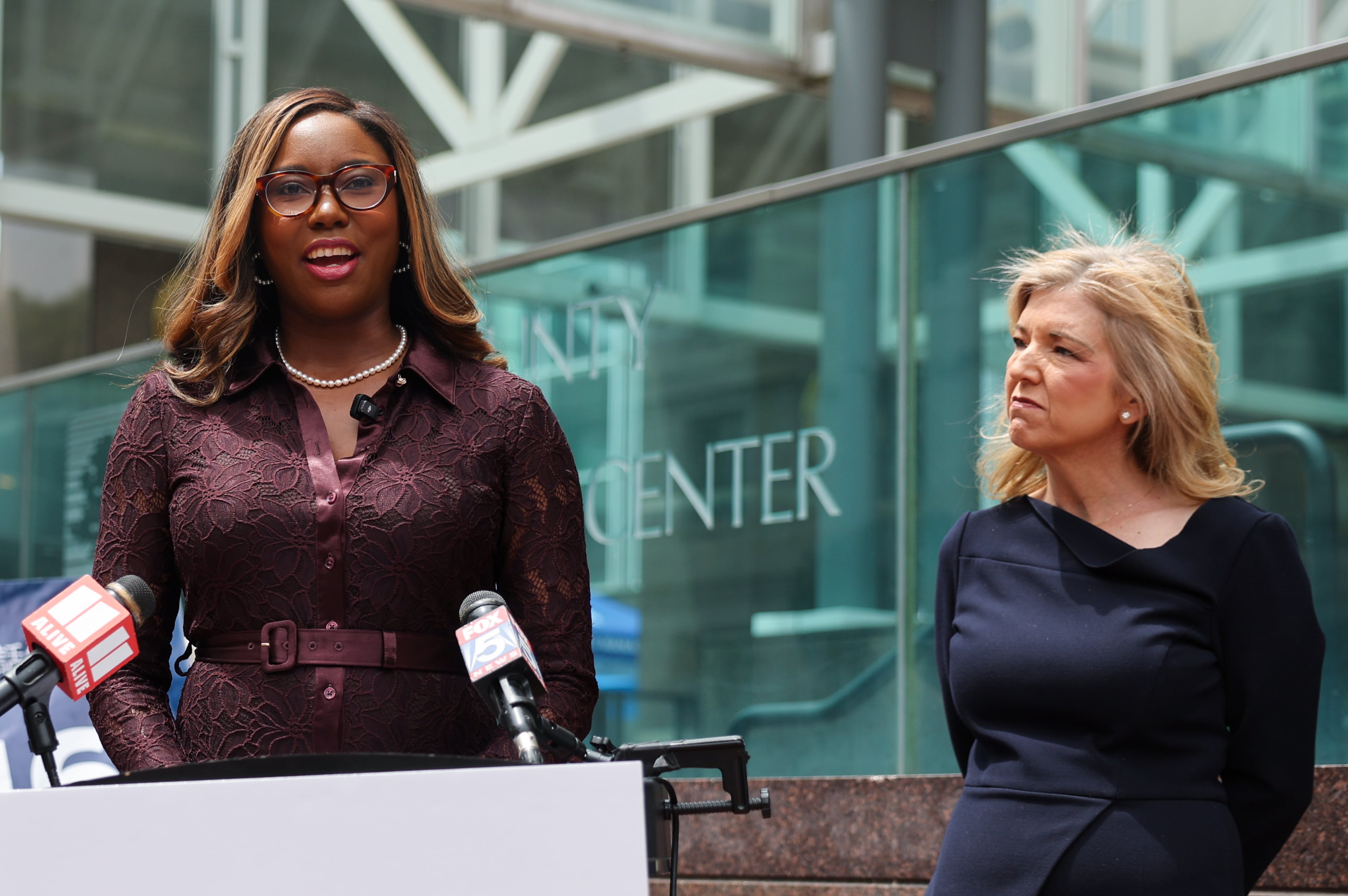
Democrats are torn over whether to rally behind former Atlanta Mayor Keisha Lance Bottoms or side with one of three alternatives: a next-generation progressive, a party elder or a former Republican who famously broke with Donald Trump.
Down-ticket contests are just as unsettled, with June runoffs expected in many of them. Polls show huge blocs of voters still undecided, even as Democrats are competing for legislative seats in more hostile Republican territory than they have in years.
All the while, two Georgia Supreme Court races have become proxy wars over abortion, elections and judicial independence. And a crop of open U.S. House seats has added even more uncertainty to an already crowded ballot.
And although Trump isn’t on the ballot, he’s effectively the gravitational force in almost every major race.
For all the money, ads and campaign trail warring, very little feels settled. And that might not be a bad thing.
Georgia Votes: Primary elections
Live updates: Georgia primary elections
Meet the candidates: Governor | U.S. Senate | Supreme Court
Controversial ruling: Supreme Court challengers violated judicial rules, state watchdog alleges
Latest polls: Governor | U.S. Senate
Election Day: Voting Tuesday? Here’s what you need to know
The stakes: Georgia’s chaotic, unsettled primary season races to an unpredictable finish
Early advantage: Democrats outpace Republicans in early voting period
Georgia Voter Guide: The races, candidates and frequestly asked questions
“There’s something healthy about insiders not being able to predict what’s about to happen,” said state Sen. Josh McLaurin, a Democratic candidate for lieutenant governor. “Record turnout means democracy is working. As hard as we candidates work on these campaigns, we have to remember it’s ultimately up to the people to decide.”
Here’s a closer look at the top races.
Governor
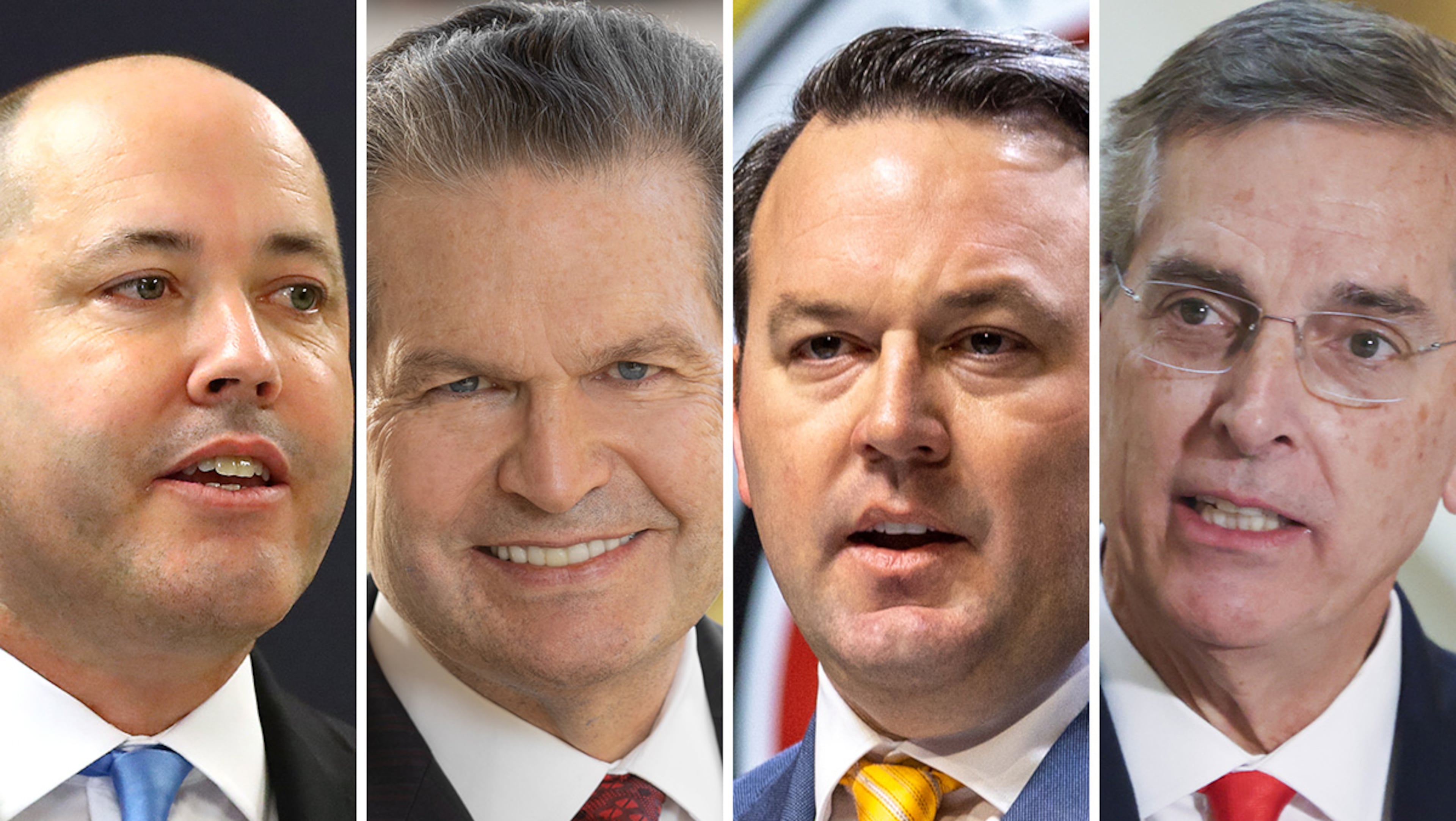
Republican Lt. Gov. Burt Jones once seemed on a glide path to the nomination. He secured Trump’s endorsement in August against two GOP rivals who have never been fully embraced by the MAGA base: Secretary of State Brad Raffensperger and Attorney General Chris Carr.
Then billionaire Rick Jackson upended the contest with a surprise entrance and a promise to put $50 million behind his case that he would be Trump’s “favorite governor.” He’s already blown past that pledge, spending at least $83 million of his own fortune.
Race for Georgia Governor
Brian Kemp is leaving after two terms, and six Democrats and five Republicans are running to replace him.
The candidates: Learn about who’s on the ballot
The polls: See who’s leading
Live updates: Georgia primary elections
Democrats: Debate reveals the race beneath the race
Republicans: Attack ads explode into real life
Money matters: The wealth divide defining Georgia’s governor’s race
Democratic front runner: Keisha Lance Bottoms is racing ahead as rivals battle each other
GOP battle: How Jones-Jackson clash has engulfed governor’s race — and Georgia politics
Georgia Voter Guide: The races, candidates and frequestly asked questions
Deadlocked in the polls, Jackson and Jones have made similar promises to slash income taxes, cap property taxes and advance Trump’s agenda. But their styles could hardly be more different, and their feud has grown so bitter that their rivals are appealing to voters exhausted by the brawling.
On the Democratic side, Bottoms has been the front-runner from the start after other big-name Democrats passed on the race, including two-time gubernatorial nominee Stacey Abrams; Jason Carter, grandson of the late President Jimmy Carter; and U.S. Rep. Lucy McBath.

Bottoms centers her pitch on pledges to bolster pre-K programs and expand Medicaid. She enjoys broad name recognition after her stint as Atlanta’s mayor and as a key adviser to former President Joe Biden, who endorsed her campaign.
But some Democrats worry her mayoral record during the tumult of the pandemic, which included struggles to deal with violent protests and lawlessness, along with her stunning decision not to seek a second term would hobble her bid.
Former Lt. Gov. Geoff Duncan argues he can win statewide because he’s done it before – as a Republican. Now a Democrat, he’s gone on a de facto apology tour around the state saying he will right his wrongs on policy issues if he’s elected.
Former state Sen. Jason Esteves has become a favorite of many mainstream Democrats drawn to his progressive platform, his background as former chair of the Atlanta school board and his argument the party needs generational change.
And Michael Thurmond brings decades of political experience, from his historic win as the first Black state lawmaker from Clarke County to statewide service as labor commissioner and later stints as DeKalb schools superintendent and chief executive.
U.S. Senate

It was one thing for Kemp to bow out of a race where he would have likely been the consensus GOP pick. It was another for him to put his chips behind former football coach Derek Dooley, a political newcomer who hardly voted before 2020.
But Kemp argues that only a fresh face unrooted in politics can defeat Ossoff, one of the most vulnerable Senate Democrats on paper but one of the party’s most formidable incumbents in practice.
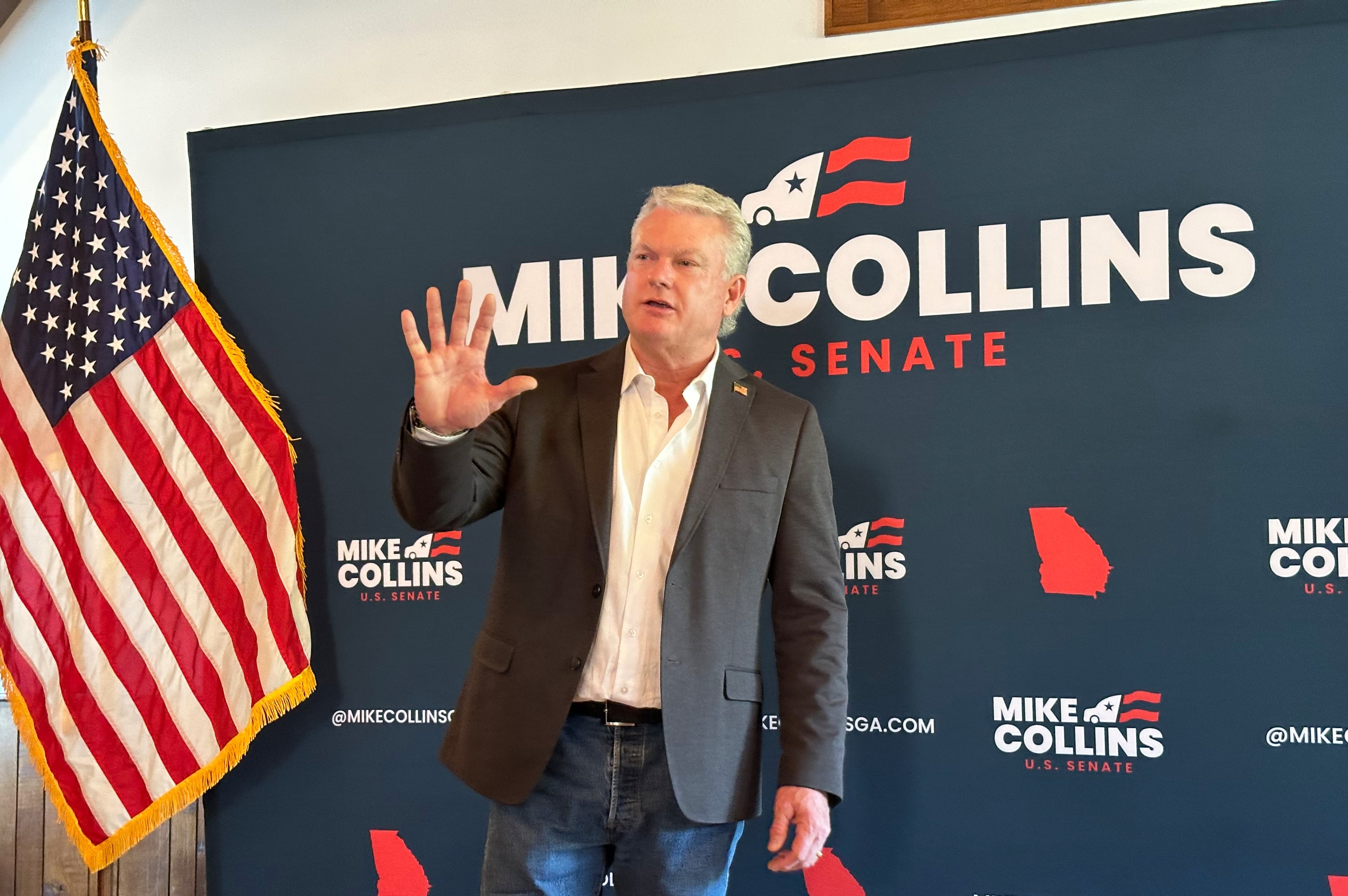
U.S. Reps. Buddy Carter and Mike Collins are making their own cases, each pointing to a conservative voting record as proof he is the race’s true “MAGA warrior.” Both also face attacks they are Washington insiders, along with scrutiny over ethics complaints filed against them.
The winner faces Ossoff, who has framed his campaign as both a check on Trump and a defense of democratic institutions. His campaign’s regular “Rally for the Republic” events capture his aims: not just a Senate race, but a referendum on Trump.
David Scott: 1945 - 2026
Georgia Democratic U.S. Rep. David Scott has died after nearly 50 years of elected office. He was the first Black chairman of the House Agriculture Committee, a powerful post shaping national farm and food policy.
Reactions: Current and former politicians remember David Scott
What’s next: Scott’s death triggers new race for his deep-blue House seat
Opinion: David Scott’s ‘great American story’
Already facing challengers: A new wave of candidates had entered the race for Georgia’s 13th Congressional District
His health and final years: ‘Age happens,’ Scott says but vows to keep doing job
Historic first: Scott lands key chairmanship of Agriculture Committee
Across party lines: Scott donates $1,000 to Republican colleague’s campaign
Former congressman Tom Price: Scott’s warmth and faith disarmed all
Policy fight: Inside Scott’s blistering condemnation of a ‘racist’ farm bill
U.S. House seats

After years of relatively little turnover, more than a third of Georgia’s U.S. House seats will change hands this cycle.
It started with the abrupt resignation of U.S. Rep. Marjorie Taylor Greene, prompting a special election earlier this year that became a proxy battle over Trump’s clout and whether constituents wanted another headline-grabbing firebrand or a more conventional conservative.
The victor, former prosecutor Clay Fuller, fits the latter mold and is the odds-on favorite to win a full term in the northwest Georgia seat. But Democrats are encouraged that Shawn Harris came closer than any recent Democratic contender in the deep-red district.
Two other Trump-backed candidates, state Rep. Houston Gaines and insurance executive Jim Kingston, have the edge in races to succeed Collins in northeast Georgia and Carter along the coast.
In the 9th District, Republican U.S. Rep. Andrew Clyde faces strong challenges from former Gainesville Mayor Sam Couvillon and Hall County Commissioner Gregg Poole.
Then there’s the more unpredictable battle to succeed U.S. Rep. Barry Loudermilk in a deep-red North Georgia seat. The top contenders include former Loudermilk aide Rob Adkerson, neurosurgeon John Cowan and Public Service Commissioner Tricia Pridemore.
On the Democratic side, the death of U.S. Rep. David Scott has thrown the race wide-open, with former Gwinnett School Board Chair Everton Blair, state Rep. Jasmine Clark and state Sen. Emanuel Jones among the top contenders. A separate special election in July will fill the remainder of Scott’s term.
Judicial contests
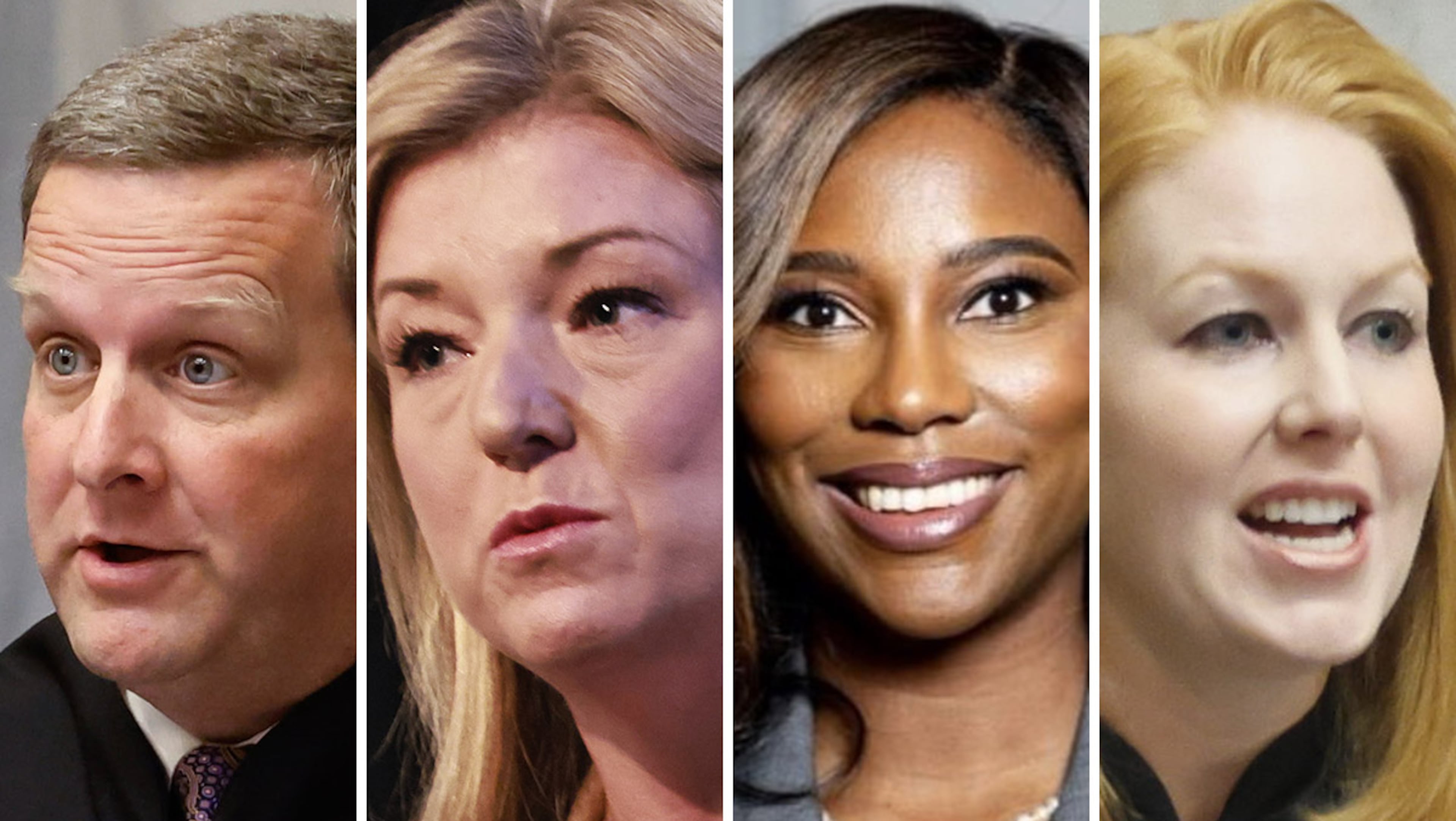
Georgia Supreme Court races are usually sleepy affairs, so overlooked that no incumbent justice has lost reelection in more than a century.
Not this year. Democrats are investing heavily in former state Sen. Jen Jordan and attorney Miracle Rankin to unseat Justices Charlie Bethel and Sarah Warren. The state party has staked a seven-figure ad campaign, and even former President Barack Obama and former Vice President Kamala Harris have weighed in.
Jordan and Rankin have cast their campaigns as a last line of defense on abortion rights, election laws and other issues likely to reach the courts.
The incumbents and their allies say that is exactly what makes the races so dangerous. They accuse the challengers of skirting judicial ethics rules by signaling how they might rule on future cases, turning officially nonpartisan contests into openly partisan proxy wars.
Turnout

Democrats enter Tuesday with two reasons for optimism: a surge in early voting and their most aggressive down-ballot push in decades.
They qualified candidates in 204 state legislative races, contesting 89% of House seats and 82% of Senate seats, their broadest slate of candidates in those contests in at least three decades, according to party officials.
They also hold an early vote edge heading into the final stretch. Roughly 55% of ballots cast so far have been Democratic ballots, compared with about 43% Republican. State officials said turnout during the first week of early voting was up 28% over the same period in 2022.
But that doesn’t necessarily forecast Democratic strength in November. Primary turnout is shaped by the races on the ballot, and Republicans could narrow that gap on Election Day.
What it does show is that Georgians are beginning to sort through races that have remained remarkably unsettled, with huge blocs of undecided voters despite months of ads, attacks and record spending.
About the Author

Greg Bluestein is the Atlanta Journal Constitution's chief political reporter. He is also an author, TV analyst and co-host of the Politically Georgia podcast.