What is Georgia’s ‘Project Pegusus’? Tech giant unveils $8 billion answer.

For two years, a mysterious magical creature has loomed over West Georgia.
An $8 billion data center proposal called “Project Pegasus” was announced in early 2024 for LaGrange, roughly 70 miles southwest of downtown Atlanta. But the rider of the Pegasus wasn’t disclosed publicly — until now.
Google unveiled itself this week as the prospective owner and operator of the large data center campus, which is the tech giant’s largest investment in the Peach State. The announcement was celebrated by the local leaders who helped recruit the project to an industrial park at 411 Pegasus Parkway.
“This is a great project with a great partner!” T. Scott Malone, president of the Development Authority of LaGrange, told The Atlanta Journal-Constitution in an email. “The world is changing at the speed of sound, and we are working hard for our community to stay on the leading edge of change.”
In a state that’s emerged as the fastest-growing market in the U.S. for new data centers, Project Pegasus stands out.
Located about 15 miles from the Georgia-Alabama border, the project ranks among the state’s largest data center projects under construction.
Malone said Project Pegasus began its flight in March 2024 when private equity firm Thor Equities purchased the 420-acre site near I-85. The site contains a shuttered industrial building and headquarters that was owned by packaging company Jindal Films. The 600,000-square-foot-plus existing structure will be retrofitted into Google’s data center campus — a rarity in Georgia, where most data centers are new construction.

The size and scope of Google’s project wasn’t disclosed. It also did not go through the Development of Regional Impact process, a state infrastructure review that typically includes estimates for power and water usage.
Critics of the data center surge in Georgia have raised concerns about the substantial amount of water and power the sites require, often using as much electricity as a city.
An on-site substation that served Jindal Films’ facility had an electrical capacity of 50 megawatts, which LaGrange City Manager Patrick Bowie said was the city’s “largest electric customer.” He said the data center project “fills a vital void” in the city’s utility grid after the former facility closed.
Thor Equities told the Columbus Ledger-Enquirer the site has the potential to expand to 400 megawatts — enough power for about 300,000 homes.
“We are excited to become a part of the LaGrange community,” Jen Ryan, Google’s regional head of data center public affairs, said in a news release. “More than just building a data center, our goal is to be a good neighbor.”
Google said the company covers “100% of the cost of power for the site and any infrastructure needs driven by its operations,” addressing a hot topic that has rippled through Georgia utility regulation hearings and the state Legislature. The company said it “will not pass the costs of its infrastructure growth onto local families.”
The company will also donate $1 million to the nonprofit Groundswell, specifically a program that helps subsidize utility costs. Groundswell CEO Michelle Moore said the donation will “support critical home repairs and energy efficiency upgrades for at least 50 LaGrange families.”
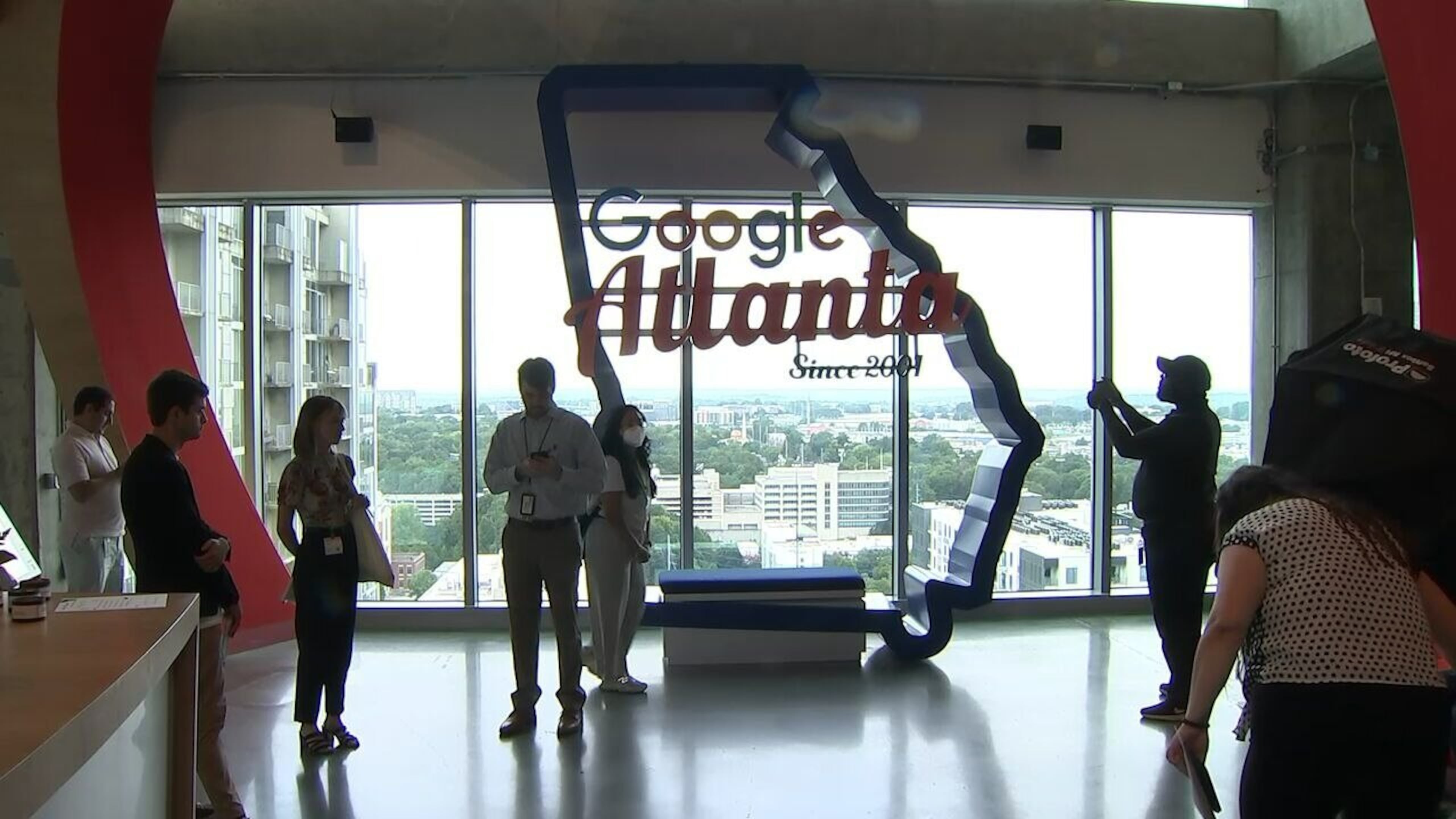
Google also has a partnership with the Trust for Public Land that removed invasive plants along the Chattahoochee River, which it says replenishes fresh water to offset its data center projects. Google’s first investment in Georgia was a data center in Douglas County, and the company now leases office space in a trophy tower in Midtown.
As controversy grows around data centers, tech companies have begun touting their project’s community benefits. Microsoft in January announced similar community-focused initiatives for its data center projects, while also pledging to not apply for local tax breaks.
Google’s nonprofit partnerships are not a formal community benefits or development agreement, which typically involve a list of ancillary projects intended to serve local needs that were negotiated by government leaders in the area.
Community benefits agreements have become a hot topic regarding new data center proposals in Georgia, especially as the state cements itself as a premier hub for these projects after the artificial intelligence boom. While not formalized, data center developers proposing projects in Atlanta’s Adair Park neighborhood and Coweta County have said they’re willing to negotiate such agreements.
Google’s holding entity, Rosewall Pines Holdings, obtained an $8 billion industrial revenue bond in July, Malone said. It’s a mechanism that also allows Google to apply for a property tax break or abatement, but Malone did not disclose the value of the tax savings the tech giant might receive.
“The property taxes for the project quadruple the taxes even with an abatement that had historically been generated for the site,” Malone added.
Other data centers looking to follow Project Pegasus’ flight path will likely face more turbulence. LaGrange leaders last year shot down a $9.7 billion proposal called “Project West,” and the city recently had a moratorium on all new data center projects to evaluate its zoning code and permitting process.
The council voted 3-2 last week that all new data center projects in LaGrange will require special-use permits, according to the LaGrange Daily News. It mirrors a similar policy Atlanta enacted last year.
Malone said Google’s construction is already underway, and the project’s first phase will be operational by the end of 2026.
About the Author

Zachary Hansen, a Georgia native, covers economic development and commercial real estate for the AJC. He's been with the newspaper since 2018 and enjoys diving into complex stories that affect people's lives.