These jet engines made in metro Atlanta can propel cruise missiles
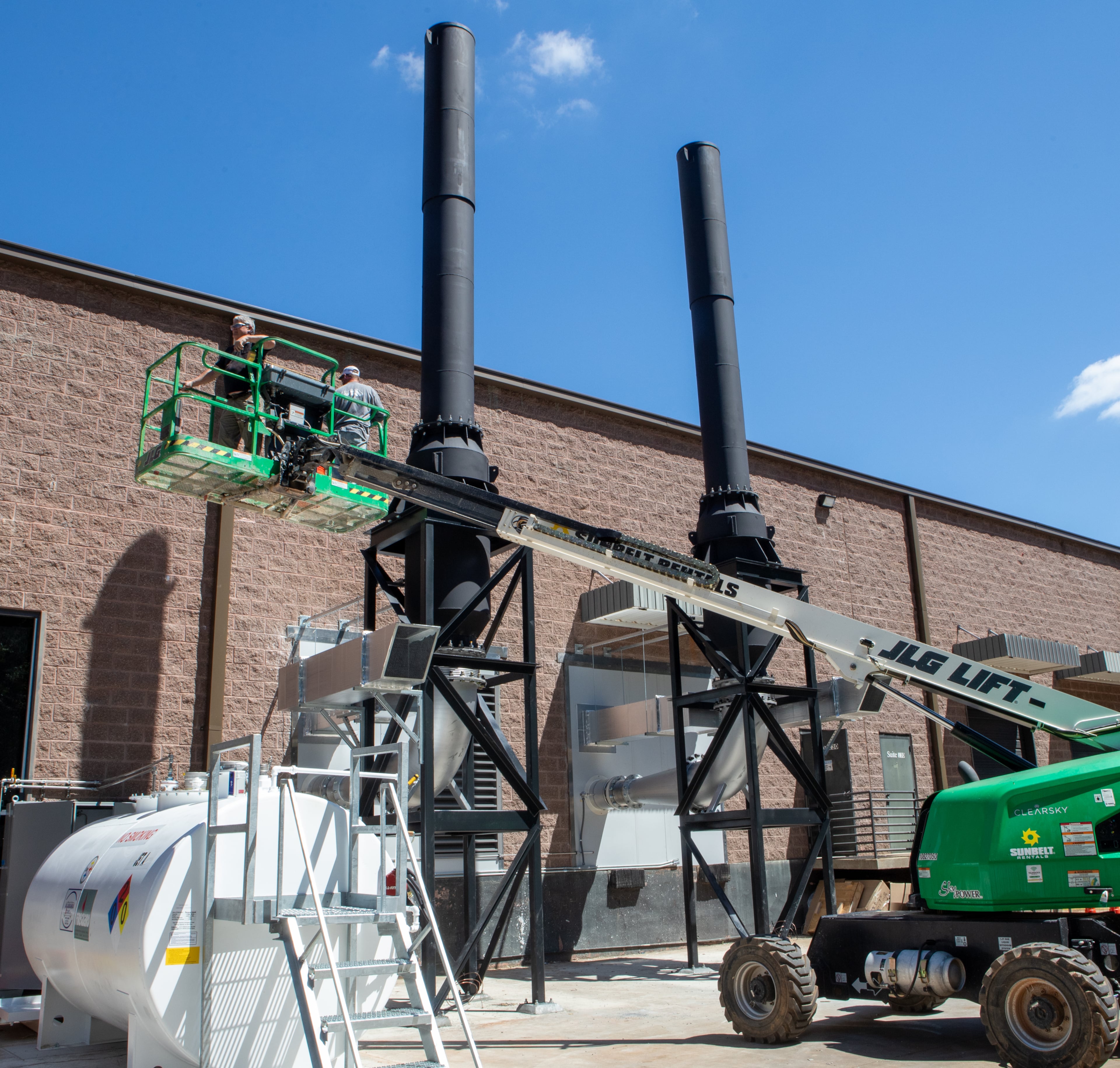
There’s a building in Roswell that looks like any other brick warehouse, except for two things: It features a couple of metal cooling towers that don’t match the rest of the building, and there’s an odd lingering odor nearby — the smell of jet fuel.
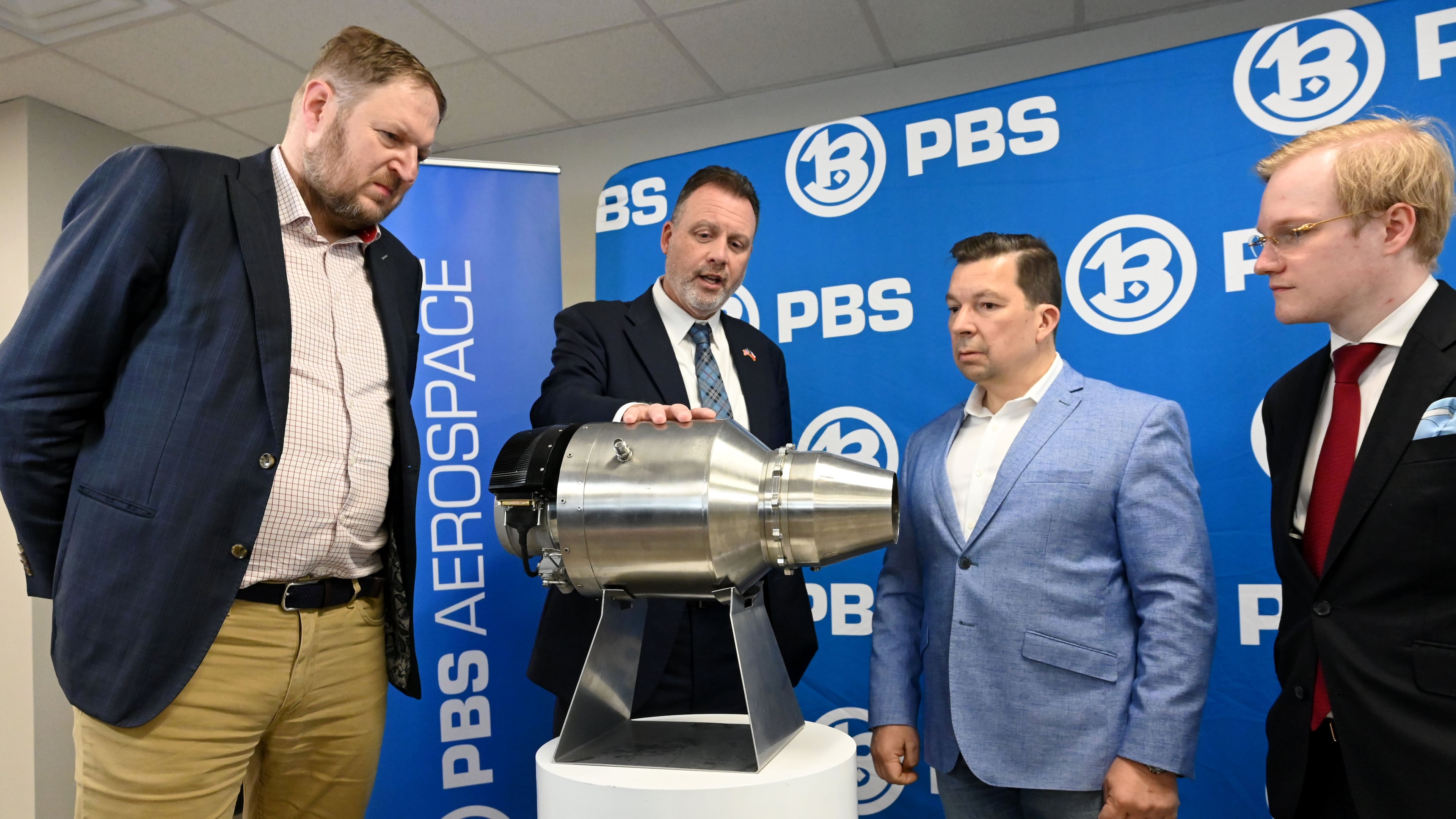
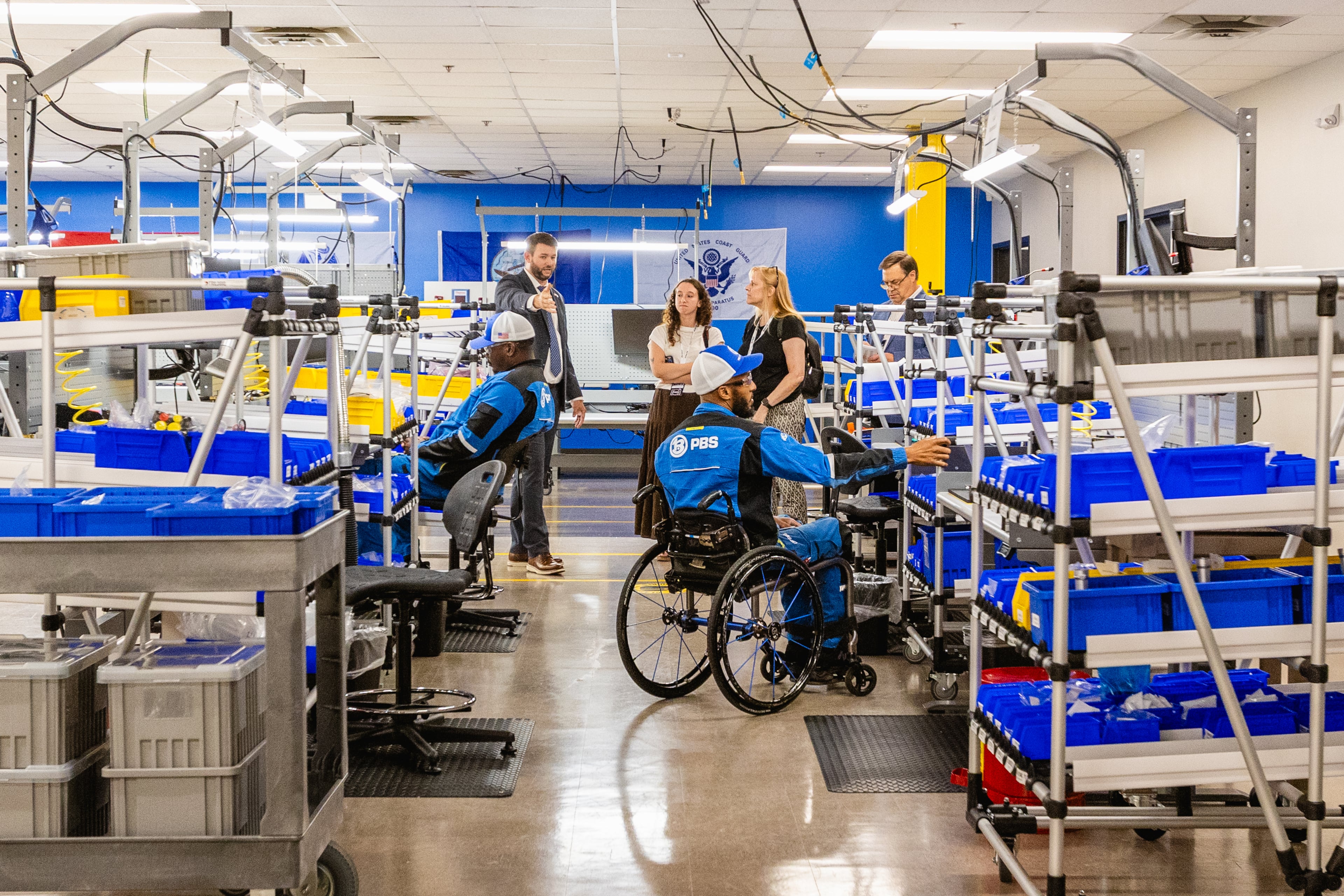
Inside the Roswell warehouse is the headquarters, manufacturing floor and testing area for PBS Aerospace, a subsidiary of a Czech Republic-based aerospace company. It specializes in small jet engines, often weighing less than a gallon of milk.
But don’t be fooled by their small size. They’re packed to the brim with propulsive power, capable of producing enough thrust to propel a midsized boat and reaching 100,000 rotations per minute without tearing themselves apart.
“These are jet engines despite them being very small, so it will be 120 to 130 decibels,” Josh Cass, engine systems engineer for PBS Aerospace, said before demonstrating a launch in the facility’s testing cell. “You’ll hear it screaming a little bit.”
The small but mighty technology has caught the attention of the U.S. military and other defense contractors, entrenching the company in Georgia’s flourishing aerospace ecosystem. The Roswell facility opened only seven months ago, but the company’s leaders said demand is so high that further expansion is likely.
“PBS is really well positioned to capture a lot of that propulsion market by having a factory both here in the U.S. as well as in Europe,” said Patrick Tynan, PBS Aerospace’s vice president of growth and strategy. “We’re actively looking at ways to expand into that footprint, whether that’s new facilities, another site or further expansion here.”
PBS Aerospace announced in February 2025 it would invest $20 million to establish its American headquarters in a renovated building at 1350 Northmeadow Parkway. The company said it’s on track to have 100 employees and produce 3,000 engines by the end of 2026. Its engines are designed to propel drones, cruise missiles and other forms of high-speed warfare.
It’s already racking up military contracts, especially as conflicts in Gaza, Iran and Ukraine fuel munitions spending.
PBS Aerospace had a preexisting contract with Lockheed Martin, which has a major presence in Georgia, before its Roswell facility was announced. In February, PBS Aerospace announced a multimillion-dollar subcontract with drone developer Zone 5 Technologies. And the following month, the engine-maker landed a $3 million prime contract to produce propulsion systems for the U.S. Air Force.
“War is changing, and the world is going to need many engines like this,” said Jakub Fischer, the company’s managing director. “So we took on the risk and went to the States because we kind of foresaw that coming.”
Pinpoint precision
PBS Group, the Czech parent company of its American aerospace division, has more than 200 years of engineering history in Central Europe.
Founded as a workshop producing steam engines and boilers, the company eventually found a niche designing and producing high-grade engines for aerospace hobbyists. The tiny turbines the company produced at its Czech facility became a hot commodity once Russia invaded Ukraine in 2022.
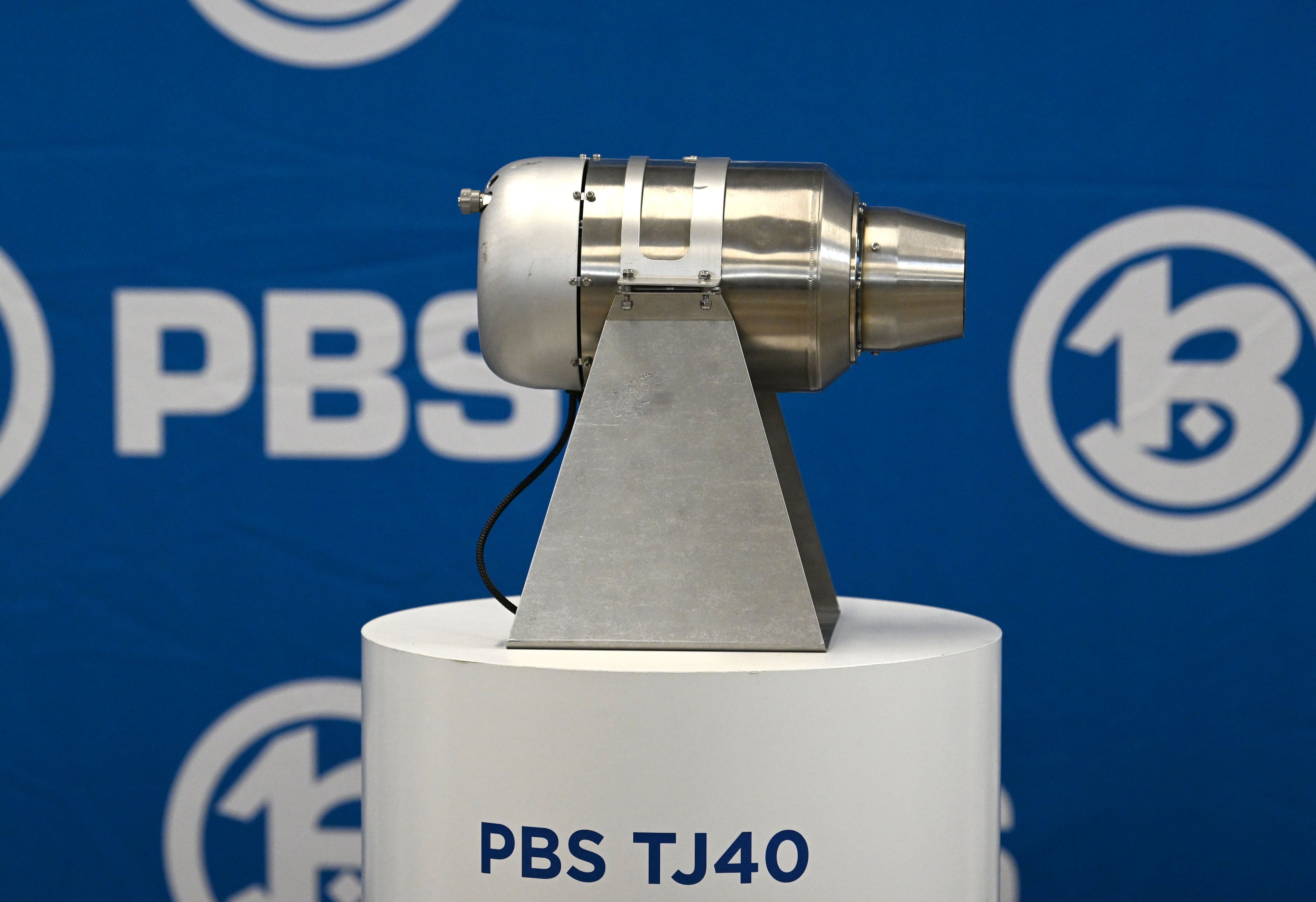
The company’s smallest engine is the TJ40, which weighs only 8 pounds but can produce roughly 100 pounds of thrust. Aside from the nickel-based superalloy used for the engine turbines, all parts used in the Roswell facility are sourced stateside, Tynan said.
Precision is paramount when building jet engines that are this small and go this fast, he added. To pass inspections, part installations have a margin of error less than 1/25 the width of a human hair — roughly half the diameter of a red blood cell.
Even the temperature, elevation and humidity differences between the Czech Republic and Georgia are variables that require adjustment during engine balancing and testing, said Tom Bunbury, the company’s production lead.
“Balancing is critical to our engines,” he said. “They spin at 100,000 rpm. So just like your (vehicle) tire, any imbalance is going to make for a terrible ride.”
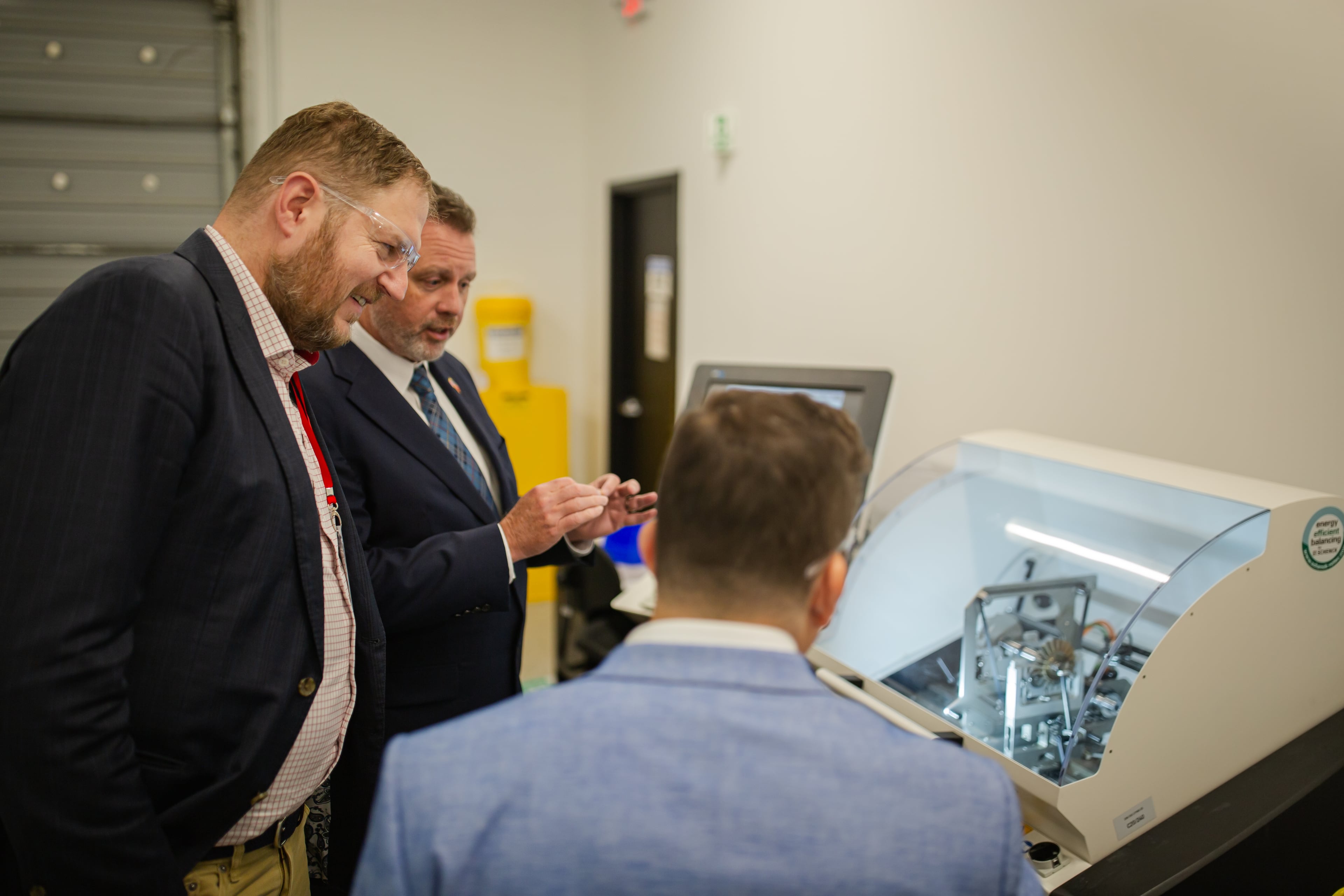
The Roswell facility has manufactured TJ40s since it opened, and it’s about to incorporate production of the larger TJ80 engine in June.
Once complete, all engines go to the on-site test cell, which is a series of converted shipping containers lined with Kevlar. They connect directly to the outdoor exhaust vents, which is why the parking lot’s smell is reminiscent to anyone who’s flown at the world’s busiest airport.
Long-term strategy
Proximity to Hartsfield-Jackson Atlanta International Airport and Georgia’s other aerospace companies was an influencing factor for PBS Aerospace to choose Roswell, according to company CEO Erin Durham.
“One of the reasons we’re in Georgia is because we do have such a local talented pool of technicians and aerospace engineers,” he said.
Agriculture has long remained Georgia’s top industry, but civilian aircraft and ancillary parts were the state’s top export last year. Atlanta boasts the headquarters of Delta Air Lines, while Georgia also has large facilities from Gulfstream Aerospace Corp. and Pratt & Whitney.
PBS Aerospace began its stateside search in 2024 before President Donald Trump began his second term and enacted his sweeping, and evolving, tariff policies.
Miloslav Stašek, the Czech ambassador to the U.S., who toured PBS Aerospace’s facility last week, said it’s “a big advantage for all Czech companies” that have invested recently in America. Over the past four years, Czech companies have invested $13 billion in the U.S.
“It’s gradual, but we are building a small enclave of Czech companies in the state of Georgia,” Stašek said.
Durham said PBS Aerospace anticipates producing 5,000 engines in Roswell in 2027 and will likely need to double or quadruple that production to meet U.S. demand. He wouldn’t commit to where that additional manufacturing space would be located, whether Georgia or elsewhere, but he emphasized that the engineering talent produced at Georgia Tech and other Peach State universities keeps the state in play.
“The more people that can do the job, the more companies are going to want to locate (in Georgia),” he said. “It kind of becomes an upward spiral of additional aerospace (investment).”
About the Author

Zachary Hansen, a Georgia native, covers economic development and commercial real estate for the AJC. He's been with the newspaper since 2018 and enjoys diving into complex stories that affect people's lives.